


Immune-checkpoint gene expression and BCG response in non-muscle invasive bladder cancer
- PMID: 38838438
- PMCID: PMC11214516
- DOI: 10.1016/j.tranon.2024.102003
Immune-checkpoint gene expression and BCG response in non-muscle invasive bladder cancer
Abstract
Methods: One-hundred-six patients diagnosed with non-muscle invasive bladder cancer and treated with intravesical BCG were included and divided into two groups, BCG-responsive (n = 47) and -unresponsive (n = 59). Immunohistochemistry was used to evaluate PD-L1 expression and MSI was assessed by a commercial multiplex PCR kit. The mRNA expression profile of 15 immune checkpoints was performed using the nCounter technology. For in silico validation, two distinct cohorts sourced from the Gene Expression Omnibus (GEO) database were used.
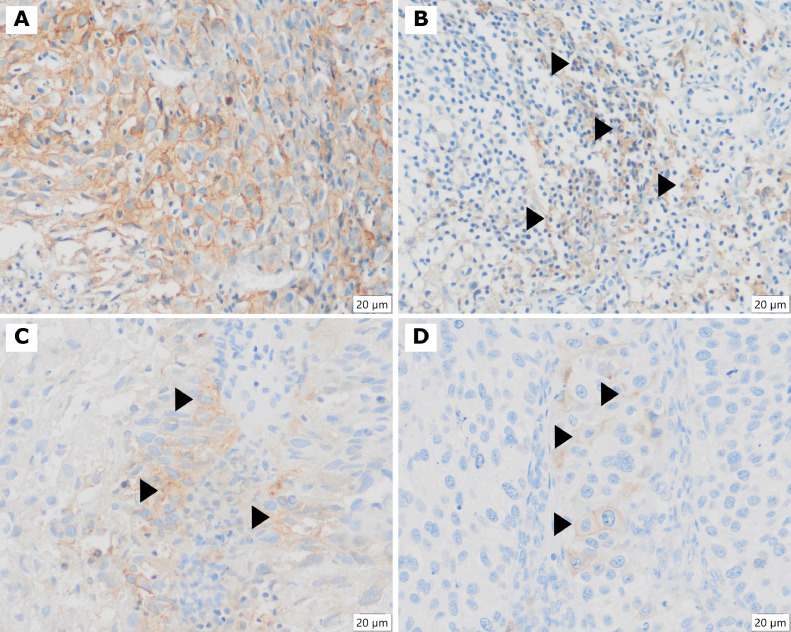
Results: Among the 106 patients, only one (<1 %) exhibited MSI instability. PD-L1 expression was present in 9.4 % of cases, and no association was found with BCG-responsive status. We found low gene expression of canonic actionable immune checkpoints PDCD1 (PD-1), CD274 (PD-L1), and CTLA4, while high expression was observed for CD276 (B7-H3), CD47, TNFRSF14, IDO1 and PVR (CD155) genes. High IDO1 expression levels was associated with worst overall survival. The PDCD1, CTLA4 and TNFRSF14 expression levels were associated with BCG responsiveness, whereas TIGIT and CD276 were associated with unresponsiveness. Finally, CD276 was validated in silico cohorts.
Conclusion: In NMIBC, MSI is rare and PD-L1 expression is present in a small subset of cases. Expression levels of PDCD1, CTLA4, TNFRSF14, TIGIT and CD276 could constitute predictive biomarkers of BCG responsiveness.
Keywords: BCG vaccine (2); Gene expression profiling(3); Immunity active(4); Urinary bladder neoplasms(1).
Copyright © 2024. Published by Elsevier Inc.
Conflict of interest statement
Declaration of competing interest The authors declare that the research was conducted in the absence of any commercial or financial relationships that could be construed as a potential conflict of interest.
Figures





References
-
- Jubber I., et al. Epidemiology of bladder cancer in 2023: a systematic review of risk factors. Eur. Urol. 2023;84:176–190. - PubMed
-
- Bladder cancer — cancer stat facts. Accessed in March 4th, 2024. https://seer.cancer.gov/statfacts/html/urinb.html.
-
- Babjuk M., et al. European association of urology guidelines on non–muscle-invasive bladder cancer (Ta, T1, and carcinoma in situ) Eur. Urol. 2022;81:75–94. - PubMed
-
- Oddens J., et al. Final results of an EORTC-GU cancers group randomized study of maintenance bacillus calmette-guérin in intermediate- and high-risk Ta, T1 papillary carcinoma of the urinary bladder: one-third dose versus full dose and 1 year versus 3 years of maintenance. Eur. Urol. 2013;63:462–472. - PubMed
LinkOut - more resources
Full Text Sources
Research Materials
