


Combination of transbronchoscopic oxygen insufflation and a digital chest drainage system in endobronchial occlusion: a hybrid technique for localization of fistula in intractable pneumothorax
- PMID: 38840165
- PMCID: PMC11151477
- DOI: 10.1186/s12890-024-03043-4
Combination of transbronchoscopic oxygen insufflation and a digital chest drainage system in endobronchial occlusion: a hybrid technique for localization of fistula in intractable pneumothorax
Abstract
Background: The management of intractable secondary pneumothorax poses a considerable challenge as it is often not indicated for surgery owing to the presence of underlying disease and poor general condition. While endobronchial occlusion has been employed as a non-surgical treatment for intractable secondary pneumothorax, its effectiveness is limited by the difficulty of locating the bronchus leading to the fistula using conventional techniques. This report details a case treated with endobronchial occlusion where the combined use of transbronchoscopic oxygen insufflation and a digital chest drainage system enabled location of the bronchus responsible for a prolonged air leak, leading to the successful treatment of intractable secondary pneumothorax.
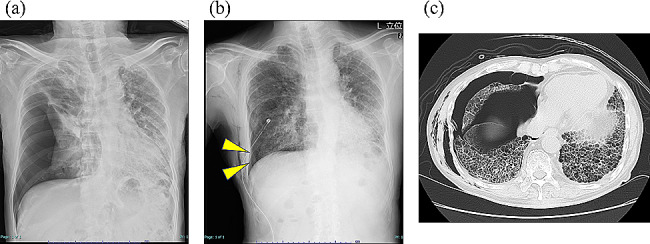
Case presentation: An 83-year-old male, previously diagnosed with chronic hypersensitivity pneumonitis and treated with long-term oxygen therapy and oral corticosteroid, was admitted due to a pneumothorax emergency. Owing to a prolonged air leak after thoracic drainage, the patient was deemed at risk of developing an intractable secondary pneumothorax. Due to his poor respiratory condition, endobronchial occlusion with silicone spigots was performed instead of surgery. The location of the bronchus leading to the fistula was unclear on CT imaging. When the bronchoscope was wedged into each subsegmental bronchus and low-flow oxygen was insufflated, a digital chest drainage system detected a significant increase of the air leak only in B5a and B5b, thus identifying the specific location of the bronchus leading to the fistula. With the occlusion of those bronchi using silicone spigots, the air leakage decreased from 200 mL/min to 20 mL/min, and the addition of an autologous blood patch enabled successful removal of the drainage tube.
Conclusion: The combination of transbronchoscopic oxygen insufflation with a digital chest drainage system can enhance the therapeutic efficacy of endobronchial occlusion by addressing the problems encountered in conventional techniques, where the ability to identify the leaking bronchus is dependent on factors such as the amount of escaping air and the location of the fistula.
Keywords: Digital chest drainage system; Endobronchial occlusion; Intractable pneumothorax; Prolonged air leak; Transbronchoscopic oxygen insufflation.
© 2024. The Author(s).
Conflict of interest statement
The authors declare no competing interests.
Figures


References
-
- Adachi M, Matsumoto Y, Furuse H, Uchimura K, Imabayashi T, Yotsukura M, Yoshida Y, Nakagawa K, Igaki H, Watanabe SI, et al. Utility of the endobronchial Watanabe spigot for intractable cancer-related pneumothorax: a retrospective observational study. Jpn J Clin Oncol. 2023;53(9):829–36. doi: 10.1093/jjco/hyad060. - DOI - PMC - PubMed
Publication types
MeSH terms
Substances
LinkOut - more resources
Full Text Sources
Medical
