


Motor activities to improve maths performance in pre-school children with typical development
- PMID: 38840733
- PMCID: PMC11150562
- DOI: 10.3389/fpsyg.2024.1332741
Motor activities to improve maths performance in pre-school children with typical development
Abstract
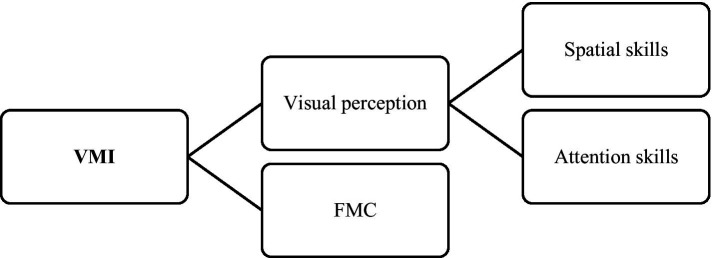
Poor maths skills are associated with negative outcomes throughout life, such as lower academic qualifications, decreased professional success and socio-economic results. Mathematical skills emerge continuously throughout childhood and those that children acquire in pre-school are crucial for activities that support analytical thinking, problem-solving and reasoning and argumentation skills. Many of these activities are related to motor skills, since certain cognitive and motor areas of the brain are activated simultaneously when solving maths problems. Of all motor skills, visuomotor integration skills have been documented as those that are most consistently positively and significantly associated with maths performance in pre-school children. These skills are influenced by visual perception (spatial and attention skills), fine motor coordination and gross motor skills. Early intervention can improve visuomotor integration skills in pre-school children. Of all skills that make up visuomotor integration, spatial skills, in addition to being the first skills to influence numerical knowledge and the recognition of geometric shapes, are also those skills that form part of the majority of programs and activities to be worked on with pre-school children for the development of mathematical concepts. However, most intervention programs or activities to develop spatial skills are carried out in the classroom, usually through activities involving handling small objects. In this sense and given the significant association between visuomotor integration skills and gross motor skills, the main objective of this study was to list a set of activities to develop spatial skills, with a strong involvement of gross motor skills, in a classroom, playground or home context.
Keywords: gross motor skills; mathematical skills; pre-school; spatial skills; visuomotor integration skills.
Copyright © 2024 Flores, Coelho, Mourão-Carvalhal and Forte.
Conflict of interest statement
The authors declare that the research was conducted in the absence of any commercial or financial relationships that could be construed as a potential conflict of interest.
Figures
References
-
- Adolph K. E. (2005). “Learning to learn in the development of action” in Action as an organizer of learning and development: Minnesota symposia on child psychology. eds. Rieser J. J., Lockman J. J., Nelson C. A. (Mahwah, NJ: Erlbaum; ), 91–122.
-
- Anderson J. R. (2000). Cognitive psychology and its implications. 5th Edn. New York: W.H. Freeman.
Publication types
LinkOut - more resources
Full Text Sources
