


Assessment of the potential occurrence of Cryptosporidium species in various water sources in Sharqia Governorate, Egypt
- PMID: 38840871
- PMCID: PMC11147971
- DOI: 10.1007/s12639-024-01675-1
Assessment of the potential occurrence of Cryptosporidium species in various water sources in Sharqia Governorate, Egypt
Abstract
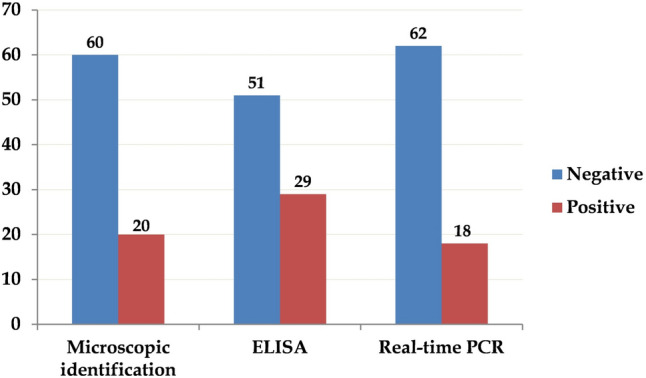
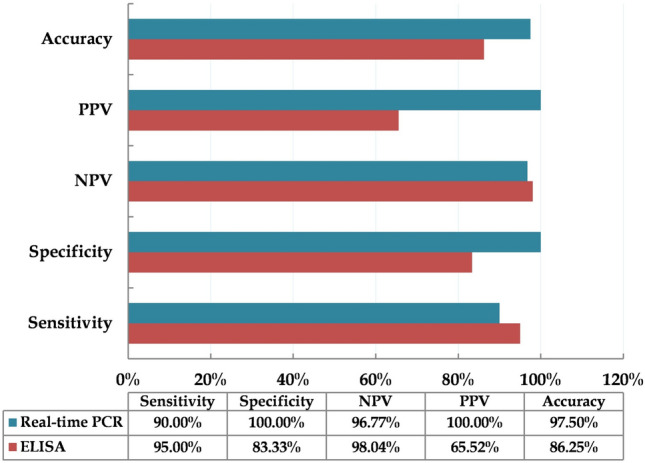
Cryptosporidium species are enteric apicomplexan parasites associated with diarrhoeal disease in humans and animals globally. Waterborne outbreaks resulting from contamination with the infective oocysts are common worldwide. Updated reports on waterborne protozoal infections are needed to identify emerging pathogens and susceptible populations. Therefore, this study aimed to assess the current profile of Cryptosporidium contamination of various water sources in Sharqia Governorate, Northeastern Egypt. For this purpose, eighty samples were collected from five different water types (canal, tap, tank, filtered, and groundwater), distributed in four major cities (El-Hessenia, Fakous, Zagazig, and Belbies) in Sharqia Governorate. All water samples were examined using conventional microscopy, ELISA, and real-time PCR (RT-PCR) techniques. Based on microscopic analysis, the Cryptosporidium protozoan was identified in 25% of the tested water samples. The RT-PCR assay has allowed for the quantification of Cryptosporidium oocysts in different types of water. Canal water exhibited the highest Cryptosporidium contamination levels (mean = 85.15 oocysts/L), followed by water tanks (mean = 12.031 oocysts/L). The study also provided a comparative evaluation of ELISA and RT-PCR for the diagnosis of Cryptosporidium infection. RT-PCR performed better than ELISA in terms of analytical accuracy (97.50% vs. 86.25%) and specificity (100% vs. 83.33%). However, ELISA showed a higher sensitivity (95.00% vs. 90.00%) for Cryptosporidium recovery. Our findings could serve as a platform for further investigations into the potential risks associated with water contamination in Sharqia Governorate.
Supplementary information: The online version contains supplementary material available at 10.1007/s12639-024-01675-1.
Keywords: Cryptosporidium; Detection; Egypt; Identification; Prevalence; Waterborne parasites.
© Indian Society for Parasitology 2024. Springer Nature or its licensor (e.g. a society or other partner) holds exclusive rights to this article under a publishing agreement with the author(s) or other rightsholder(s); author self-archiving of the accepted manuscript version of this article is solely governed by the terms of such publishing agreement and applicable law.
Conflict of interest statement
Conflict of interestThe authors have no relevant financial or non-financial interests to disclose.
Figures
References
-
- Akuffo I, Cobbina SJ, Alhassan EH, Nkoom M. Assessment of the quality of water before and after storage in the Nyankpala community of the Tolon-kumbungu district, Ghana. Int J Sci Technol Res. 2013;2:221–227.
-
- Anceno AJ, Katayama H, Houpt ER, Chavalitshewinkoon-Petmitr P, Chuluun B, Shipin OV. IMS-free DNA extraction for the PCR-based quantification of Cryptosporidium parvum and Giardia lamblia in surface and waste water. Int J Environ Health Res. 2007;17(4):297–310. doi: 10.1080/09603120701372573. - DOI - PubMed
LinkOut - more resources
Full Text Sources
Miscellaneous