


Facial Rejuvenation: A Global Trend of Dermatological Procedures in the Last Decade
- PMID: 38841523
- PMCID: PMC11150033
- DOI: 10.1097/GOX.0000000000005801
Facial Rejuvenation: A Global Trend of Dermatological Procedures in the Last Decade
Abstract
Background: We aimed to track the global trend of cosmetic treatment outcomes for facial rejuvenation and the differences in modalities used in East Asian and Western populations.
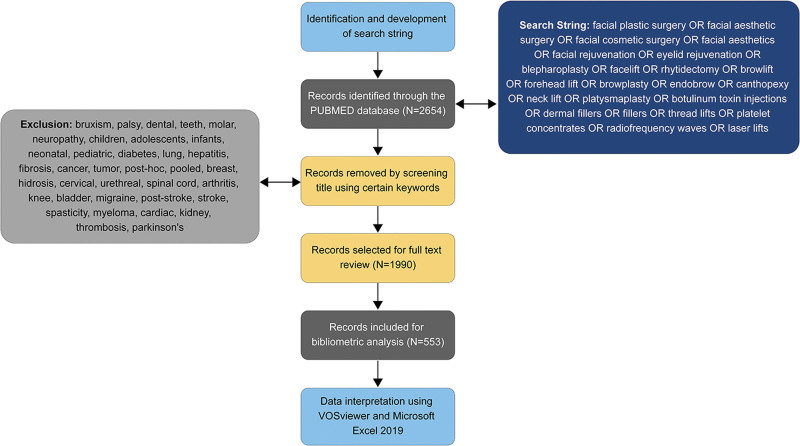
Methods: Articles reporting on facial rejuvenation procedures (invasive/noninvasive) were identified in PubMed from 2013 to March 2023 and bibliometrically analyzed for type of published document, citation frequency, authors with most articles, author's affiliation, and frequency distribution of keywords.
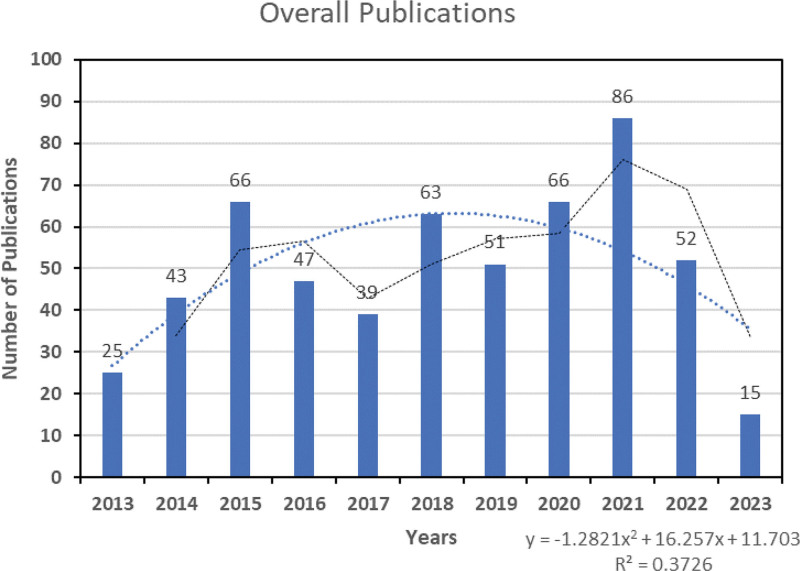
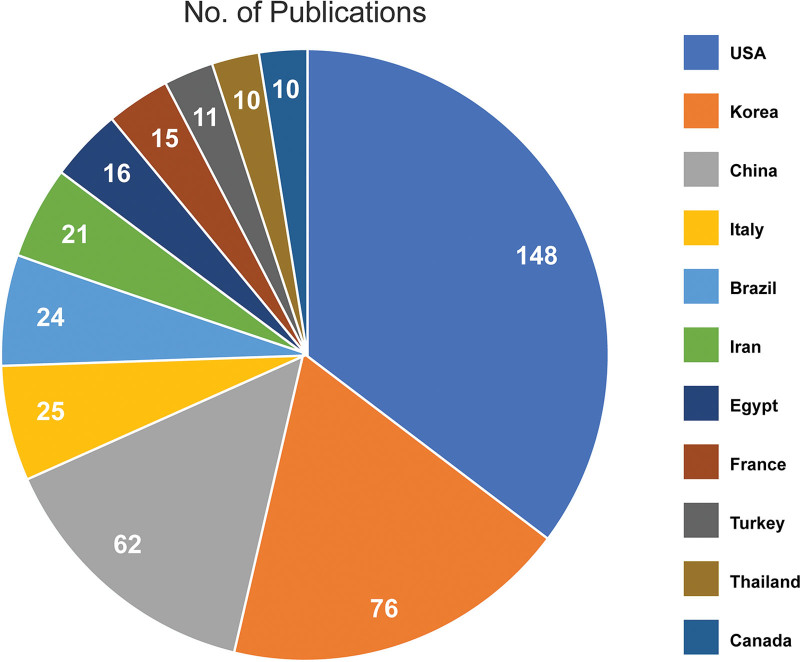
Results: From 553 articles, most were published in 2021 (n = 86, 15.6%). Western countries (n = 323, 58.4%) contributed more than East Asian (n = 230, 41.6%), with more invasive interventions (n = 355, 64.2%) than noninvasive techniques (n = 198, 35.8%). Numbers of invasive techniques in West versus East Asian countries were 225 (40.7%) versus 135 (24.4%). Main indications were the reduction of facial wrinkles and antiageing treatments. Hyaluronic acid, fillers, and botulinum toxin were the main hotspots for invasive treatments, whereas laser, platelet-rich plasma, and radiofrequency were for noninvasive treatments. Nasolabial folds (13.4%) and glabellar lines (12.4%) were the top research hotspots in the East Asian and Western regions. Common adverse events were pain, erythema, swelling, and bruising. Approximately, 89.3% of publications were from single countries, whereas 10.7% of publications were from international collaborations. Most articles (n = 387; 69.95%) presented their findings using level II evidence. Dermatological surgery (IF = 2.914) had the greatest number of publications (n = 109; 19.71%).
Conclusions: The main hotspots were antiaging and youthfulness. This study provides a trend and a new perspective on the future research directions in the field of facial rejuvenation.
Copyright © 2024 The Authors. Published by Wolters Kluwer Health, Inc. on behalf of The American Society of Plastic Surgeons.
Conflict of interest statement
The authors have no financial interest to declare in relation to the content of this article.
Figures
References
-
- The rise of plastic surgery and aesthetics in private equity healthcare. SCALE Healthcare. Available at https://www.scale-community.com/insights/the-rise-of-plastic-surgery-and.... Published 2023. Accessed February 13, 2024.
-
- https://fyra.io. Your comprehensive guide to ocular aesthetics. Modern optometry. Bryn Mawr Communications. Available at https://modernod.com/articles/2023-may-june/your-comprehensive-guide-to-.... Published May/June 2023. Accessed February 13, 2024.
-
- Facial rejuvenation market – global industry trends and forecast to 2028. Data Bridge Market Research. Available at https://www.databridgemarketresearch.com/reports/global-facial-rejuvenat.... Published July 2023. Accessed April 5, 2024.
LinkOut - more resources
Full Text Sources
Miscellaneous