


Plasma D-asparagine and the D/L-serine ratio reflect chronic kidney diseases in children regardless of physique
- PMID: 38844708
- PMCID: PMC11156734
- DOI: 10.1007/s00726-024-03400-x
Plasma D-asparagine and the D/L-serine ratio reflect chronic kidney diseases in children regardless of physique
Abstract
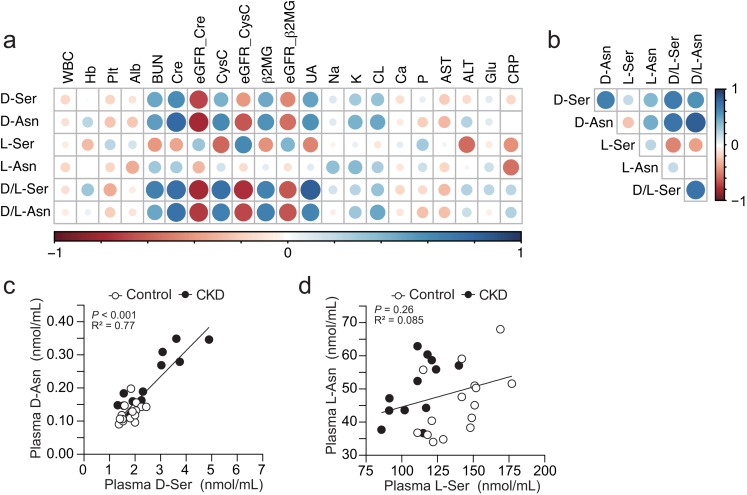
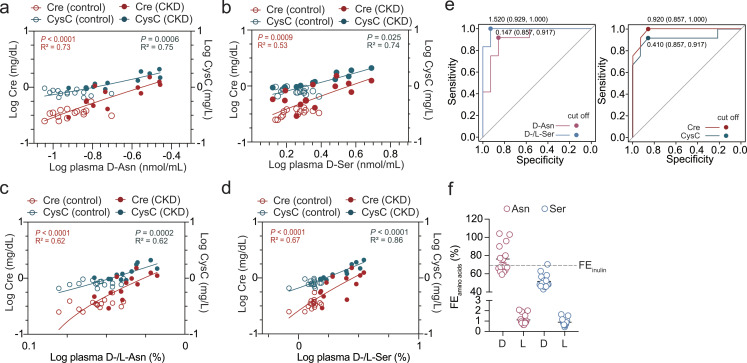
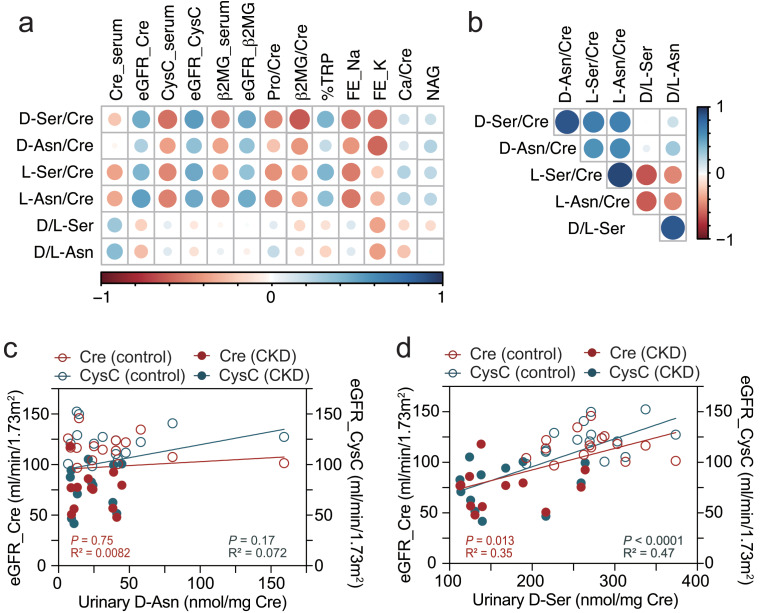
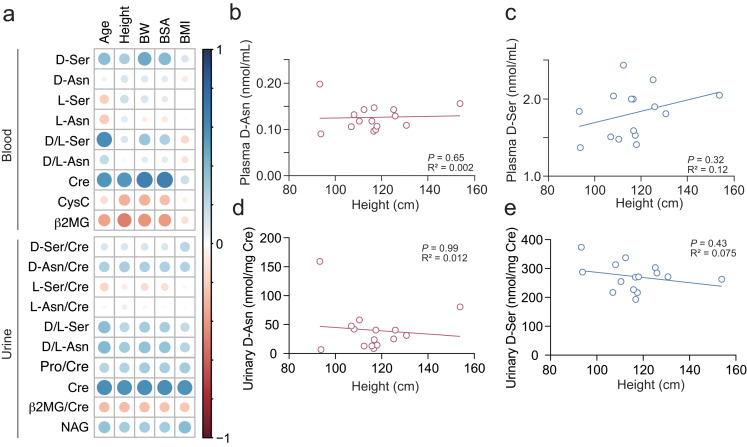
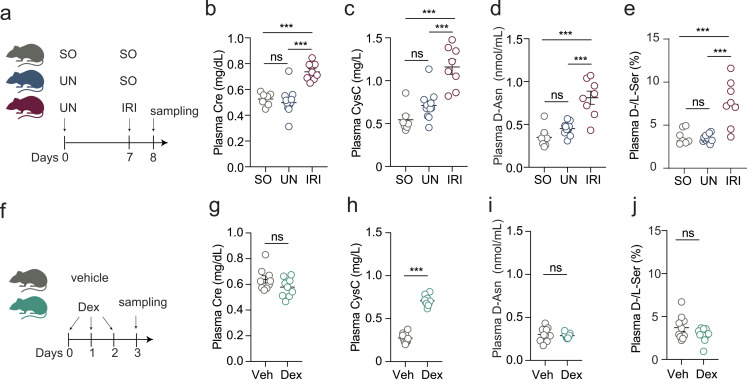
Biomarkers that accurately reflect renal function are essential in management of chronic kidney diseases (CKD). However, in children, age/physique and medication often alter established renal biomarkers. We studied whether amino acid enantiomers in body fluids correlate with renal function and whether they are influenced by physique or steroid medication during development. We conducted a prospective study of children 2 to 18 years old with and without CKD. We analyzed associations of serine/asparagine enantiomers in body fluids with major biochemical parameters as well as physique. To study consequences of kidney dysfunction and steroids on serine/asparagine enantiomers, we generated juvenile mice with uninephrectomy, ischemic reperfusion injury, or dexamethasone treatment. We obtained samples from 27 children, of which 12 had CKD due to congenital (n = 7) and perinatal (n = 5) causes. Plasma D-asparagine and the D/L-serine ratio had robust, positive linear associations with serum creatinine and cystatin C, and detected CKD with high sensitivity and specificity, uninfluenced by body size or biochemical parameters. In the animal study, kidney dysfunction increased plasma D-asparagine and the D/L-serine ratio, but dexamethasone treatment did not. Thus, plasma D-asparagine and the D/L-serine ratio can be useful markers for renal function in children.
Keywords: d-amino acids; Body size; Clinical laboratory test; Juvenile kidney function.
© 2024. The Author(s).
Conflict of interest statement
The authors have no relevant financial interests to disclose. M.M. is a founder and CEO of KAGAMI INC., a company working on analysis of chiral amino acids.
Figures
References
-
- Blufpand HN, Tromp J, Abbink FC, Stoffel-Wagner B, Bouman AA, Schouten-van Meeteren AY, van Wijk JA, Kaspers GJ, Bokenkamp A (2011) Cystatin c more accurately detects mildly impaired renal function than creatinine in children receiving treatment for malignancy. Pediatr Blood Cancer 57 (2):262–267 - PubMed
-
- Bokenkamp A, Dieterich C, Dressler F, Muhlhaus K, Gembruch U, Bald R, Kirschstein M (2001) Fetal serum concentrations of cystatin c and beta2-microglobulin as predictors of postnatal kidney function. Am J Obstet Gynecol 185(2):468–475 - PubMed
-
- Bokenkamp A, Laarman CA, Braam KI, van Wijk JA, Kors WA, Kool M, de Valk J, Bouman AA, Spreeuwenberg MD, Stoffel-Wagner B (2007) Effect of corticosteroid therapy on low-molecular weight protein markers of kidney function. Clin Chem 53 (12):2219–2221 - PubMed
-
- Carrie BJ, Golbetz HV, Michaels AS, Myers BD (1980) Creatinine: An inadequate filtration marker in glomerular diseases. Am J Med 69 (2):177–182 - PubMed
-
- Cataldi L, Mussap M, Bertelli L, Ruzzante N, Fanos V, Plebani M (1999) Cystatin c in healthy women at term pregnancy and in their infant newborns: relationship between maternal and neonatal serum levels and reference values. Am J Perinatol 16(6):287–295 - PubMed
MeSH terms
Substances
Grants and funding
LinkOut - more resources
Full Text Sources
Medical
