


Is There a Difference in Abdominal Wall Muscle Strength, Endurance, and Motor Control Following Bilateral DIEP and TRAM Flaps for Breast Reconstruction?
- PMID: 38846507
- PMCID: PMC11155377
Is There a Difference in Abdominal Wall Muscle Strength, Endurance, and Motor Control Following Bilateral DIEP and TRAM Flaps for Breast Reconstruction?
Abstract
Background: Abdominal donor site complications in bilateral pedicled transverse rectus abdominis muscle (TRAM) have been a concern when compared with bilateral deep inferior epigastric perforator (DIEP) flap breast reconstruction. This study aimed to assess the strength, endurance, and motor control in patients undergoing DIEP and TRAM flaps.
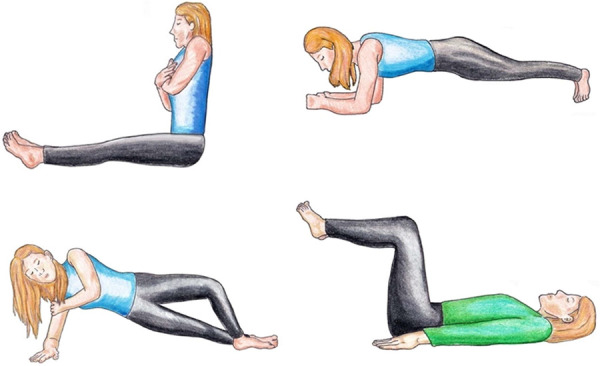
Methods: A prospective, cohort study was performed at a single institution including patients who underwent pedicled TRAM and DIEP flap reconstruction after mastectomy from August 2017 to August 2018. Patients underwent pre- and postoperative testing involving rectus abdominis, prone plank, side bridge, and trunk flexor tests. Descriptive analyses and multivariate linear regressions were performed.
Results: The final analysis included a total of 9 patients, 4 of whom underwent TRAM flap reconstruction while 5 underwent DIEP flap reconstruction. The tests were not statistically significant between the TRAM versus DIEP groups, including rectus abdominis mean time decrease (0.25 vs 0.60 sec, P = .51), prone plank time increase (1.38 vs 1.38 sec, P = .51), right side bridge time increase (7.54 sec vs 32.15 sec, P = 1.00), left side bridge time increase (2.14 vs 44.5 sec, P = .37), and trunk flexor time decrease (4.68 vs 1.68 sec, P = .44). Overall complications were similar between the 2 groups.
Conclusions: No significant difference in abdominal donor site morbidity was found when comparing the 2 groups. This article provides a point of conversation with patients when discussing available reconstruction options.
Keywords: Abdominal; DIEP; Function; Reconstruction; TRAM.
© 2024 HMP Global. All Rights Reserved. Any views and opinions expressed are those of the author(s) and/or participants and do not necessarily reflect the views, policy, or position of ePlasty or HMP Global, their employees, and affiliates.
Figures
References
-
- Nelson JA, Allen RJ Jr., Polanco T, et al. Long-term patient-reported outcomes following postmastectomy breast reconstruction: an 8-year examination of 3268 patients. Ann Surg. Sep 2019;270(3):473-483. doi:10.1097/sla.0000000000003467 10.1097/SLA.0000000000003467 - DOI - PubMed
-
- Hu ES, Pusic AL, Waljee JF, et al. Patient-reported aesthetic satisfaction with breast reconstruction during the long-term survivorship period. Plast Reconstr Surg. Jul 2009;124(1):1-8. doi:10.1097/PRS.0b013e3181ab10b2 10.1097/PRS.0b013e3181ab10b2 - DOI - PubMed
-
- Santosa KB, Qi J, Kim HM, Hamill JB, Wilkins EG, Pusic AL. Long-term patient-reported outcomes in postmastectomy breast reconstruction. JAMA Surg. Oct 1 2018;153(10):891-899. doi:10.1001/jamasurg.2018.1677 10.1001/jamasurg.2018.1677 - DOI - PMC - PubMed
-
- Ménez T, Michot A, Tamburino S, Weigert R, Pinsolle V. Multicenter evaluation of quality of life and patient satisfaction after breast reconstruction, a long-term retrospective study. Ann Chir Plast Esthet. 2018;63(2):126-133. doi:10.1016/j.anplas.2017.07.022 - DOI - PubMed
-
- Christensen BO, Overgaard J, Kettner LO, Damsgaard TE. Long-term evaluation of postmastectomy breast reconstruction. Acta Oncol. Oct 2011;50(7):1053-1061. doi:10.3109/0284186x.2011.584554 10.3109/0284186X.2011.584554 - DOI - PubMed
LinkOut - more resources
Full Text Sources