


Aging-related alterations in mechanistic target of rapamycin signaling promote platelet hyperreactivity and thrombosis
- PMID: 38849085
- PMCID: PMC11656450
- DOI: 10.1016/j.jtha.2024.05.025
Aging-related alterations in mechanistic target of rapamycin signaling promote platelet hyperreactivity and thrombosis
Abstract
Background: Aging is an independent risk factor for the development of cardiovascular, thrombotic, and other chronic diseases. However, mechanisms of platelet hyperactivation in aging remain poorly understood.
Objectives: Here, we examine whether and how aging alters intracellular signaling in platelets to support platelet hyperactivity and thrombosis.
Methods: Quantitative mass spectrometry with tandem mass tag labeling systematically measured protein phosphorylation in platelets from healthy aged (>65 years) and young human (<45 years) subjects. The role of platelet mechanistic target of rapamycin (mTOR) in aging-induced platelet hyperreactivity was assessed using pharmacologic mTOR inhibition and a platelet-specific mTOR-deficient mouse model (mTORplt-/-).
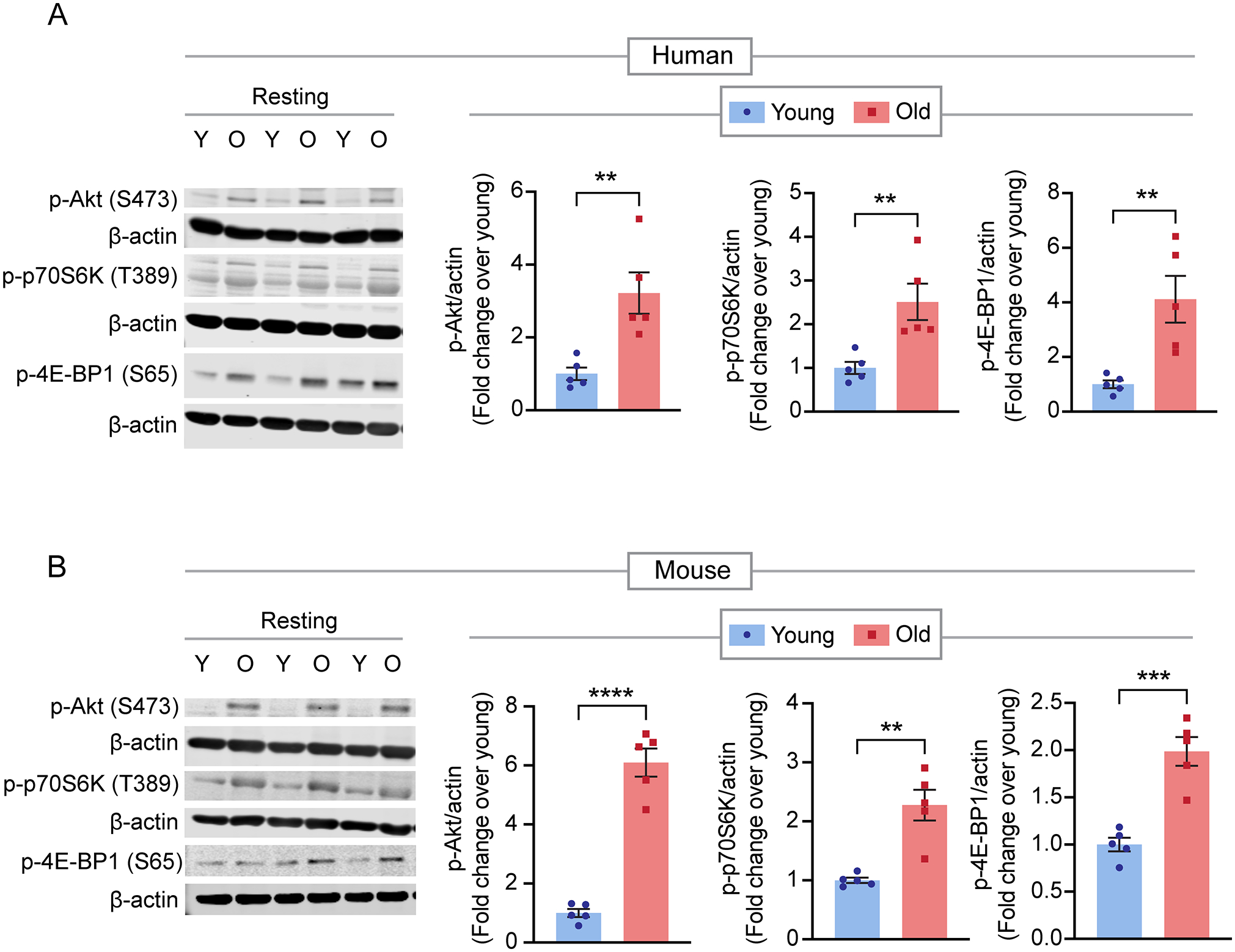
Results: Quantitative phosphoproteomics uncovered differential site-specific protein phosphorylation within mTOR, Rho GTPase, and MAPK pathways in platelets from aged donors. Western blot confirmed constitutive activation of the mTOR pathway in platelets from both aged humans and mice, which was associated with increased aggregation compared with that in young controls. Inhibition of mTOR with either Torin 1 in aged humans or genetic deletion in aged mice reversed platelet hyperreactivity. In a collagen-epinephrine pulmonary thrombosis model, aged wild-type (mTORplt+/+) mice succumbed significantly faster than young controls, while time to death of aged mTORplt-/- mice was similar to that of young mTORplt+/+ mice. Mechanistically, we noted increased Rac1 activation and levels of mitochondrial reactive oxygen species in resting platelets from aged mice, as well as increased p38 phosphorylation upstream of thromboxane generation following agonist stimulation.
Conclusion: Aging-related changes in mTOR phosphorylation enhance Rac1 and p38 activation to enhance thromboxane generation, platelet hyperactivity, and thrombosis.
Keywords: aging; phosphoproteome; platelets; tandem mass tag; thrombosis.
Copyright © 2024 The Author(s). Published by Elsevier Inc. All rights reserved.
Conflict of interest statement
Declaration of competing interests The authors have no competing interests to disclose.
Figures


References
MeSH terms
Substances
Grants and funding
- U24 NS107228/NS/NINDS NIH HHS/United States
- P30 EY010572/EY/NEI NIH HHS/United States
- R01 HL167442/HL/NHLBI NIH HHS/United States
- R01 HL130541/HL/NHLBI NIH HHS/United States
- S10 OD026959/OD/NIH HHS/United States
- S10 OD012246/OD/NIH HHS/United States
- R01 HL142804/HL/NHLBI NIH HHS/United States
- R01 HL146549/HL/NHLBI NIH HHS/United States
- I01 CX001696/CX/CSRD VA/United States
- R01 HL163019/HL/NHLBI NIH HHS/United States
- R35 HL145237/HL/NHLBI NIH HHS/United States
- R56 AG059877/AG/NIA NIH HHS/United States
- K01 AG059892/AG/NIA NIH HHS/United States
- R01 AG048022/AG/NIA NIH HHS/United States
- P30 CA069533/CA/NCI NIH HHS/United States
- K24 HL155856/HL/NHLBI NIH HHS/United States
LinkOut - more resources
Full Text Sources
Medical
Research Materials
Miscellaneous
