


PAX1 methylation as a robust predictor: developing and validating a nomogram for assessing endocervical curettage (ECC) necessity in human papillomavirus16/18-positive women undergoing colposcopy
- PMID: 38849868
- PMCID: PMC11157736
- DOI: 10.1186/s13148-024-01691-1
PAX1 methylation as a robust predictor: developing and validating a nomogram for assessing endocervical curettage (ECC) necessity in human papillomavirus16/18-positive women undergoing colposcopy
Abstract
Objective: The major challenge in routine endocervical curettage (ECC) among Human Papillomavirus (HPV) 16/18-positive patients is that only a small fraction benefit. Nevertheless, current reported models often overestimate the validity and necessity of ECC, making it difficult to improve benefits for patients. This research hypothesized that assessing paired boxed gene 1 methylation levels (PAX1m) and clinical characteristics could enhance the predictive accuracy of detecting additional high-grade squamous intraepithelial lesions or worse (HSIL +) through ECC that were not identified by colposcopy-directed biopsy (CDB).
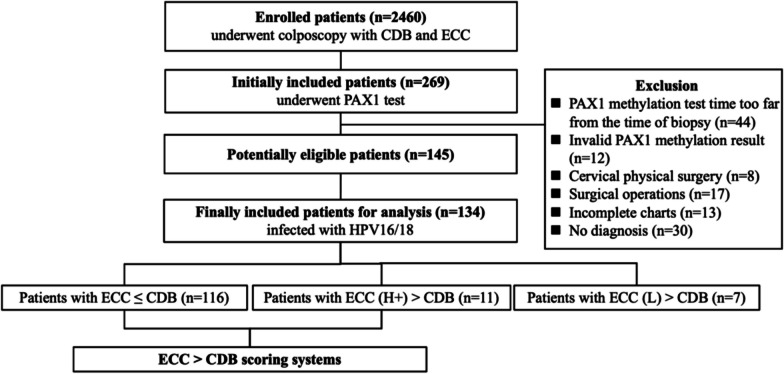
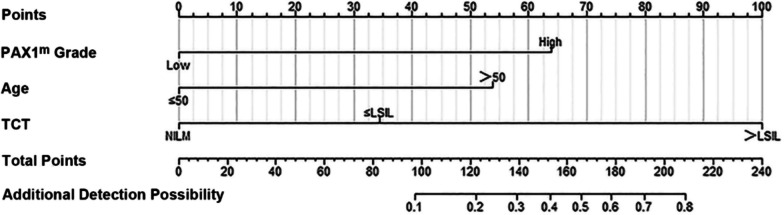
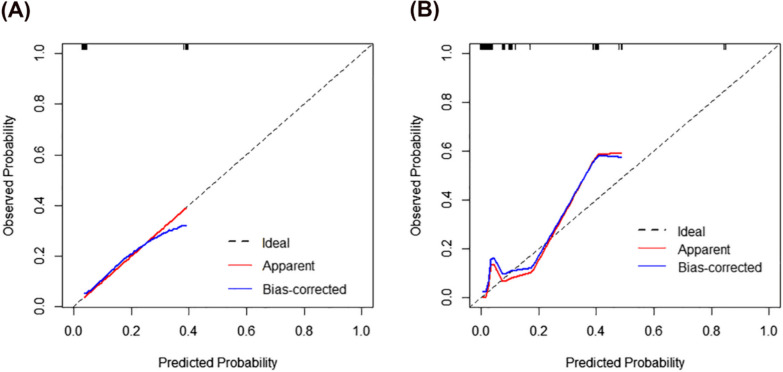
Methods: Data from 134 women with HPV16/18 positivity undergoing CDB and ECC between April 2018 and April 2022 were collected and analyzed. Quantitative methylation-specific polymerase chain reaction (qMSP) was utilized to measure PAX1m, expressed as ΔCp. Univariate and multivariate regression analyses were conducted to screen variables and select predictive factors. A nomogram was constructed using multivariate logistic regression to predict additional HSIL + detected by ECC. The discrimination, calibration, and clinical utility of the nomogram were evaluated using receiver operating characteristic curves (ROC) and the calibration plot.
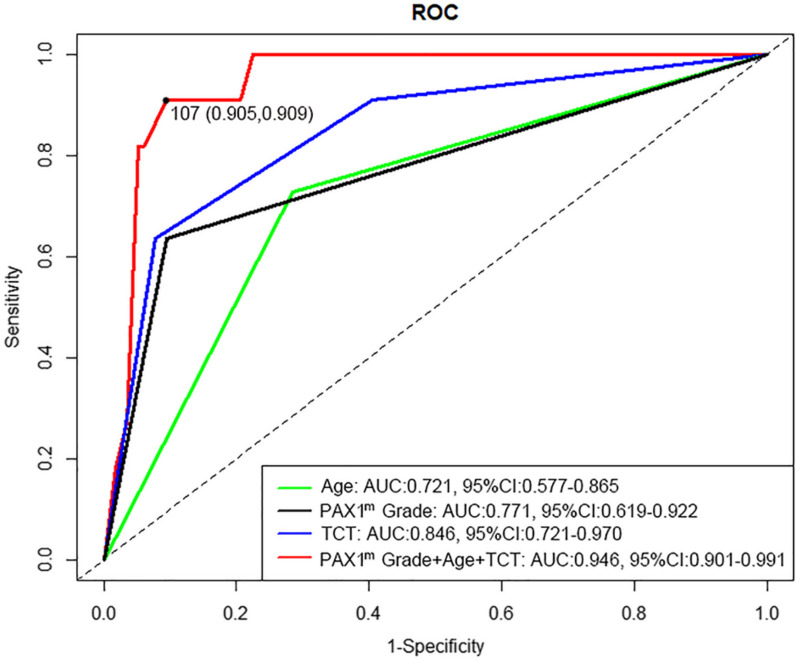
Results: Age (odds ratio [OR], 5.654; 95% confidence interval [CI], 1.131-37.700), cytology (OR, 24.978; 95% CI, 3.085-540.236), and PAX1 methylation levels by grade (PAX1m grade) (OR, 7.801; 95% CI, 1.548-44.828) were independent predictive factors for additional detection of HSIL + by ECC. In HPV16/18-positive women, the likelihood of additional detection of HSIL + through ECC increased with the severity of cytological abnormalities, peaking at 43.8% for high-grade cytological lesions. Moreover, when cytological findings indicated low-grade lesions, PAX1 methylation levels were positively correlated with the additional detection of HSIL + by ECC (P value < 0.001). A nomogram prediction model was developed (area under curve (AUC) = 0.946; 95% CI, 0.901-0.991), demonstrating high sensitivity (90.9%) and specificity (90.5%) at the optimal cutoff point of 107. Calibration analysis confirmed the model's strong agreement between predicted and observed probabilities.
Conclusion: The clinical nomogram presented promising predictive performance for the additional detection of HSIL + through ECC among women with HPV16/18 infection. PAX1 methylation level could serve as a valuable tool in guiding individualized clinical decisions regarding ECC for patients with HPV 16/18 infection, particularly in cases of low-grade cytological findings.
Keywords: DNA methylation; Endocervical curettage; Human papillomavirus; Nomogram prediction model; PAX1.
© 2024. The Author(s).
Conflict of interest statement
The authors declare that they have no competing interests.
Figures
Similar articles
-
Comparing the performance of DeoxyriboNucleic Acid methylation analysis and cytology for detecting cervical (pre)cancer in women with high-risk human papillomavirus-positive status in a gynecologic outpatient population.BMC Cancer. 2024 Nov 4;24(1):1352. doi: 10.1186/s12885-024-13126-4. BMC Cancer. 2024. PMID: 39497123 Free PMC article.
-
The performance of JAM3/PAX1 methylation in the diagnosis of high-grade squamous intraepithelial lesions for women with high-risk HPV infection.BMC Cancer. 2024 Dec 18;24(1):1514. doi: 10.1186/s12885-024-13299-y. BMC Cancer. 2024. PMID: 39696066 Free PMC article.
-
Assessing the risk of undetected cervical cancer in women with a biopsy of high-grade cervical intraepithelial neoplasia: predictive value of cytology and endocervical curettage (ECC).BMC Cancer. 2025 Jul 29;25(1):1238. doi: 10.1186/s12885-025-14565-3. BMC Cancer. 2025. PMID: 40731391 Free PMC article.
-
PAX1/SOX1 DNA Methylation Versus Cytology and HPV16/18 Genotyping for the Triage of High-Risk HPV-Positive Women in Cervical Cancer Screening: Retrospective Analysis of Archival Samples.BJOG. 2025 Jan;132(2):197-204. doi: 10.1111/1471-0528.17965. Epub 2024 Sep 26. BJOG. 2025. PMID: 39327707 Free PMC article. Clinical Trial.
-
Performance of DNA methylation assays for detection of high-grade cervical intraepithelial neoplasia (CIN2+): a systematic review and meta-analysis.Br J Cancer. 2019 Nov;121(11):954-965. doi: 10.1038/s41416-019-0593-4. Epub 2019 Oct 16. Br J Cancer. 2019. PMID: 31616037 Free PMC article.
Cited by
-
Development and validation of a predictive model for the risk of endocervical curettage positivity.Front Oncol. 2025 Mar 18;15:1559087. doi: 10.3389/fonc.2025.1559087. eCollection 2025. Front Oncol. 2025. PMID: 40171267 Free PMC article.
-
Comparing the performance of DeoxyriboNucleic Acid methylation analysis and cytology for detecting cervical (pre)cancer in women with high-risk human papillomavirus-positive status in a gynecologic outpatient population.BMC Cancer. 2024 Nov 4;24(1):1352. doi: 10.1186/s12885-024-13126-4. BMC Cancer. 2024. PMID: 39497123 Free PMC article.
-
The diagnostic of PAX1 gene methylation in cervical lesions and its role in the triage of non-16/18 HR-HPV positive.Front Immunol. 2025 Jul 24;16:1634297. doi: 10.3389/fimmu.2025.1634297. eCollection 2025. Front Immunol. 2025. PMID: 40777030 Free PMC article.
References
-
- Khan MJ, Castle PE, Lorincz AT, Wacholder S, Sherman M, Scott DR, et al. The elevated 10-year risk of cervical precancer and cancer in women with human papillomavirus (HPV) type 16 or 18 and the possible utility of type-specific HPV testing in clinical practice. J Natl Cancer Inst. 2005;97(14):1072–1079. doi: 10.1093/jnci/dji187. - DOI - PubMed
-
- Vadaparampil ST, Fuzzell LN, Brownstein NC, Fontenot HB, Lake P, Michel A, et al. A cross-sectional survey examining clinician characteristics, practices, and attitudes associated with adoption of the 2019 American Society for Colposcopy and Cervical Pathology risk-based management consensus guidelines. Cancer. 2023;129(17):2671–2684. doi: 10.1002/cncr.34838. - DOI - PubMed
