Review
. 2024 Jun 8;29(1):313.
doi: 10.1186/s40001-024-01915-3.

Alzheimer's disease and drug delivery across the blood-brain barrier: approaches and challenges

Affiliations
Review

Alzheimer's disease and drug delivery across the blood-brain barrier: approaches and challenges

Iram Iqbal et al. Eur J Med Res. .

Abstract

Alzheimer's disease (AD) is a diverse disease with a complex pathophysiology. The presence of extracellular β-amyloid deposition as neuritic plaques and intracellular accumulation of hyper-phosphorylated tau as neurofibrillary tangles remain the core neuropathologic criteria for diagnosing Alzheimer's disease. Nonetheless, several recent basic discoveries have revealed significant pathogenic roles for other essential cellular and molecular processes. Previously, there were not so many disease-modifying medications (DMT) available as drug distribution through the blood-brain barrier (BBB) is difficult due to its nature, especially drugs of polypeptides nature and proteins. Recently FDA has approved lecanemab as DMT for its proven efficacy. It is also complicated to deliver drugs for diseases like epilepsy or any brain tumor due to the limitations of the BBB. After the advancements in the drug delivery system, different techniques are used to transport the medication across the BBB. Other methods are used, like enhancement of brain blood vessel fluidity by liposomes, infusion of hyperosmotic solutions, and local intracerebral implants, but these are invasive approaches. Non-invasive approaches include the formulation of nanoparticles and their coating with polymers. This review article emphasizes all the above-mentioned techniques, procedures, and challenges to transporting medicines across the BBB. It summarizes the most recent literature dealing with drug delivery across the BBB.

Keywords: Alzheimer’s disease; Blood–brain barrier; Liposomes; Nanoparticles; Tau; β-amyloid.


Conflict of interest statement

The authors wish to confirm that there are no known competing interests associated with this publication, and there has been no significant financial support for this work that could have influenced its outcome.

Figures
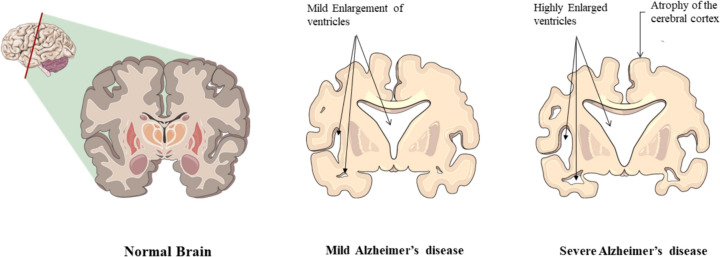
Fig. 1
Fig. 1
Alzheimer's disease development
Fig. 2
Fig. 2
Pathological changes of neurons in AD
Fig. 3
Fig. 3
Processing of APP. (1) Non-amyloidogenic pathway: The enzyme α-secretase breaks down the amyloid precursor protein (APP) to produce extracellularly released, soluble APP. (left). (2) Amyloidogenic pathway: Inside the membrane, β-secretase cleaves APP in the first occurrence, followed by γ-secretase. (right). The proteolytic processing of APP opens the extracellular space through the amyloidogenic pathway, which produces amyloid-β, that is prone to self-aggregation and results in the development of cytotoxic type oligomers and insoluble Aβ fibrils
Fig. 4
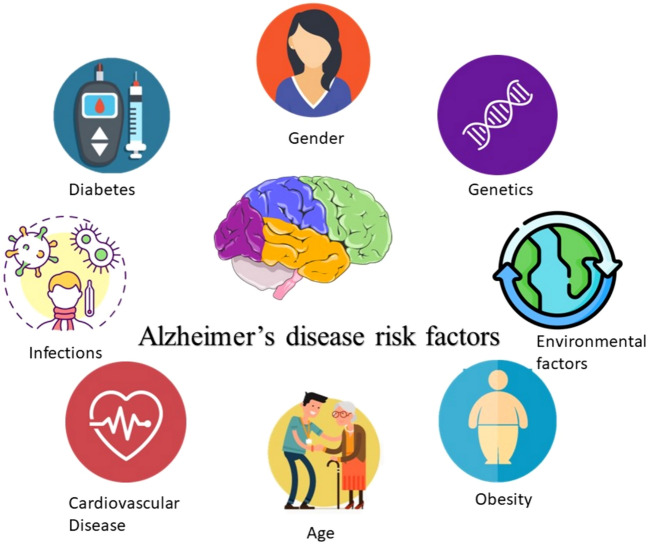
Fig. 4
Factors increasing risk for Alzheimer's disease
Fig. 5
Fig. 5
Chemical Structures of PET scanning agents
Fig. 6
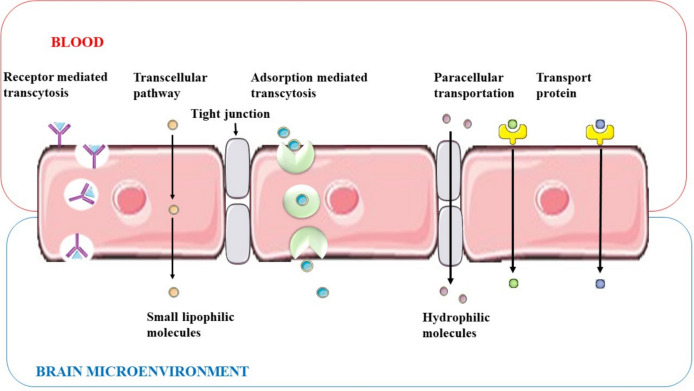
Fig. 6
BBB-mediated solute transport from blood to brain
Fig. 7
Fig. 7
A The number of publications from 2010 to 2023. B The focused scientific keywords from 2010 to 2023
Fig. 8
Fig. 8
Brain-targeted drug delivery system in Alzheimer’s disease
Fig. 9
Fig. 9
Nanoformulations for improved drug delivery across BBB
Fig. 10
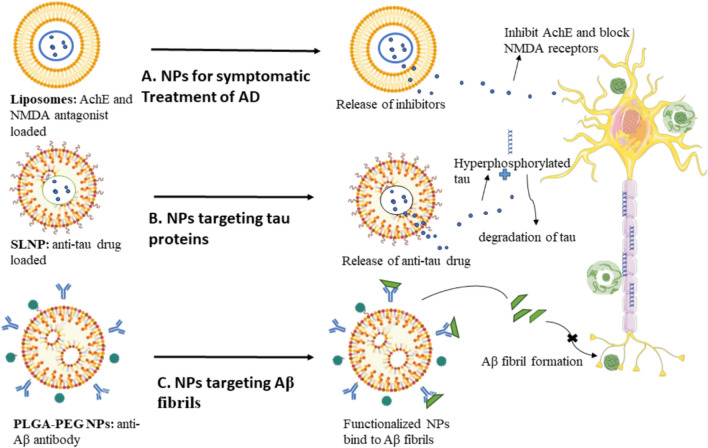
Fig. 10
Comparison of effect of NPs in neurons associated with AD after overcoming the BBB A Liposome with loaded AchE inhibitors targeting cholinergic system impairment, B Functionalized phosphatidylserine in SLNP-loaded anti-tau medication that targets hyperphosphorylated tau Liposomes containing AchE inhibitors that target cholinergic system protein malfunction C Anti-Aβ antibody-coated PLGA-PEG is used to target, solubilize, and remove Aβ fibrils

References

    1. Fish PV, Steadman D, Bayle ED, Whiting P. New approaches for the treatment of Alzheimer's disease. Bioorganic Med Chem Lett. 2019;29:125–133. doi: 10.1016/j.bmcl.2018.11.034. - DOI - PubMed
    1. Noel RL, Batts AJ, Ji R, Pouliopoulos AN, Bae S, Kline-Schoder AR, Konofagou EE. Natural aging and Alzheimer’s disease pathology increase susceptibility to focused ultrasound-induced blood–brain barrier opening. Sci Rep. 2023;13:6757. doi: 10.1038/s41598-023-30466-6. - DOI - PMC - PubMed
    1. Kales HC, Lyketsos CG, Miller EM, Ballard C. Management of behavioral and psychological symptoms in people with Alzheimer's disease: an international Delphi consensus. Int Psychogeriatr. 2019;31:83–90. doi: 10.1017/S1041610218000534. - DOI - PubMed
    1. Chapleau M, Iaccarino L, Soleimani-Meigooni D, Rabinovici GD. The role of amyloid PET in imaging neurodegenerative disorders: a review. J Nucl Med. 2022;63:13S–19S. doi: 10.2967/jnumed.121.263195. - DOI - PMC - PubMed
    1. Vogt A-CS, Jennings GT, Mohsen MO, Vogel M, Bachmann MF. Alzheimer disease: a brief history of immunotherapies targeting amyloid & beta. Int J Mol Sci. 2023;24:3895. doi: 10.3390/ijms24043895. - DOI - PMC - PubMed