


Synapses tagged, memories kept: synaptic tagging and capture hypothesis in brain health and disease
- PMID: 38853570
- PMCID: PMC11343274
- DOI: 10.1098/rstb.2023.0237
Synapses tagged, memories kept: synaptic tagging and capture hypothesis in brain health and disease
Abstract
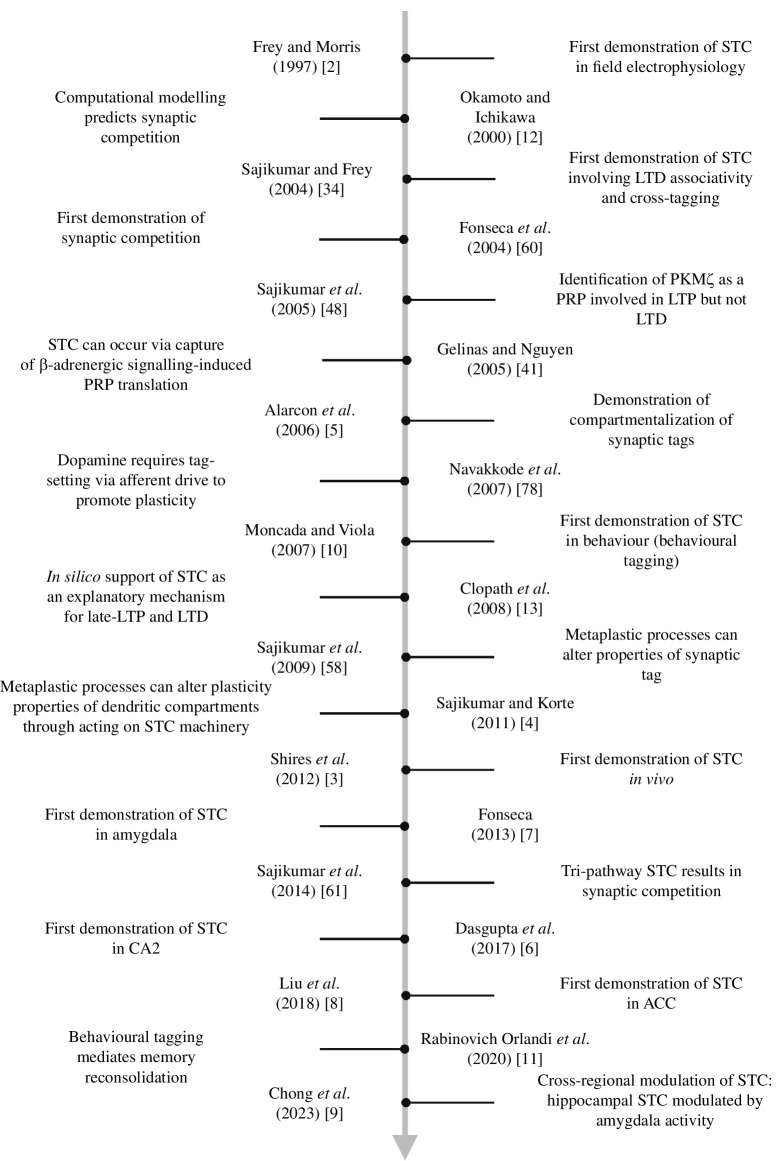
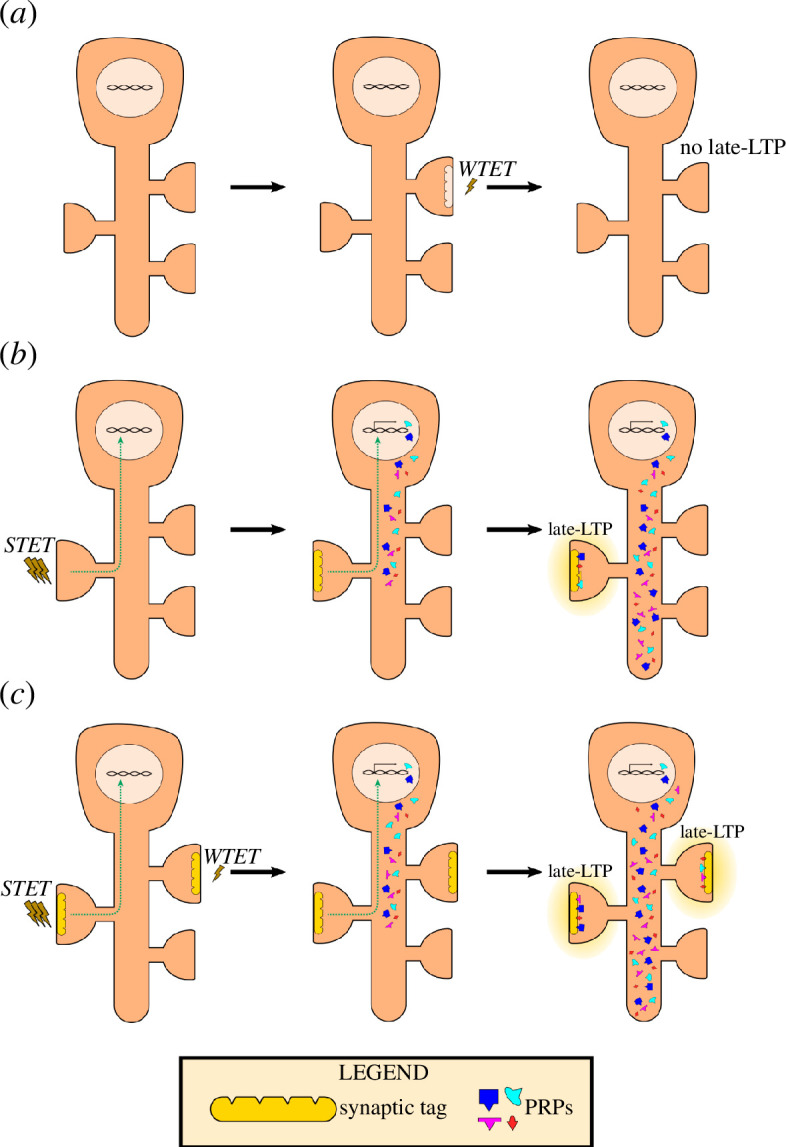
The synaptic tagging and capture (STC) hypothesis lays the framework on the synapse-specific mechanism of protein synthesis-dependent long-term plasticity upon synaptic induction. Activated synapses will display a transient tag that will capture plasticity-related products (PRPs). These two events, tag setting and PRP synthesis, can be teased apart and have been studied extensively-from their electrophysiological and pharmacological properties to the molecular events involved. Consequently, the hypothesis also permits interactions of synaptic populations that encode different memories within the same neuronal population-hence, it gives rise to the associativity of plasticity. In this review, the recent advances and progress since the experimental debut of the STC hypothesis will be shared. This includes the role of neuromodulation in PRP synthesis and tag integrity, behavioural correlates of the hypothesis and modelling in silico. STC, as a more sensitive assay for synaptic health, can also assess neuronal aberrations. We will also expound how synaptic plasticity and associativity are altered in ageing-related decline and pathological conditions such as juvenile stress, cancer, sleep deprivation and Alzheimer's disease. This article is part of a discussion meeting issue 'Long-term potentiation: 50 years on'.
Keywords: Synaptic Tagging; hippocampus; long-term depression; long-term potentiation; memory; synaptic plasticity; synaptic tagging and capture.
Conflict of interest statement
The authors declare no competing interests.
Figures
References
-
- Alarcon JM, Barco A, Kandel ER. 2006. Capture of the late phase of long-term potentiation within and across the apical and basilar dendritic compartments of CA1 pyramidal neurons: synaptic tagging is compartment restricted. J. Neurosci. 26 , 256–264. ( 10.1523/JNEUROSCI.3196-05.2006) - DOI - PMC - PubMed
Publication types
MeSH terms
Grants and funding
LinkOut - more resources
Full Text Sources
Medical
Research Materials
