This is a preprint.
Differential requirement of Formyl Peptide Receptor 1 in macrophages and neutrophils in the host defense against Mycobacterium tuberculosis Infection
- PMID: 38853986
- PMCID: PMC11160921
- DOI: 10.21203/rs.3.rs-4421561/v1
Differential requirement of Formyl Peptide Receptor 1 in macrophages and neutrophils in the host defense against Mycobacterium tuberculosis Infection
Update in
-
Differential requirement of formyl peptide receptor 1 in macrophages and neutrophils in the host defense against Mycobacterium tuberculosis Infection.Sci Rep. 2024 Oct 9;14(1):23595. doi: 10.1038/s41598-024-71180-1. Sci Rep. 2024. PMID: 39384825 Free PMC article.
Abstract
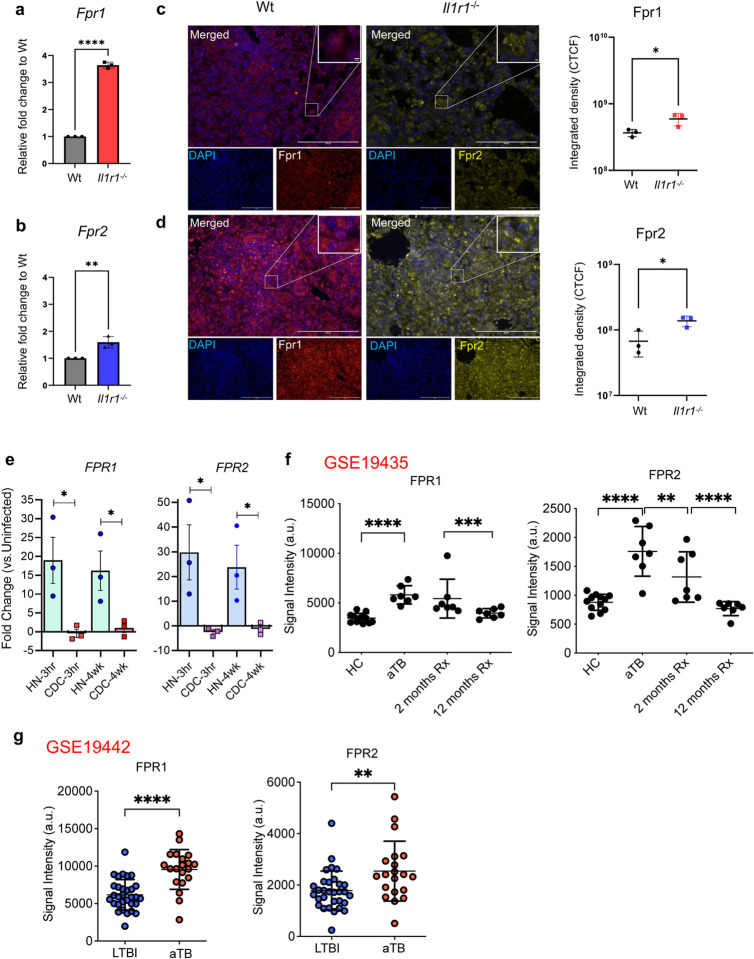
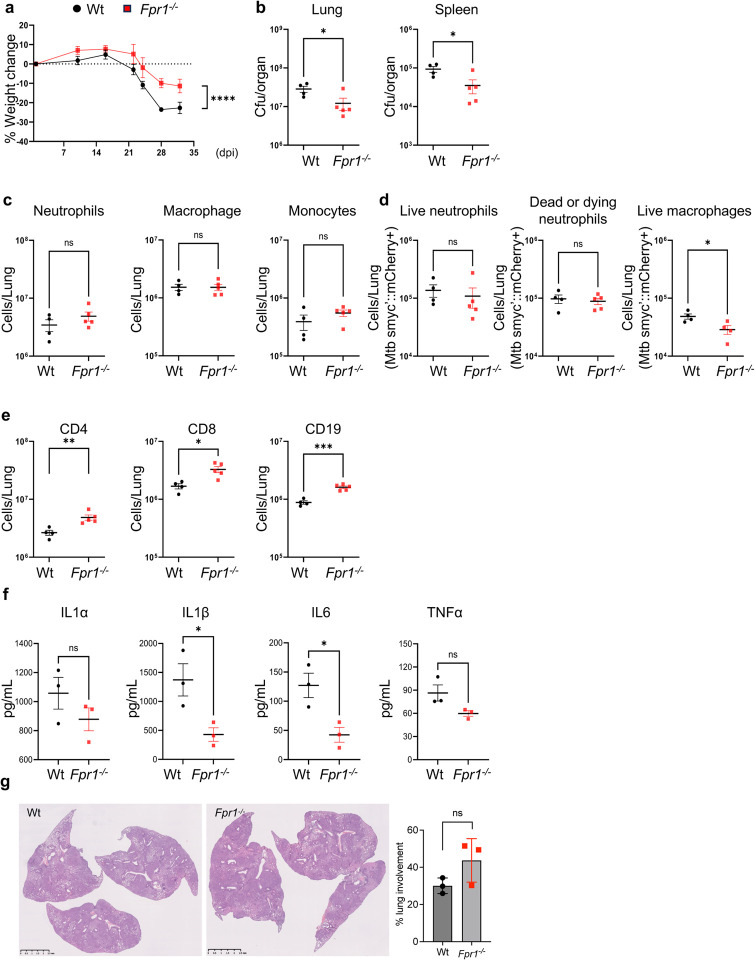
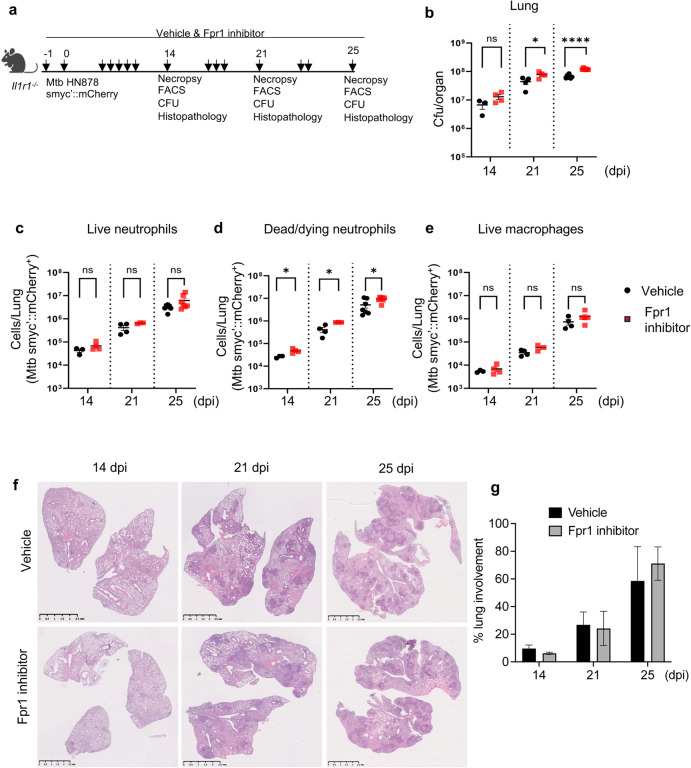
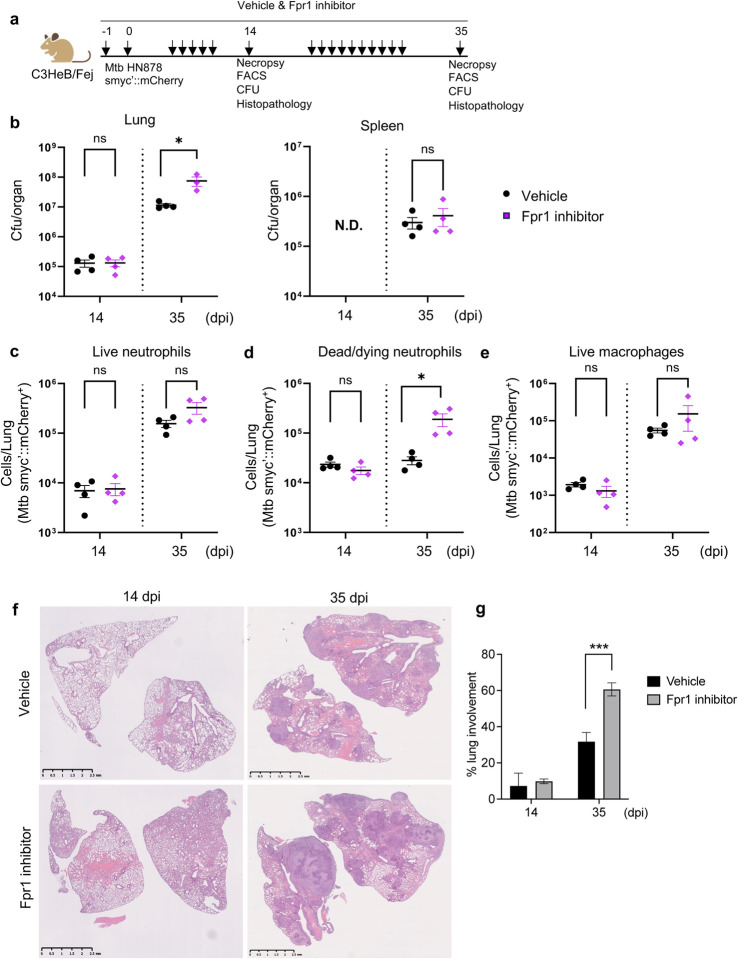
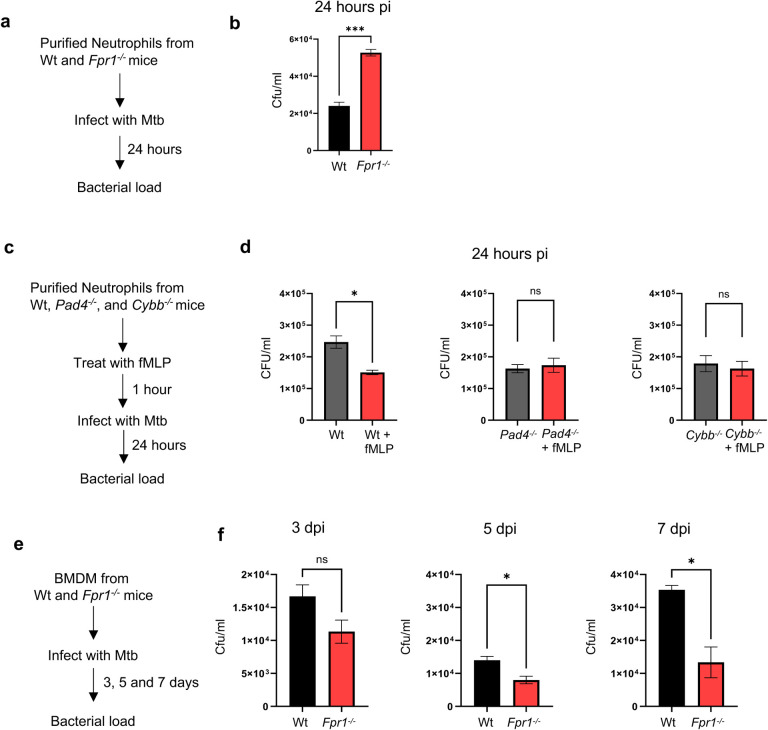
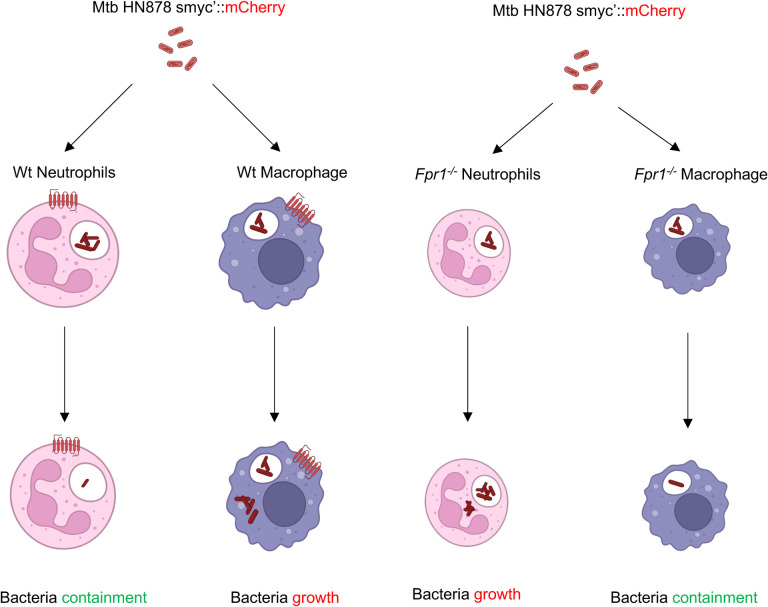
Formyl peptide receptors (FPR), part of the G-protein coupled receptor superfamily, are pivotal in directing phagocyte migration towards chemotactic signals from bacteria and host tissues. Although their roles in acute bacterial infections are well-documented, their involvement in immunity against tuberculosis (TB) remains unexplored. This study investigates the functions of Fpr1 and Fpr2 in defense against Mycobacterium tuberculosis (Mtb), the causative agent of TB. Elevated levels of Fpr1 and Fpr2 were found in the lungs of mice, rabbits and peripheral blood of humans infected with Mtb, suggesting a crucial role in the immune response. The effects of Fpr1 and Fpr2 deletion on bacterial load, lung damage, and cellular inflammation were assessed using a TB model of hypervirulent strain of Mtb from the W-Beijing lineage. While Fpr2 deletion showed no impact on disease outcome, Fpr1-deficient mice demonstrated improved bacterial control, especially by macrophages. Bone marrow-derived macrophages from these Fpr1 -/- mice exhibited an enhanced ability to contain bacterial growth over time. Contrarily, treating genetically susceptible mice with Fpr1-specific inhibitors caused impaired early bacterial control, corresponding with increased bacterial persistence in necrotic neutrophils. Furthermore, ex vivo assays revealed that Fpr1 -/- neutrophils were unable to restrain Mtb growth, indicating a differential function of Fpr1 among myeloid cells. These findings highlight the distinct and complex roles of Fpr1 in myeloid cell-mediated immunity against Mtb infection, underscoring the need for further research into these mechanisms for a better understanding of TB immunity.
Keywords: Formyl peptide receptors; G-protein coupled receptors; Host defense; Immunity; Mycobacterium tuberculosis.
Conflict of interest statement
Competing interests The authors declare no competing interests.
Figures
References
-
- Pai M., Kasaeva T. & Swaminathan S. Covid-19’s Devastating Effect on Tuberculosis Care - A Path to Recovery. N Engl J Med 386, 1490–1493 (2022). - PubMed
-
- Pai M. Tuberculosis: the story after the Primer. Nat Rev Dis Primers 6, 29–2 (2020). - PubMed
-
- Moura-Alves P. et al. AhR sensing of bacterial pigments regulates antibacterial defence. Nature 512, 387–392 (2014). - PubMed
Publication types
Grants and funding
LinkOut - more resources
Full Text Sources