


Sleep Habits and Disturbances Among Tunisian Adults: A Cross-Sectional Online Survey
- PMID: 38854484
- PMCID: PMC11162229
- DOI: 10.2147/NSS.S456879
Sleep Habits and Disturbances Among Tunisian Adults: A Cross-Sectional Online Survey
Abstract
Background: Sleep quality and disturbances have gained heightened scholarly attention due to their well-established association with both mental and physical health. This study aims to assess sleep-wake habits and disturbances in Tunisian adults.
Methodology: This cross-sectional study employed an online questionnaire to assess 3074 adults ≥ 18 years. Primary outcomes, including sleep quality, daytime vigilance, mood, and subjective well-being, were measured using validated questionnaires [the Pittsburgh Sleep Quality Index (PSQI), the Insomnia Severity Index (ISI), the Epworth Sleepiness Scale (ESS), the Patient Health Questionnaire (PHQ)-9, and the World Health Organisation-Five Well-Being Index (WHO-5)].
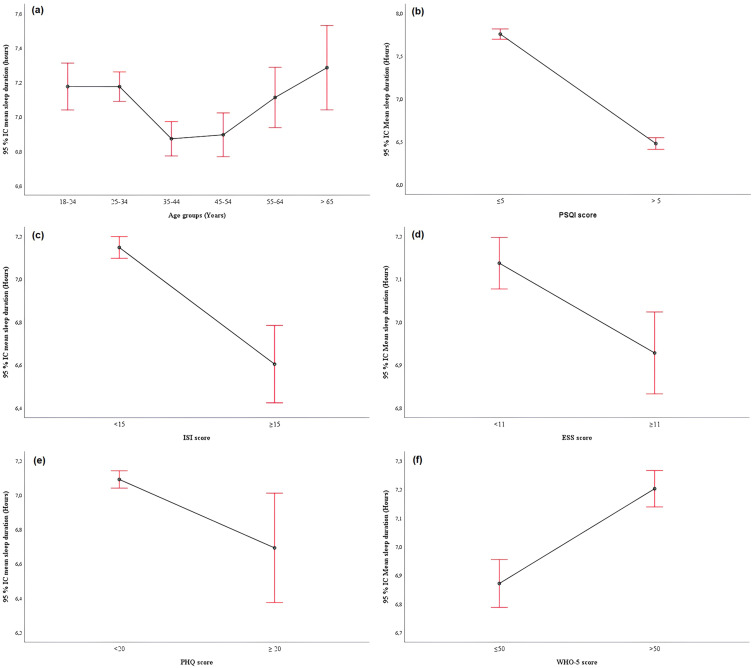
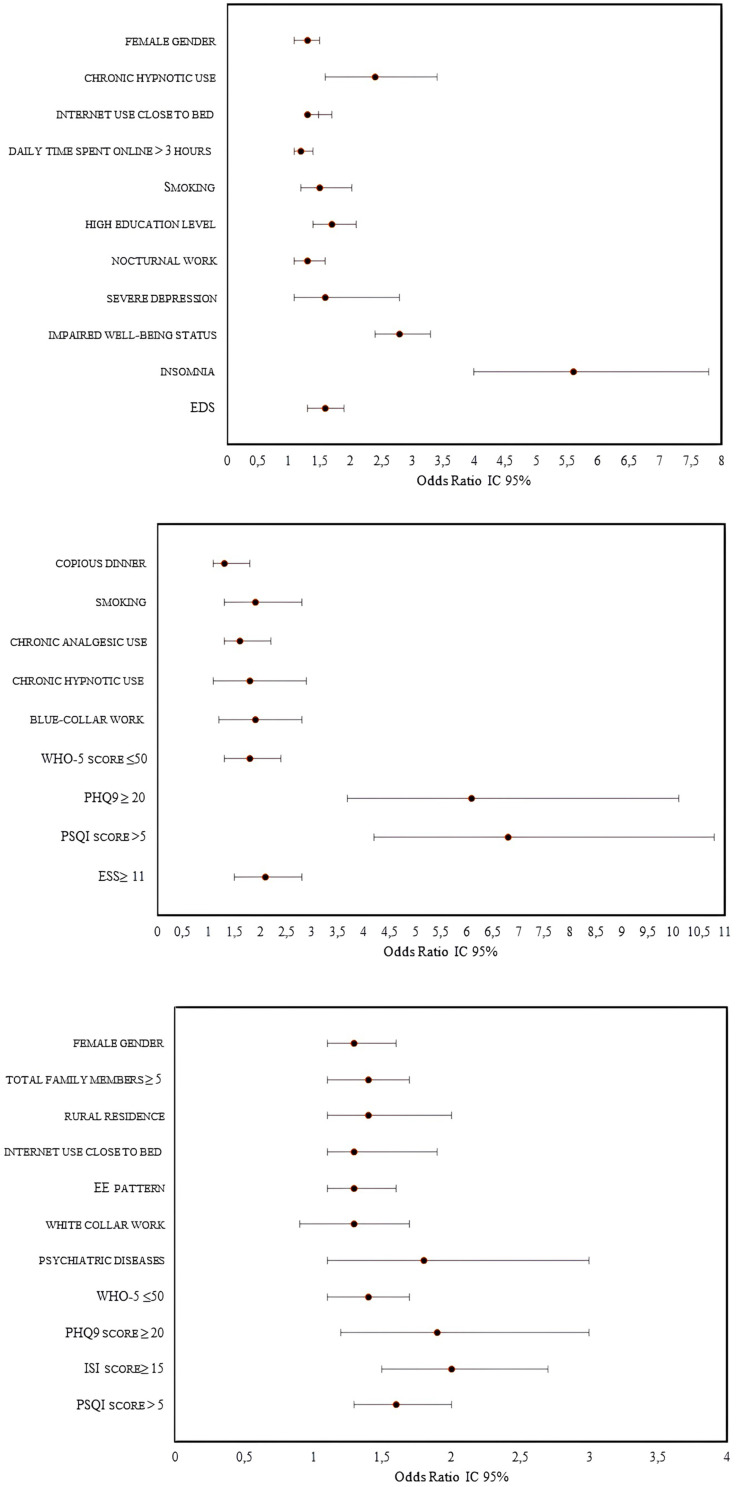
Results: Less than two-thirds (n= 1941; 63.1%) of participants were females and the mean age was 36.25±13.56. The prevalence of poor sleep quality was 53.8% when defined as a PSQI > 5. The prevalence of insomnia, short sleep duration, long sleep duration, EDS, severe depression, and poor well-being were 14.5%, 34.7%, 12.3%, 32.4%, 7.4%, and 40.2%, respectively. Some factors were associated with an increased likelihood of poor sleep quality, including female gender, chronic hypnotics use, internet use close to bedtime, daily time spent on the internet >3 hours, smoking, university- level education, nocturnal work, severe depression, impaired well-being status, insomnia, and EDS.
Conclusion: The high prevalence of sleep-wake disturbances among Tunisian adults emphasizes the need for an appropriate screening strategy for high-risk groups. Individuals with unhealthy habits and routines were significantly more likely to experience these kinds of disturbances. Consequently, there is a pressing need for educational programs on sleep to foster healthier sleep patterns.
Keywords: excessive daytime sleepiness; insomnia; prevalence; risk factors; sleep; sleep quality; wake habits.
© 2024 Msaad et al.
Conflict of interest statement
We have no conflicts of interest to disclose.
Figures
References
-
- CDC Sleep. How Much Sleep Do I Need? Available from: https://www.cdc.gov/sleep/about/index.html.
LinkOut - more resources
Full Text Sources
