P4 Medicine for Heterogeneity of Dry Eye: A Mobile Health-based Digital Cohort Study
- PMID: 38854846
- PMCID: PMC11153075
- DOI: 10.14789/jmj.JMJ22-0032-R
P4 Medicine for Heterogeneity of Dry Eye: A Mobile Health-based Digital Cohort Study
Abstract
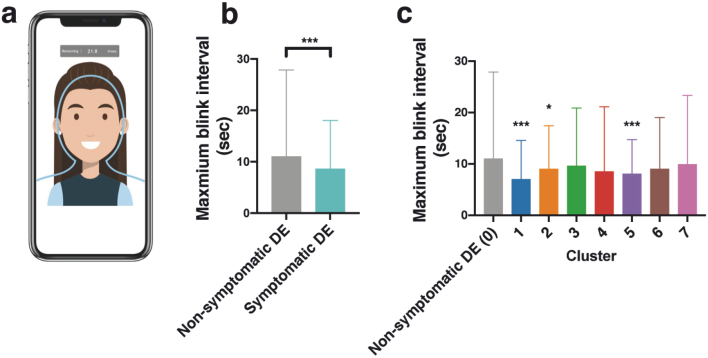
During the 5th Science, Technology, and Innovation Basic Plan, the Japanese government proposed a novel societal concept -Society 5.0- that promoted a healthcare system characterized by its capability to provide unintrusive, predictive, longitudinal care through the integration of cyber and physical space. The role of Society 5.0 in managing our quality of vision will become more important in the modern digitalized and aging society, both of which are known risk factors for developing dry eye. Dry eye is the most common ocular surface disease encountered in Japan with symptoms including increased dryness, eye discomfort, and decreased visual acuity. Owing to its complexity, implementation of P4 (predictive, preventive, personalized, participatory) medicine in managing dry eye requires a comprehensive understanding of its pathology, as well as a strategy to visualize and stratify its risk factors. Using DryEyeRhythm®, a mobile health (mHealth) smartphone software (app), we established a route to collect holistic medical big data on dry eye, such as the subjective symptoms and lifestyle data for each individual. The studies to date aided in determining the risk factors for severe dry eye, the association between major depressive disorder and dry eye exacerbation, eye drop treatment adherence, app-based stratification algorithms based on symptomology, blink detection biosensoring as a dry eye-related digital phenotype, and effectiveness of app-based dry eye diagnosis support compared to traditional methods. These results contribute to elucidating disease pathophysiology and promoting preventive and effective measures to counteract dry eye through mHealth.
Keywords: P4 medicine; big data; dry eye; mobile health; smartphone application.
© 2023 The Juntendo Medical Society.
Conflict of interest statement
The DryEyeRhythmⓇ application was created using Apple's ResearchKit (Cupertino, CA, USA) along with OHAKO, Inc. (Tokyo, Japan) and Medical Logue, Inc. (Tokyo, Japan). TI, YO, and AMI are the owners of InnoJin, Inc. (Tokyo, Japan), which developed DryEyeRhythmⓇ. TI reported receiving grants from Johnson & Johnson Vision Care, SEED Co., Ltd., Novartis Pharma K.K., and Kowa Company, Ltd., outside the submitted work, as well as personal fees from Santen Pharmaceutical Co., Ltd., and InnoJin, Inc. The remaining authors declare no competing interests.
Figures


References
-
- Cabinet Office, Government of Japan: Society 5.0. https://www8.cao.go.jp/cstp/society5_0/ (Accessed May. 7, 2022)
-
- Hood L, Friend SH: Predictive, personalized, preventive, participatory (P4) cancer medicine. Nat Rev Clin Oncol. 2011; 8: 184-187. - PubMed
-
- Inomata T, Sung J, Nakamura M, et al. : Using Medical Big Data to Develop Personalized Medicine for Dry Eye Disease. Cornea. 2020; 39 Suppl 1: S39-46. - PubMed
-
- Inomata T, Sung J, Nakamura M, et al. : New medical big data for P4 medicine on allergic conjunctivitis. Allergol Int. 2020; 69: 510-518. - PubMed
-
- Inomata T, Sung J, Nakamura M, et al. : Cross-hierarchical Integrative Research Network for Heterogenetic Eye Disease Toward P4 Medicine: A Narrative Review. Juntendo Med J. 2021; 67: 519-529.