


Exploring the rules of related parameters in acupuncture for post-stroke dysphagia based on data mining
- PMID: 38854959
- PMCID: PMC11160137
- DOI: 10.3389/fneur.2024.1394348
Exploring the rules of related parameters in acupuncture for post-stroke dysphagia based on data mining
Abstract
Background: Post-stroke dysphagia (PSD) affects the efficacy and safety of swallowing, causing serious complications. Acupuncture is a promising and cost-effective treatment for PSD; however, as the number of randomized controlled trials increases, scientific analysis of the parameters and acupoint prescription is required. Therefore, this study aimed to explore the effects of acupuncture on parameters related to post-stroke dysphagia (PSD).
Methods: We searched the Cochrane Library, PubMed, Embase, Web of Science, China National Knowledge Infrastructure, Wanfang Database, Chinese Biomedical Literature, and Chongqing VIP Database for randomized controlled trials of acupuncture for PSD in the last 15 years and relevant parameters were analyzed using data mining techniques.
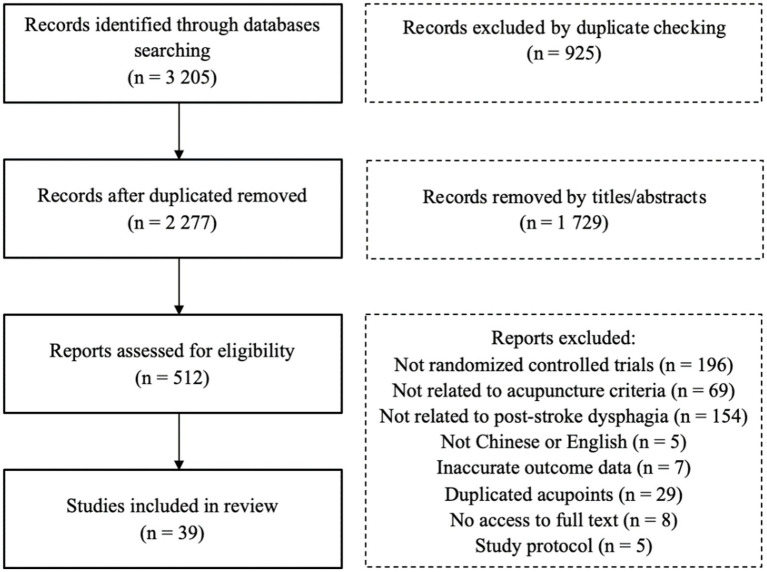
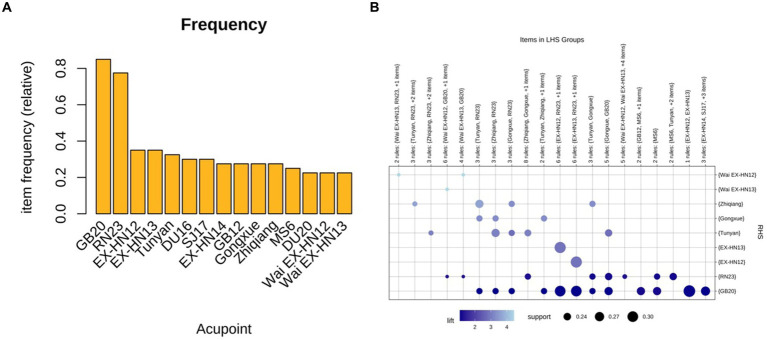
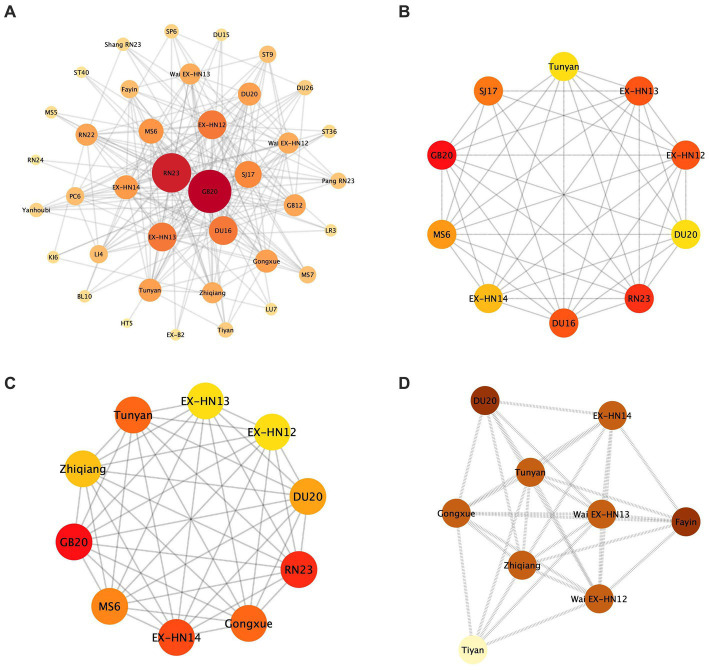
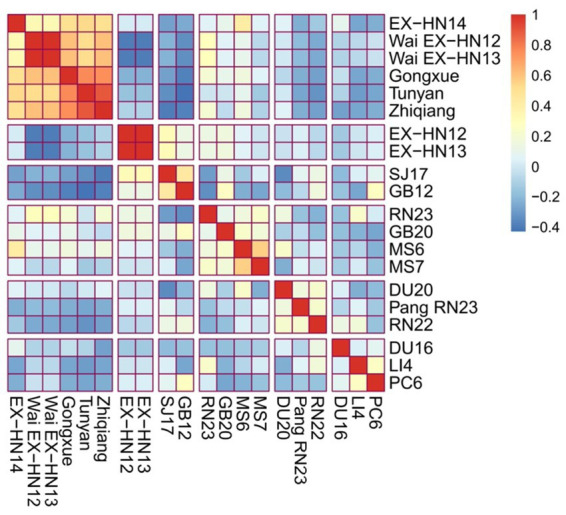
Results: In total, 3,205 records were identified, of which 3,507 patients with PSD were included in 39 studies. The comprehensive analysis demonstrated that the closest parameter combinations of acupuncture on PSD were 0.25 mm × 40 mm needle size, 30 min retention time, five treatments per week, and a 4-week total course of treatment. Additionally, the gallbladder and nontraditional meridians, crossing points, and head and neck sites are the most commonly used acupoint parameters. The core acupoints identified were GB20, RN23, EX-HN14, Gongxue, MS6, SJ17, EX-HN12, EX-HN13, and the commonly used combination of EX-HN12, EX-HN13, GB20, and RN23.
Conclusion: This study analyzed the patterns of PSD-related needling and acupoint parameters to provide evidence-based guidelines for clinical acupuncturists in treating PSD, potentially benefitting affected patients.
Keywords: EX-HN14; Gongxue; MS6; acupuncture; data mining RN23; dysphagia; parameter; stroke.
Copyright © 2024 Wu, Song, Wang, Tang, Gao and Zhu.
Conflict of interest statement
The authors declare that the research was conducted in the absence of any commercial or financial relationships that could be construed as a potential conflict of interest.
Figures
References
-
- Dziewas R, Michou E, Trapl-Grundschober M, Lal A, Arsava EM, Bath PM, et al. . European Stroke Organisation and European Society for Swallowing Disorders guideline for the diagnosis and treatment of post-stroke dysphagia. Eur Stroke J. (2021) 6:LXXXIX-CXV. doi: 10.1177/23969873211039721, PMID: - DOI - PMC - PubMed
Publication types
LinkOut - more resources
Full Text Sources
