


Trait-specific sensitive developmental windows: Wing growth best integrates weather conditions encountered throughout the development of nestling Alpine swifts
- PMID: 38855314
- PMCID: PMC11156578
- DOI: 10.1002/ece3.11491
Trait-specific sensitive developmental windows: Wing growth best integrates weather conditions encountered throughout the development of nestling Alpine swifts
Abstract
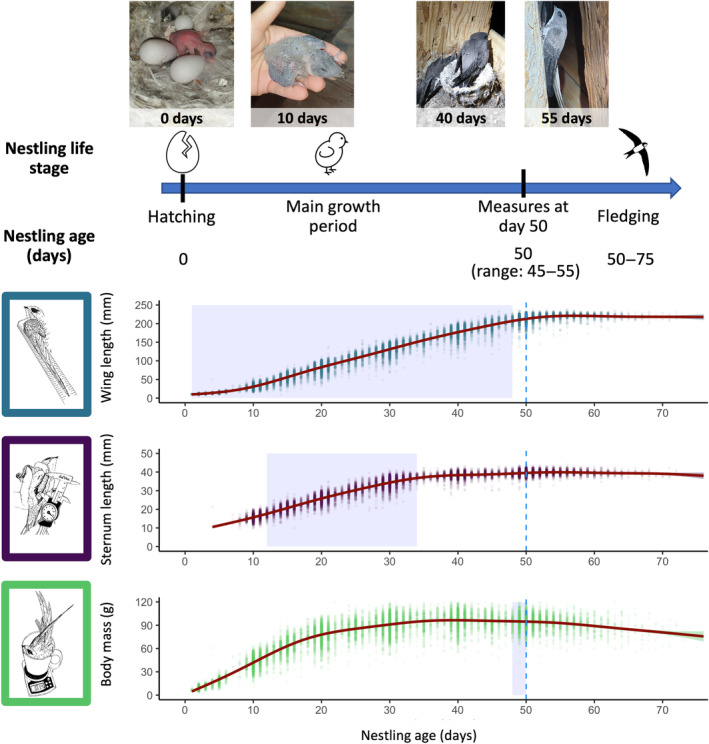
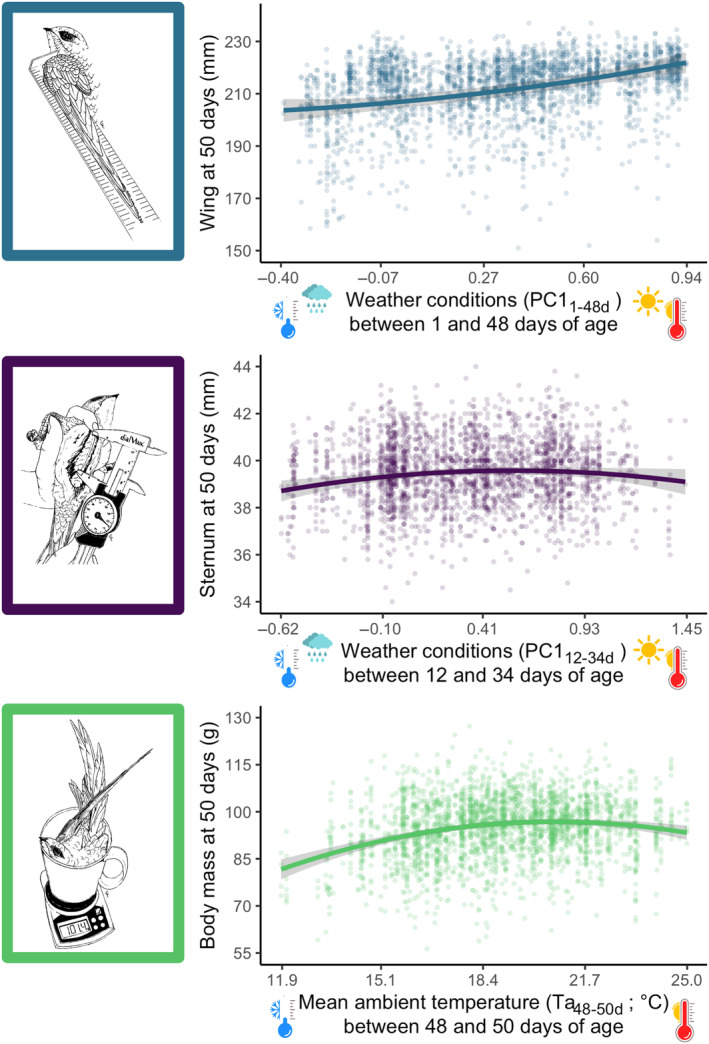
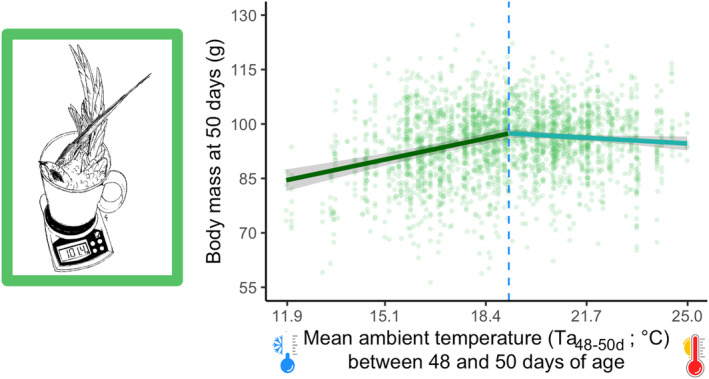
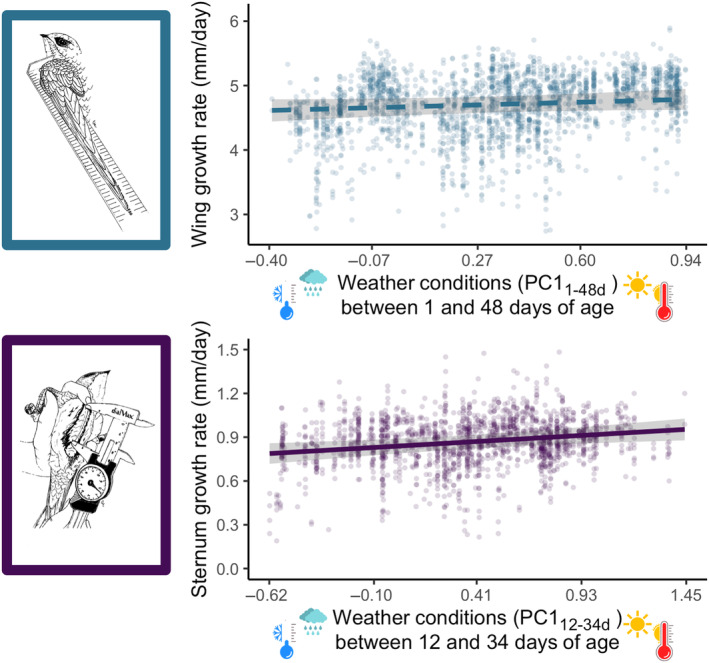
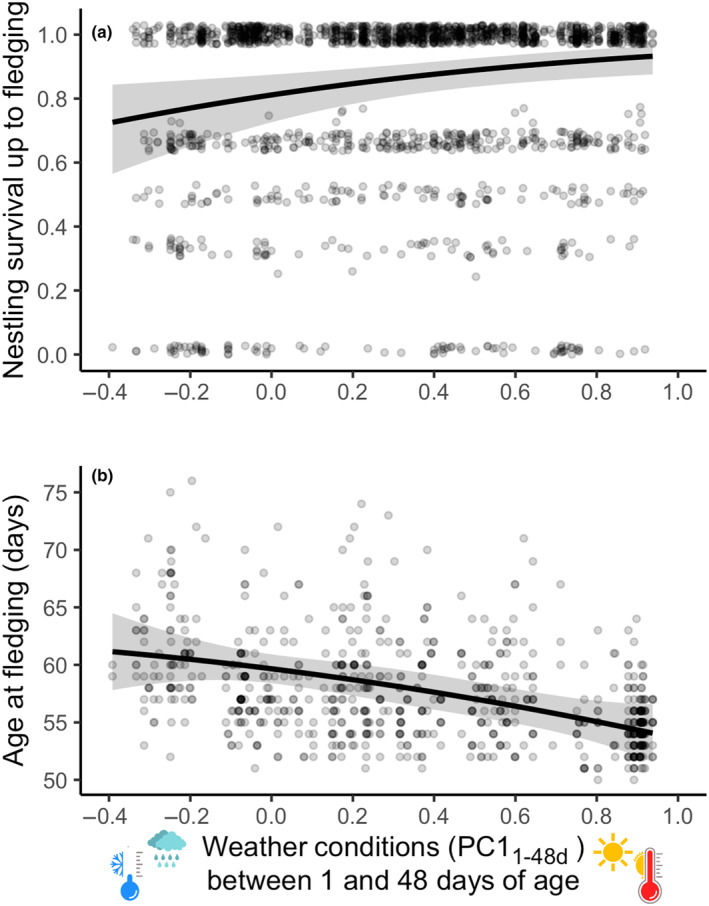
The size and growth patterns of nestling birds are key determinants of their survival up to fledging and long-term fitness. However, because traits such as feathers, skeleton and body mass can follow different developmental trajectories, our understanding of the impact of adverse weather on development requires insights into trait-specific sensitive developmental windows. We analysed data from nestling Alpine swifts in Switzerland measured throughout growth up to the age of 50 days (i.e. fledging between 50 and 70 days), for wing length and body mass (2693 nestlings in 25 years) and sternum length (2447 nestlings in 22 years). We show that the sensitive developmental windows for wing and sternum length corresponded to the periods of trait-specific peak growth, which span almost the whole developmental period for wings and the first half for the sternum. Adverse weather conditions during these periods slowed down growth and reduced size. Although nestling body mass at 50 days showed the greatest inter-individual variation, this was explained by weather in the two days before measurement rather than during peak growth. Interestingly, the relationship between temperature and body mass was not linear, and the initial sharp increase in body mass associated with the increase in temperature was followed by a moderate drop on hot days, likely linked to heat stress. Nestlings experiencing adverse weather conditions during wing growth had lower survival rates up to fledging and fledged at later ages, presumably to compensate for slower wing growth. Overall, our results suggest that measures of feather growth and, to some extent, skeletal growth best capture the consequences of adverse weather conditions throughout the whole development of offspring, while body mass better reflects the short, instantaneous effects of weather conditions on their body reserves (i.e. energy depletion vs. storage in unfavourable vs. favourable conditions).
Keywords: Apodiformes; Tachymarptis(Apus)melba; climate change; early‐life conditions; feathers; heat stress; meteorological conditions; multi‐trait; offspring development.
© 2024 The Author(s). Ecology and Evolution published by John Wiley & Sons Ltd.
Figures
References
-
- Aldredge, R. A. (2016). Using non‐linear mixed effects models to identify patterns of chick growth in house sparrows Passer domesticus . Ibis, 158(1), 16–27. 10.1111/ibi.12312 - DOI
-
- Arbeiter, S. , Schulze, M. , Tamm, P. , & Hahn, S. (2016). Strong cascading effect of weather conditions on prey availability and annual breeding performance in European bee‐eaters Merops apiaster . Journal für Ornithologie, 157(1), 155–163. 10.1007/s10336-015-1262-x - DOI
-
- Arendt, J. (1997). Adaptive intrinsic growth rates: An integration across taxa. The Quarterly Review of Biology, 72, 149–177. 10.1086/419764 - DOI
-
- Arnold, K. E. , Blount, J. D. , Metcalfe, N. B. , Orr, K. J. , Adam, A. , Houston, D. , & Monaghan, P. (2007). Sex‐specific differences in compensation for poor neonatal nutrition in the zebra finch Taeniopygia guttata . Journal of Avian Biology, 38(3), 356–366. 10.1111/j.0908-8857.2007.03818.x - DOI
LinkOut - more resources
Full Text Sources
