


Round and flat zygomatic implants: effectiveness after a 3‑year follow‑up non‑interventional study
- PMID: 38856876
- PMCID: PMC11164844
- DOI: 10.1186/s40729-024-00548-9
Round and flat zygomatic implants: effectiveness after a 3‑year follow‑up non‑interventional study
Abstract
Purpose: This non-interventional study investigates variations in the type and frequency of late complications linked to novel zygomatic implant designs, installed adhering to the Zygoma Anatomy-Guided Approach (ZAGA) concept, over an extended follow-up period of at least 3 years.
Methods: Consecutive patients presenting indications for treatment with ZIs were treated according to ZAGA recommendations. Implants were immediately loaded. The ORIS success criteria for prosthetic offset, stability, sinus changes and soft-tissue status were used to evaluate the outcome.
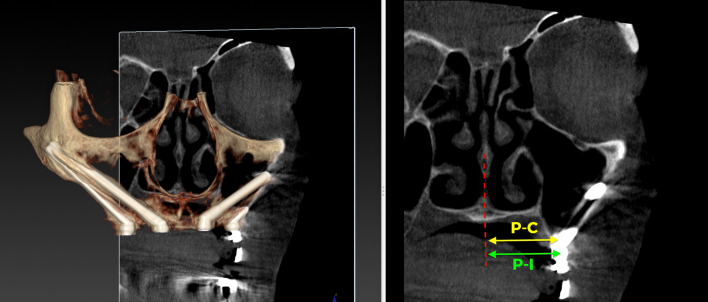
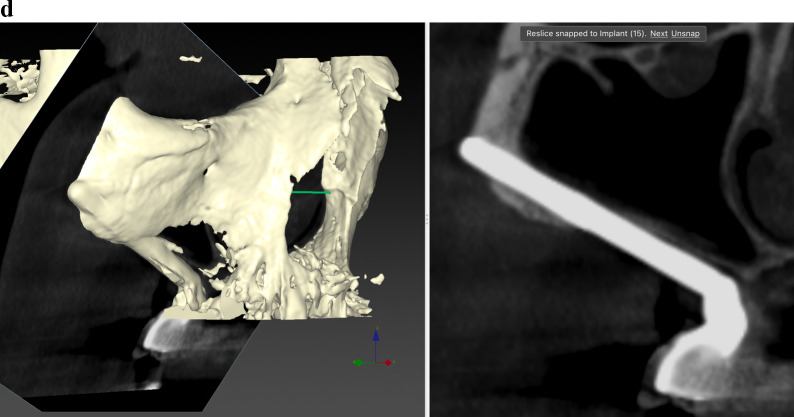
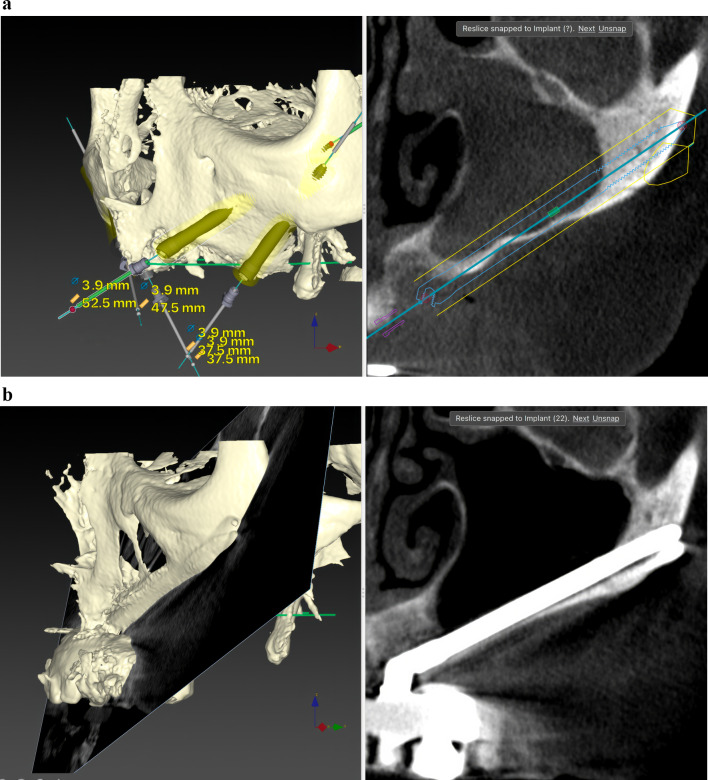
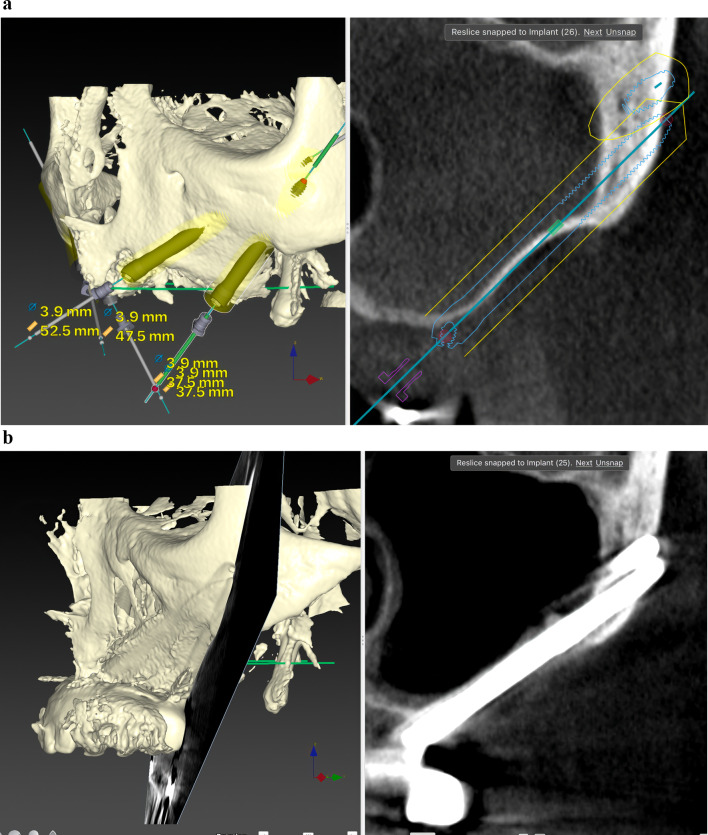
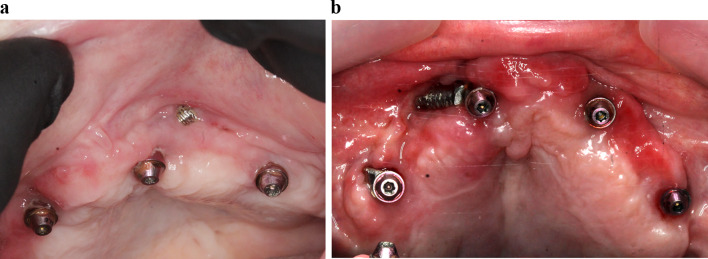
Results: Twenty patients were treated. Ten patients received two ZIs and regular implants; one received three ZIs plus regular implants, and nine received four ZIs. Fifty-nine ZIs were placed: thirty-six (61%) Straumann ZAGA-Flat implants and twenty-three (39%) Straumann ZAGA-Round implants. Four patients (20%) presented earlier sinus floor discontinuities. Fifteen patients (75%) had prior sinus opacities. Nineteen patients were followed for between 38 and 53 months (mean 46.5 months). One patient dropped out after 20 months. When comparing pre-surgical CBCT with post-surgical CBCT, 84.7% of the sites presented identical or less sinus opacity; nine locations (15%) showed decreased, and another nine increased (15%) post-surgical sinus opacity. Fifty-three ZIs (89.8%) maintained stable soft tissue. Six ZIs had recessions with no signs of infection. ZIs and prosthesis survival rate was 100%.
Conclusions: The study highlights the effectiveness of ZAGA-based zygomatic implant rehabilitations using Round and Flat designs. Despite patient number constraints, minimal changes in the frequency of late complications from the 1-year follow-up were observed. 100% implant and prosthesis survival rate over a mean follow-up of 46.5 months is reported.
Keywords: ORIS criteria; ZAGA; ZAGA implants; ZAGA-flat; ZAGA-round; Zygomatic implant late complications; Zygomatic implants.
© 2024. The Author(s).
Conflict of interest statement
Carlos Aparicio is the founding president of Zygoma ZAGA Centers and occasionally provides CE activities for NobelBiocare, Straumann Group, SouthernImplants and Versah Osseodensification Company. Waldemar Polido occasionally performs CE activities for Straumann Group and Geistlich Biomaterials. Bilal Al-Nawas occasionally performs CE activities and obtains research grants for StraumannGroup, BEGO, Camlog, Dentsply and Geistlich Biomaterials. All other authors declare that they have no conflicts of interest.
Figures




References
-
- Aparicio C, Branemark PI, Keller EE, Olivé J. Reconstruction of the premaxilla with autogenous lliac bone in combination with osseointegrated implants. Int J Oral Maxillofac Implants. 1993;8:1–15.
-
- Jensen OT, Brownd C, Blacker J. Nasofacial prostheses supported by osseointegrated implants. Int J Oral Maxillofac Implants. 1992;7(2):203–211. - PubMed
-
- Sáez-Alcaide LM, Cortés-Bretón-Brinkmann J, Sánchez-Labrador L, Pérez-González F, Forteza-López A, Molinero-Mourelle P, et al. Patient-reported outcomes in patients with severe maxillary bone atrophy restored with zygomatic implant-supported complete dental prostheses: a systematic review. Acta Odontol Scand. 2022;80(5):363–373. doi: 10.1080/00016357.2021.2018494. - DOI - PubMed
MeSH terms
Substances
LinkOut - more resources
Full Text Sources
