


Physical working conditions over time: a repeated cross-sectional study in German employees
- PMID: 38858744
- PMCID: PMC11165766
- DOI: 10.1186/s12995-024-00423-8
Physical working conditions over time: a repeated cross-sectional study in German employees
Abstract
Background: This study aimed to examine time trends in physical working conditions across and within occupational groups in Germany between 2006 and 2018.
Methods: Logistic regression analyses were conducted using data from the BIBB/BAuA Employment Surveys in 2006, 2012, and 2018, with a total sample size of 59,006 participants. The study investigated changes in various self-reported occupational exposure measures over time, along with demographic shifts in the workforce.
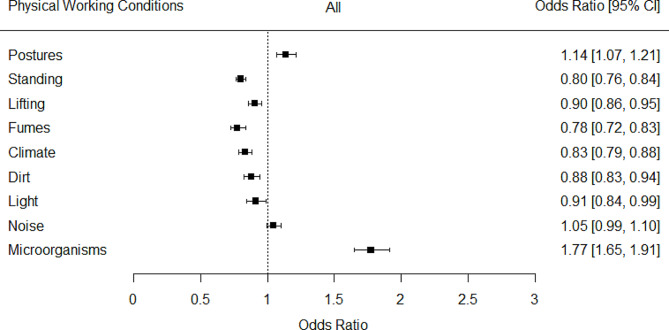
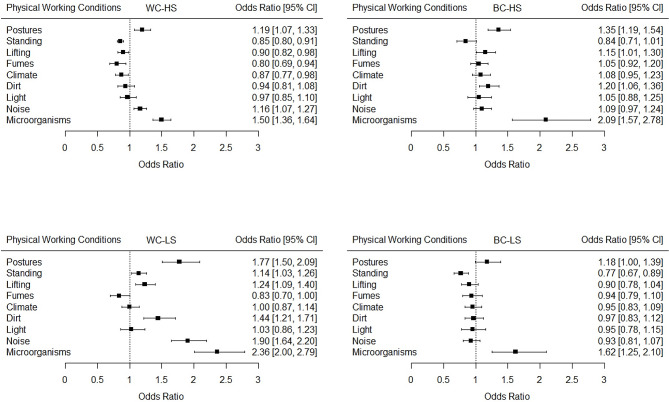
Results: The results showed overall improvements in most occupational exposure measures during the study period, alongside an aging and upskilling workforce. However, exposure to awkward postures, microorganisms, and, to a lesser extent, noise increased. Substantial variation was observed between occupational groups, with more favourable trends among white-collar high-skilled and blue-collar low-skilled workers, and less favourable trends among white-collar low-skilled and blue-collar high-skilled workers.
Conclusions: While trends in physical working conditions in Germany are partly promising, some exposures are worsening, and substantial inequalities between occupations persist. As occupational exposures remain common, there is still a need for targeted interventions to improve working conditions, particularly in higher-risk occupations.
Keywords: Inequality; Occupational Health; Trends; Working conditions.
© 2024. The Author(s).
Conflict of interest statement
The authors declare no competing interests.
Figures
References
LinkOut - more resources
Full Text Sources
Research Materials
