


Alpha-lipoic acid upregulates the PPARγ/NRF2/GPX4 signal pathway to inhibit ferroptosis in the pathogenesis of unexplained recurrent pregnancy loss
- PMID: 38859880
- PMCID: PMC11163161
- DOI: 10.1515/med-2024-0963
Alpha-lipoic acid upregulates the PPARγ/NRF2/GPX4 signal pathway to inhibit ferroptosis in the pathogenesis of unexplained recurrent pregnancy loss
Abstract
Aim: With unknown etiology and limited treatment options, unexplained recurrent pregnancy loss (URPL) remains a thorny problem. Ferroptosis, a newly identified type of cell death, has been shown to be crucial in the development in reproductive disorders. This study aims to explore the specific mechanism of ferroptosis in URPL and to uncover whether alpha-lipoic acid (ALA) can inhibit ferroptosis, and then exert a protective effect in URPL.
Method: The decidua tissues of URPL and control patients who actively terminated pregnancy were collected. The CBA/J × DBA/2 murine models of URPL were established, and were randomly treated with peroxisome proliferator activated receptor γ (PPARγ) agonists (Rosiglitazone) and ALA. The CBA/J × BALB/c murine models of normal pregnancy were intraperitoneally injected with PPARγ inhibitors (T0070907). Here, we used reactive oxygen species (ROS), malondialdehyde (MDA), glutathione (GSH)/GSSG, and FeRhoNox-1 analysis to detect the level of ferroptosis. We used quantitative real-time reverse transcription polymerase chain reaction (qRT-PCR) analysis to evaluate the mRNA level of PPARγ. Besides, western blot and immunofluorescence were utilized to test the expression profile of PPARγ/nuclear factor erythroid 2-related factor 2 (NRF2)/glutathione peroxidase 4 (GPX4).
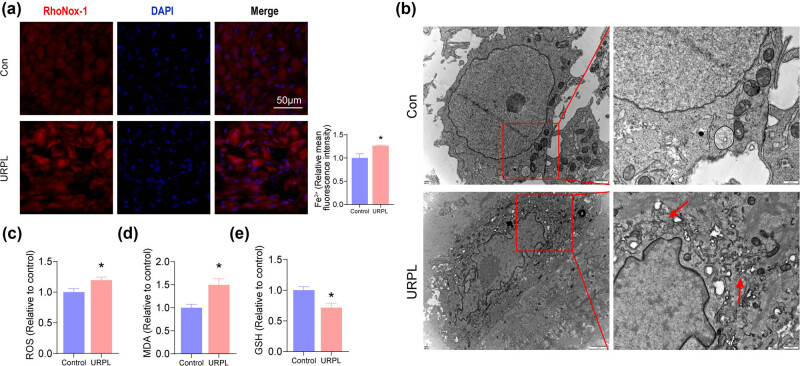
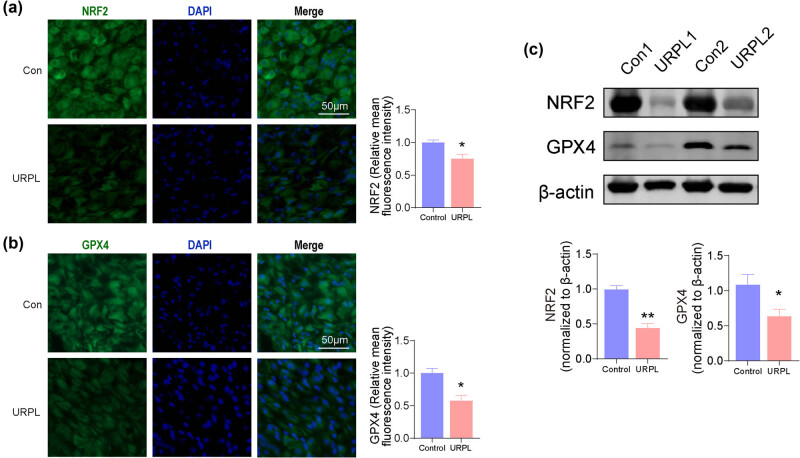
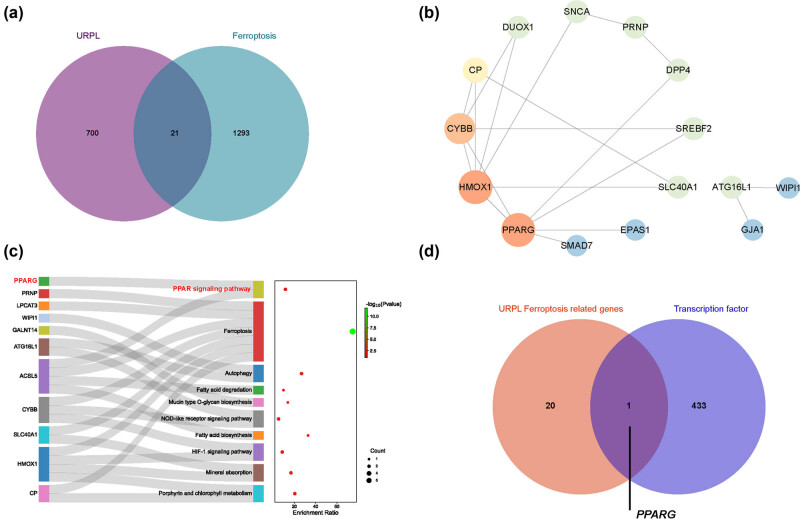
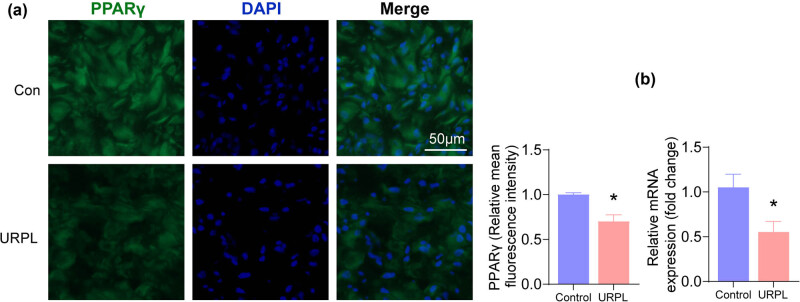
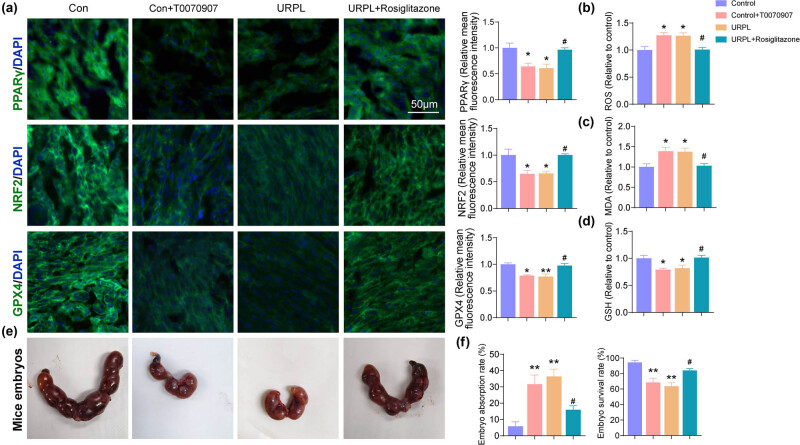
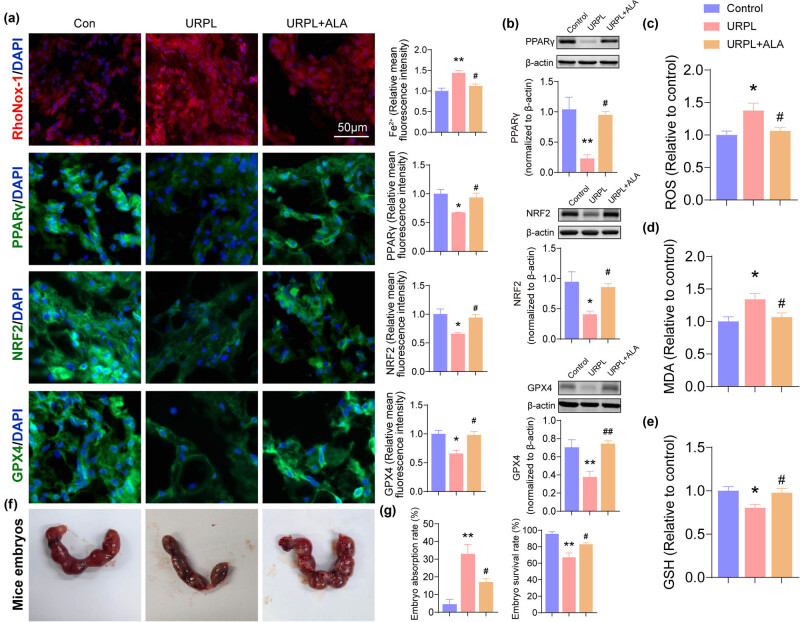
Results: In this study, we found that iron deposition was increased in the decidual tissue of patients with URPL. Additionally, the changes in cell morphology, the level of ROS, MDA, GSH, and the expression of ferroptosis marker proteins NRF2/GPX4 confirmed activated ferroptosis in URPL. Besides, bioinformatics analysis combined with experiments confirmed that PPARγ was critical in triggering NRF2/GPX4 pathway in URPL. Furthermore, URPL mouse models were established, and the results showed that PPARγ/NRF2/GPX4-mediated ferroptosis was also significantly increased, which could be mitigated by ALA treatment.
Conclusion: Overall, these findings suggest that ferroptosis may play an important role in URPL, and ALA might be a promising therapeutic drug for improving pregnancy outcomes in URPL via targeting the PPARγ/NRF2/GPX4 pathway.
Keywords: PPARγ/NRF2/GPX4; alpha-lipoic acid; ferroptosis; unexplained recurrent pregnancy loss.
© 2024 the author(s), published by De Gruyter.
Conflict of interest statement
Conflict of interest: On behalf of all authors, the corresponding author states that there are no conflicts of interest.
Figures
Similar articles
-
Yi-qi-hua-yu-jie-du decoction induces ferroptosis in cisplatin-resistant gastric cancer via the AKT/GSK3β/NRF2/GPX4 axis.Phytomedicine. 2024 Jan;123:155220. doi: 10.1016/j.phymed.2023.155220. Epub 2023 Nov 18. Phytomedicine. 2024. PMID: 38056149
-
[Role of Nrf2/GPX4 mediated ferroptosis in intestinal injury in sepsis].Zhonghua Wei Zhong Bing Ji Jiu Yi Xue. 2023 Nov;35(11):1188-1194. doi: 10.3760/cma.j.cn121430-20230616-00451. Zhonghua Wei Zhong Bing Ji Jiu Yi Xue. 2023. PMID: 37987130 Chinese.
-
Maresin-1 inhibits high glucose induced ferroptosis in ARPE-19 cells by activating the Nrf2/HO-1/GPX4 pathway.BMC Ophthalmol. 2023 Sep 6;23(1):368. doi: 10.1186/s12886-023-03115-9. BMC Ophthalmol. 2023. PMID: 37674121 Free PMC article.
-
Astragaloside IV regulates the ferroptosis signaling pathway via the Nrf2/SLC7A11/GPX4 axis to inhibit PM2.5-mediated lung injury in mice.Int Immunopharmacol. 2022 Nov;112:109186. doi: 10.1016/j.intimp.2022.109186. Epub 2022 Sep 15. Int Immunopharmacol. 2022. PMID: 36115280 Review.
-
Ferroptosis in radiation-induced brain injury: roles and clinical implications.Biomed Eng Online. 2024 Sep 11;23(1):93. doi: 10.1186/s12938-024-01288-y. Biomed Eng Online. 2024. PMID: 39261942 Free PMC article. Review.
Cited by
-
Ferroptosis and recurrent miscarriage: a critical review of pathophysiology and emerging therapeutic targets.Front Cell Dev Biol. 2025 Jun 9;13:1559300. doi: 10.3389/fcell.2025.1559300. eCollection 2025. Front Cell Dev Biol. 2025. PMID: 40552306 Free PMC article. Review.
References
LinkOut - more resources
Full Text Sources