


Understanding the olfactory role in post-COVID cognitive and neuropsychiatric manifestations
- PMID: 38860043
- PMCID: PMC11164098
- DOI: 10.3389/fpsyg.2024.1407887
Understanding the olfactory role in post-COVID cognitive and neuropsychiatric manifestations
Abstract
Introduction: Olfactory dysfunction (OD) is frequent after SARS-CoV-2 infection. The aim of this study was to examine if long-term OD is common in post-COVID condition, and the relationship between olfaction, cognition, neuropsychiatric symptoms, and disease duration in these patients.
Methods: This study included 121 participants with post-COVID condition and 51 healthy controls (HC). A comprehensive neuropsychological and neuropsychiatric assessment was conducted, encompassing various domains, including general cognition, processing speed, verbal fluency, attention, verbal memory, visual memory, visuoconstructive ability, visuospatial ability, abstraction, executive functions, anxious-depressive symptoms, general health perception, fatigue level, sleep quality, and olfaction. Statistical analyses were carried out to understand the relationship of OD with cognition, and its role as moderator variable.
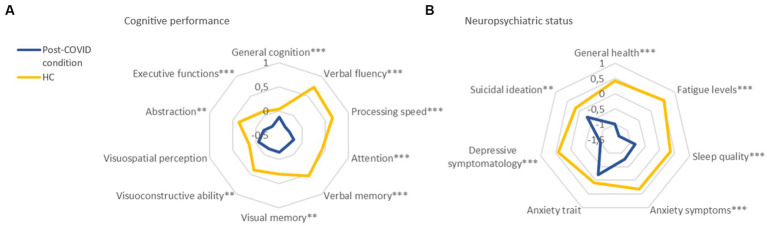
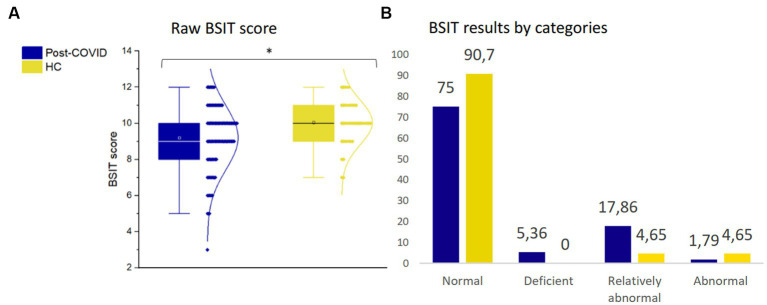
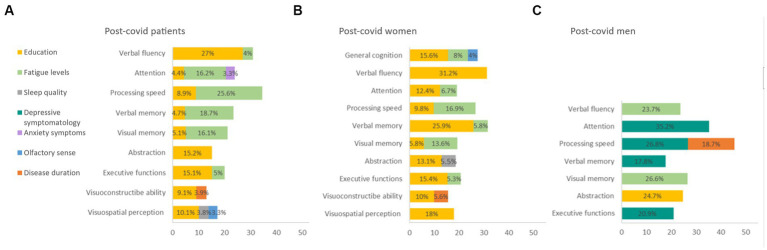
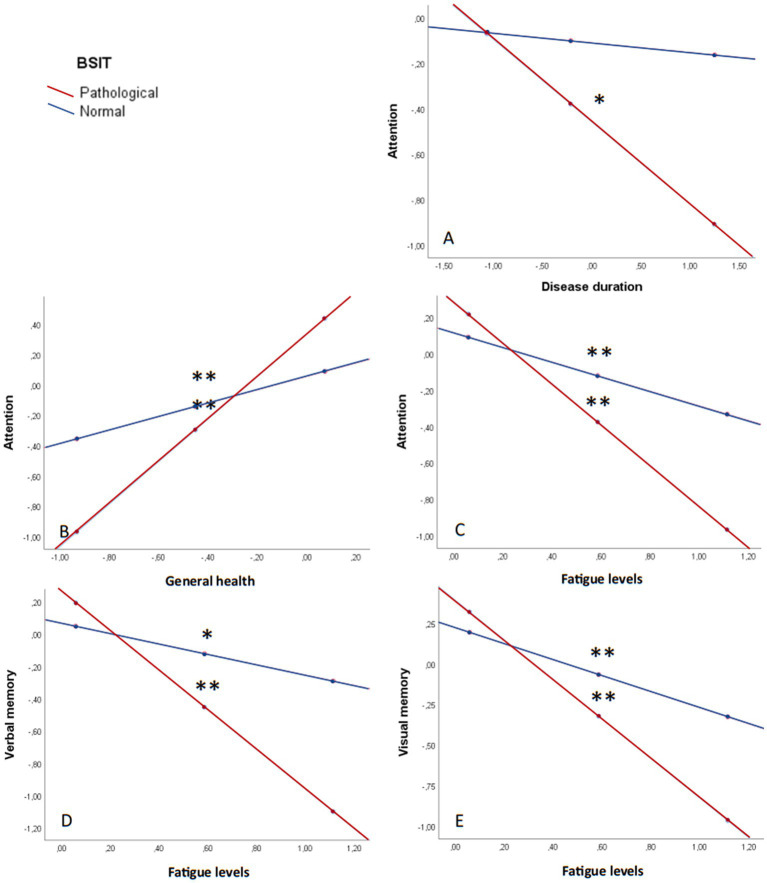
Results: In total, 25% of the post-covid patients had a reduced smell capacity, while only 9.3% of HC presented OD. Post-COVID patients had statistically significantly worse cognitive performance and clinical status than HC. Verbal fluency (AUC = 0.85, p < 0.001), and attention (AUC = 0.82, p < 0.001) were the variables that best discriminate between groups. OD seemed to be a moderator between fatigue and cognition, and between disease duration and attention (β = -0.04; p = 0.014).
Discussion: The study highlights marked cognitive and neuropsychiatric sequelae in individuals post-COVID relative to HC. Olfactory impairment exhibits correlations with both cognitive performance and general health. Olfaction emerges as a potential prognostic marker owing to its moderating influence on disease severity indicators.
Keywords: cognition; neuropsychiatry; neuropsychology; olfaction; post-covid condition.
Copyright © 2024 Azcue, Del Pino, Saenz de Argandoña, Ortiz de Echevarría, Acera, Fernández-Valle, Ayo-Mentxakatorre, Lafuente, Ruiz-Lopez, López de Munain, Gabilondo, Gómez-Esteban and Tijero-Merino.
Conflict of interest statement
The authors declare that the research was conducted in the absence of any commercial or financial relationships that could be construed as a potential conflict of interest.
Figures

References
-
- Araújo L., Arata V., Figueiredo R. G. (2021). Olfactory disorders in post-acute COVID-19 syndrome. Dermatol. Sin. 5, 116–122. doi: 10.3390/sinusitis5020012 - DOI
-
- Boscolo-Rizzo P., Guida F., Polesel J., Marcuzzo A. V., Antonucci P., Capriotti V., et al. (2022). Self-reported smell and taste recovery in coronavirus disease 2019 patients: a one-year prospective study. Eur. Arch. Otorrinolaringol. 279, 515–520. doi: 10.1007/s00405-021-06839-w, PMID: - DOI - PMC - PubMed
LinkOut - more resources
Full Text Sources
Miscellaneous
