


Identification and expression profiling of SmGATA genes family involved in response to light and phytohormones in eggplant
- PMID: 38863540
- PMCID: PMC11165305
- DOI: 10.3389/fpls.2024.1415921
Identification and expression profiling of SmGATA genes family involved in response to light and phytohormones in eggplant
Abstract
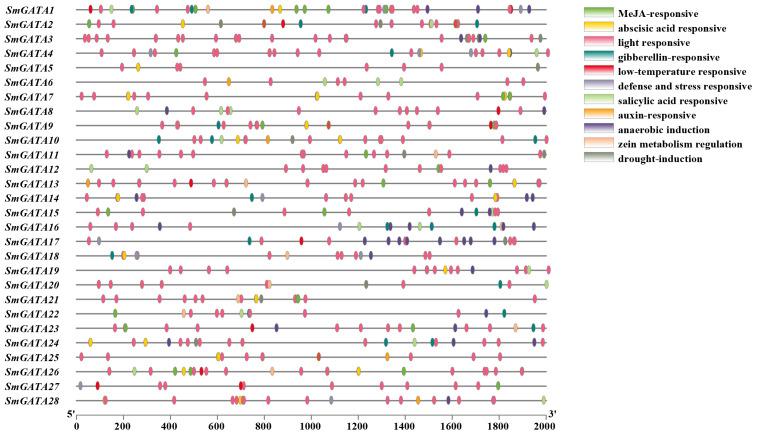
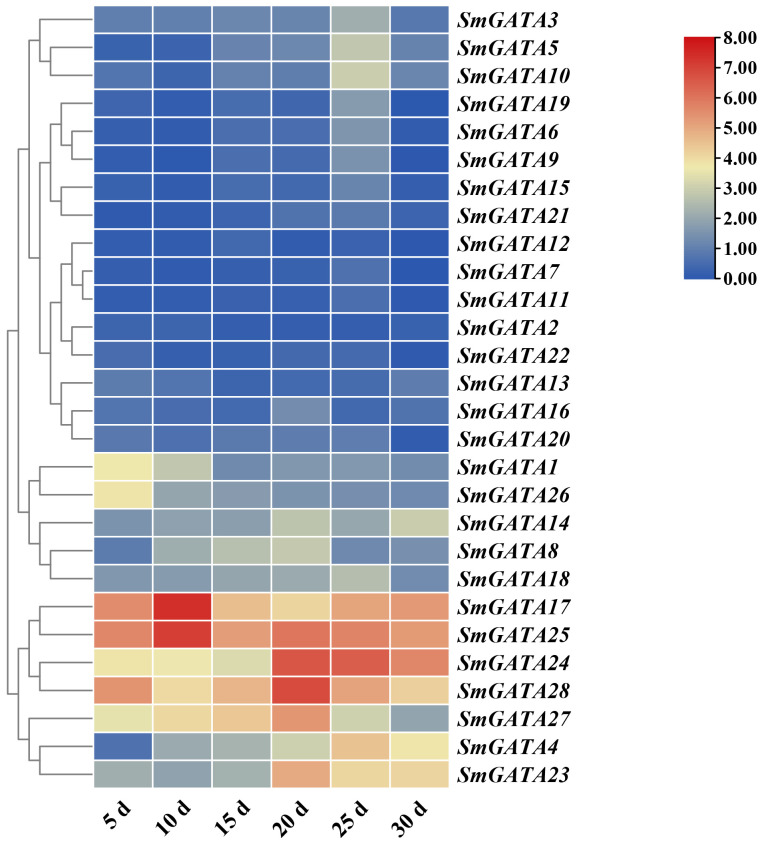
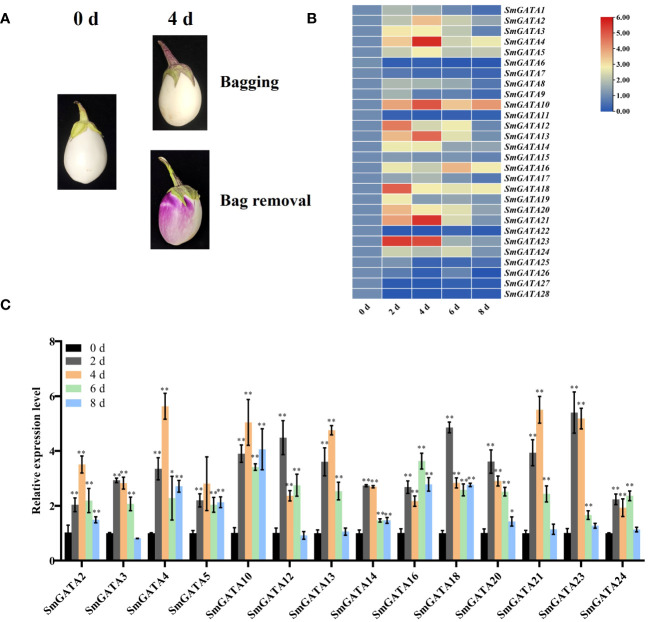
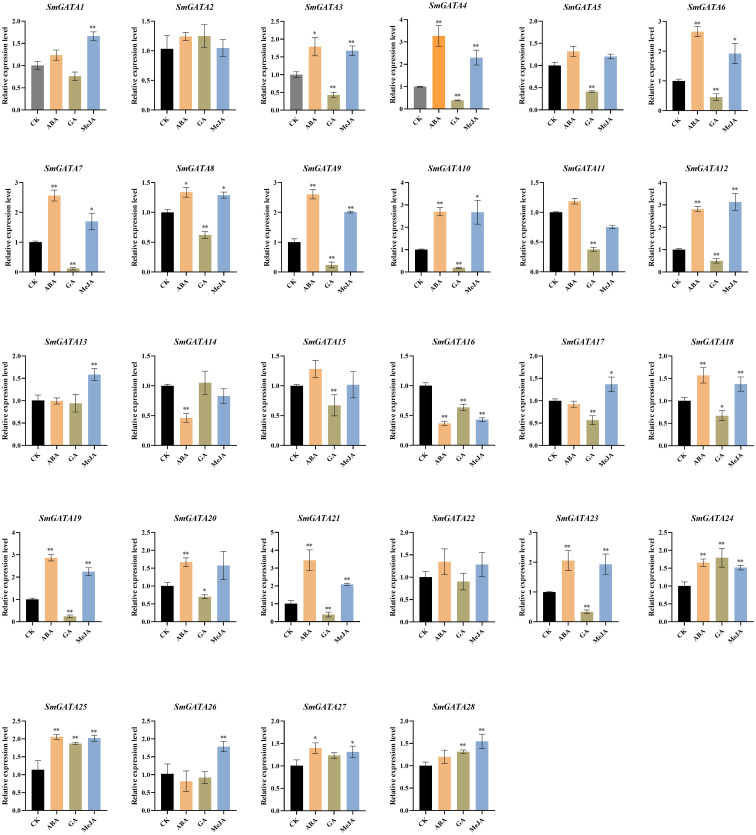
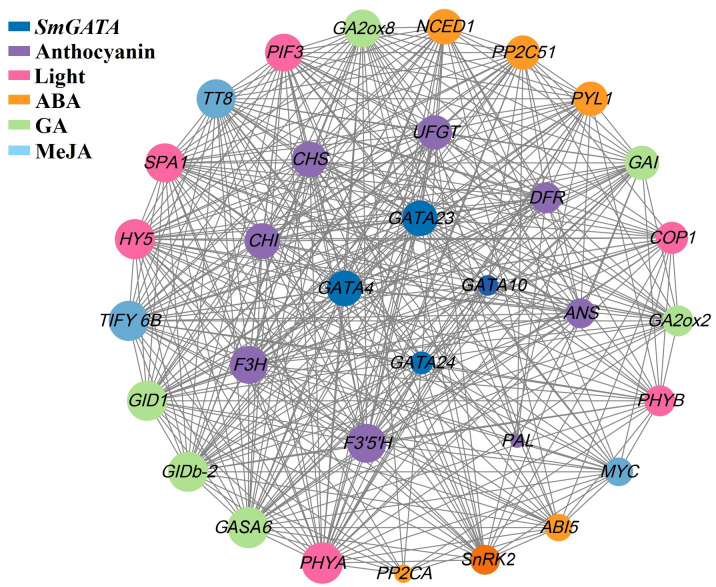
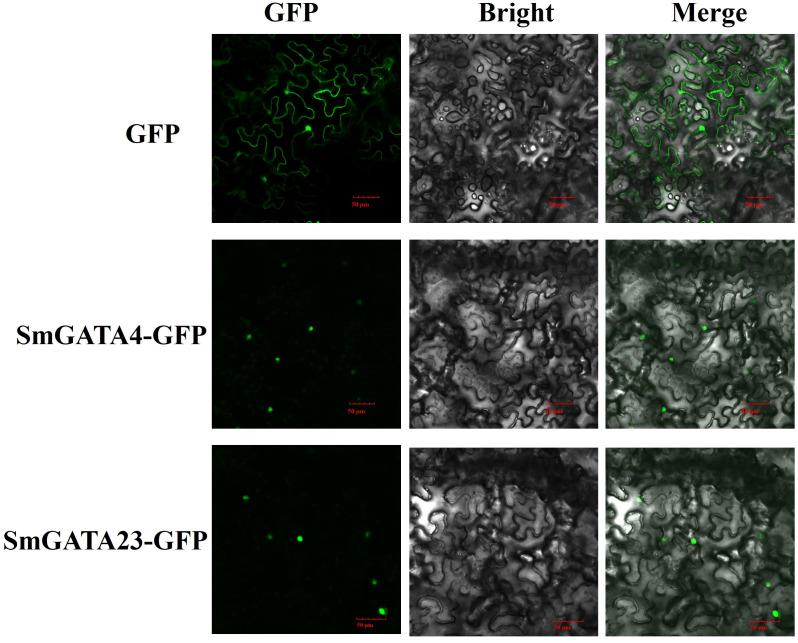
GATA proteins are transcription factors of zinc finger proteins, which play an important role in plant growth development and abiotic stress. However, there have been no identification or systematic studies of the GATA gene family in eggplant. In this study, 28 SmGATA genes were identified in the genome database of eggplant, which could be divided into four subgroups. Plant development, hormones, and stress-related cis-acting elements were identified in promoter regions of the SmGATA gene family. RT-qPCR indicated that 4 SmGATA genes displayed upregulated expressions during fruit developmental stage, whereas 2 SmGATA genes were down-regulated expression patterns. It was also demonstrated that SmGATA genes may be involved in light signals to regulate fruit anthocyanin biosynthesis. Furthermore, the expression patterns of SmGATA genes under ABA, GA and MeJA treatments showed that the SmGATAs were involved in the process of fruit ripening. Notably, SmGATA4 and SmGATA23 were highly correlated with the expression of anthocyanin biosynthesis genes, light-responsive genes, and genes that function in multiple hormone signaling pathways and the proteins they encoded were localized in the nucleus. All these results showed GATA genes likely play a major role in regulating fruit anthocyanin biosynthesis by integrating the light, ABA, GA and MeJA signaling pathways and provided references for further research on fruit quality in eggplant.
Keywords: GATA; Solanum melongena L.; gene family; hormones; light.
Copyright © 2024 Wang, Li, Mo, Jiang, Zhou, Hu, Zhang, Lv, Zhao and Lu.
Conflict of interest statement
The authors declare that the research was conducted in the absence of any commercial or financial relationships that could be construed as a potential conflict of interest.
Figures
References
-
- An Y., Han X., Tang S., Xia X. L., Yin W. L. (2014). Poplar GATA transcription factor PdGNC is capable of regulating chloroplast ultrastructure, photosynthesis, and vegetative growth in Arabidopsis under varying nitrogen levels. Plant Cell Tissue Organ Cult. 119, 313–327. doi: 10.1007/s11240-014-0536-y - DOI
-
- Bi Y. M., Zhang Y., Signorelli T., Zhao R., Zhu T., Rothstein S. (2005). Genetic analysis of Arabidopsis GATA transcription factor gene family reveals a nitrate-inducible member important for chlorophyll synthesis and glucose sensitivity. Plant J. 44, 680–692. doi: 10.1111/j.1365-313X.2005.02568.x - DOI - PubMed
LinkOut - more resources
Full Text Sources
