


Effect of different treatment modalities on the prognosis of patients with stage IIIC cervical cancer
- PMID: 38863632
- PMCID: PMC11165038
- DOI: 10.3389/fonc.2024.1405778
Effect of different treatment modalities on the prognosis of patients with stage IIIC cervical cancer
Abstract
Objective: To compare the effects of different treatments on the prognosis of patients with stage IIIC cervical cancer and to identify the main influencing factors to predict the outcomes of patients.
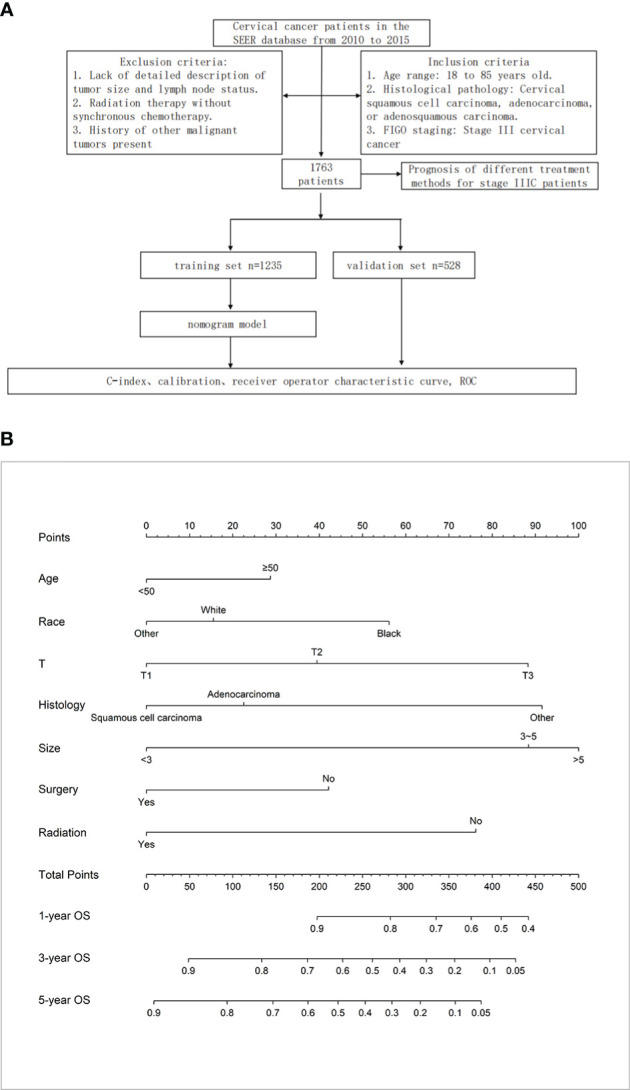
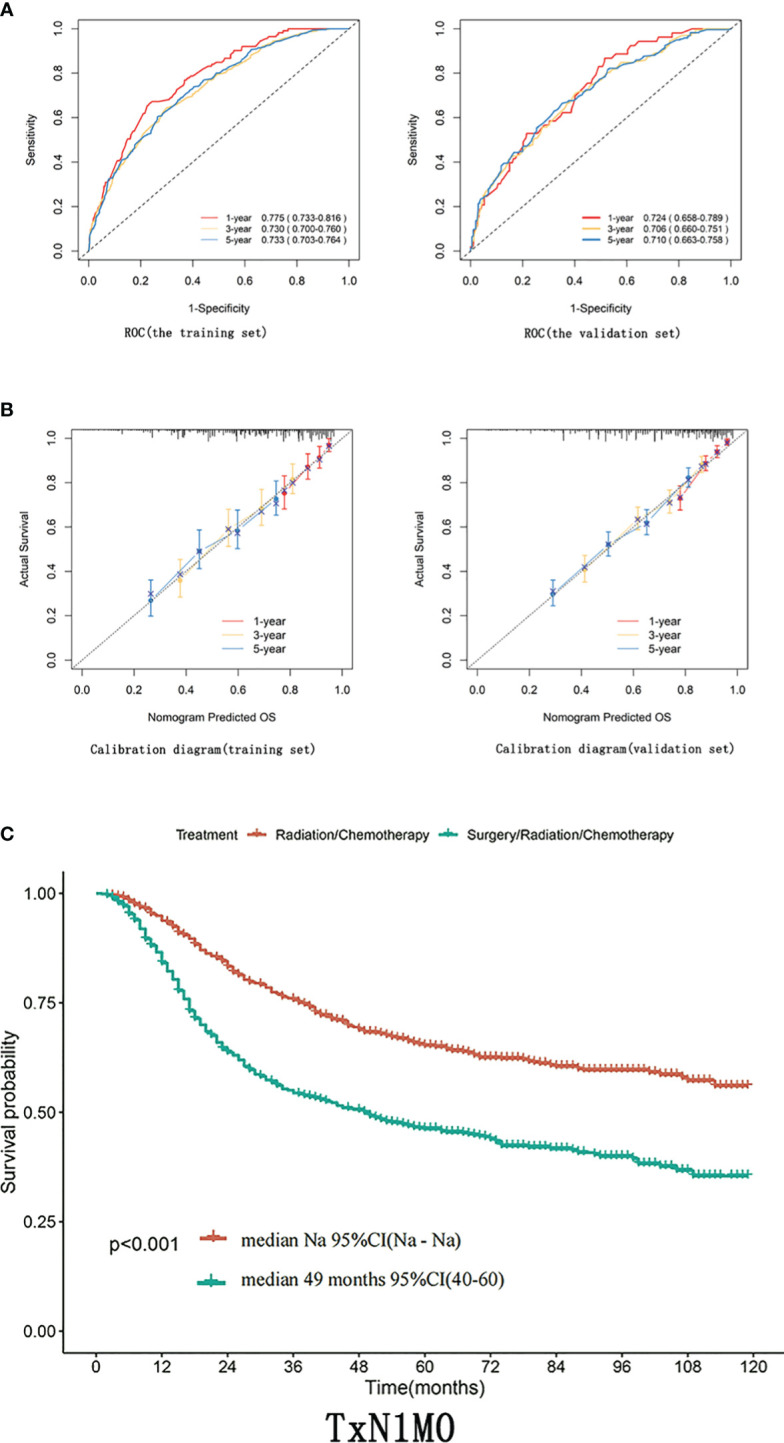
Methods: In this study, a total of 1763 patients with stage IIIC cervical cancer from 2010-2015 were retrospectively analyzed, and these patients were divided into the radical radiotherapy ± chemotherapy group (877 patients) and the radical surgery + radiotherapy ± chemotherapy group (886 patients) according to the treatment methods. The survival differences between the two groups were compared using the Kaplan-Meier method. Unifactorial and multifactorial COX analyses screened the clinical factors affecting the prognosis. The nomogram was constructed, and the accuracy of the line graph was verified using the C-index, calibration, and ROC (receiver operator characteristic curve, ROC).
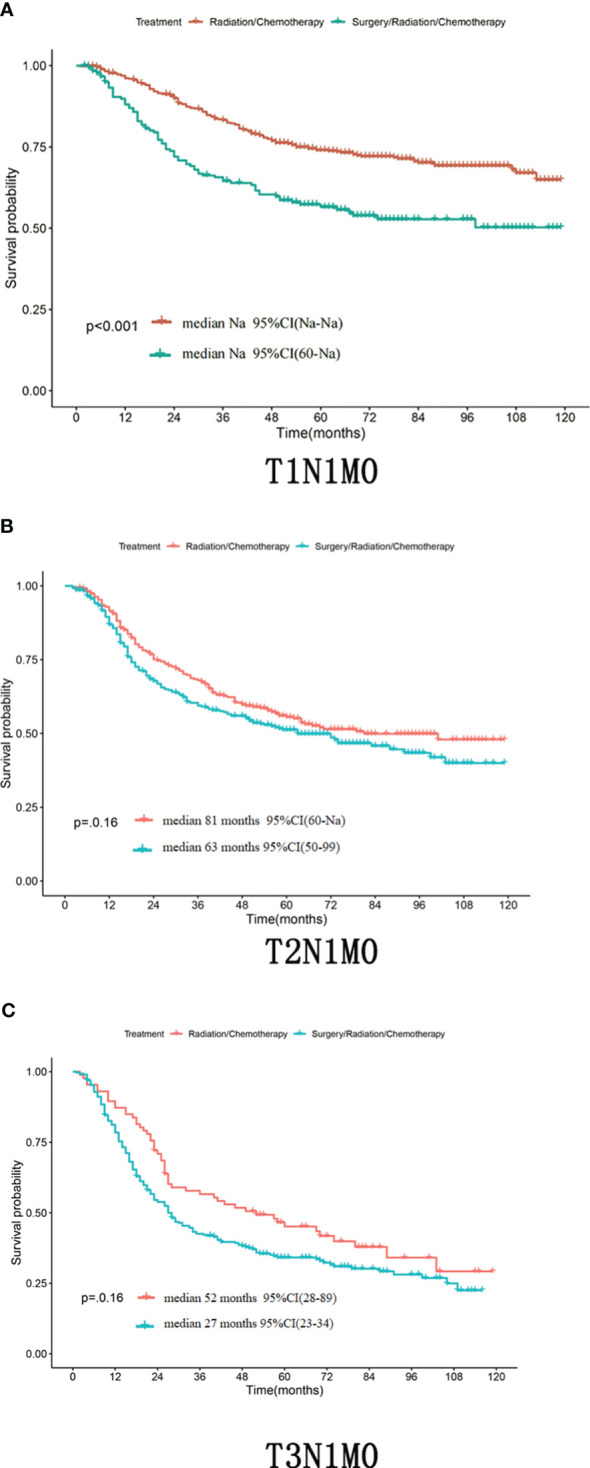
Results: Age, race, T-stage, pathologic type, mass size, whether or not they underwent surgery, and whether or not they received radiotherapy were independent factors affecting Overall Survival (OS). For all patients with TxN1M0 in cervical cancer stage IIIC, radical synchronized radiotherapy was better than the radical surgery group (p<0.0001). After comparing the tumor size breakdown, it could be found that in the T1N1M0, T2N1M0, and T3N1M0 groups, none of the OS in the surgical group achieved an improvement in OS compared with that in the non-surgical group (p>0.05).
Conclusion: In patients with stage IIIC cervical cancer, OS did not improve in the radical surgery group compared with the radical simultaneous radiotherapy group. And surgery did not benefit patients' survival regardless of tumor size.
Keywords: cervical cancer prognosis; lymph node metastasis; radiotherapy; stage IIIC cervical cancer; surgery.
Copyright © 2024 Su, Huang and Wang.
Conflict of interest statement
The authors declare that the research was conducted in the absence of any commercial or financial relationships that could be construed as a potential conflict of interest.
Figures
References
-
- Jinghui L, Jiao Y, Yanrong H. Research progress in early prevention and vaccine application of cervical cancer. J Chin Clin N Med. (2019) 12:377–80.
LinkOut - more resources
Full Text Sources
