


Generation of salivary glands derived from pluripotent stem cells via conditional blastocyst complementation
- PMID: 38865239
- PMCID: PMC11580835
- DOI: 10.1016/j.celrep.2024.114340
Generation of salivary glands derived from pluripotent stem cells via conditional blastocyst complementation
Abstract
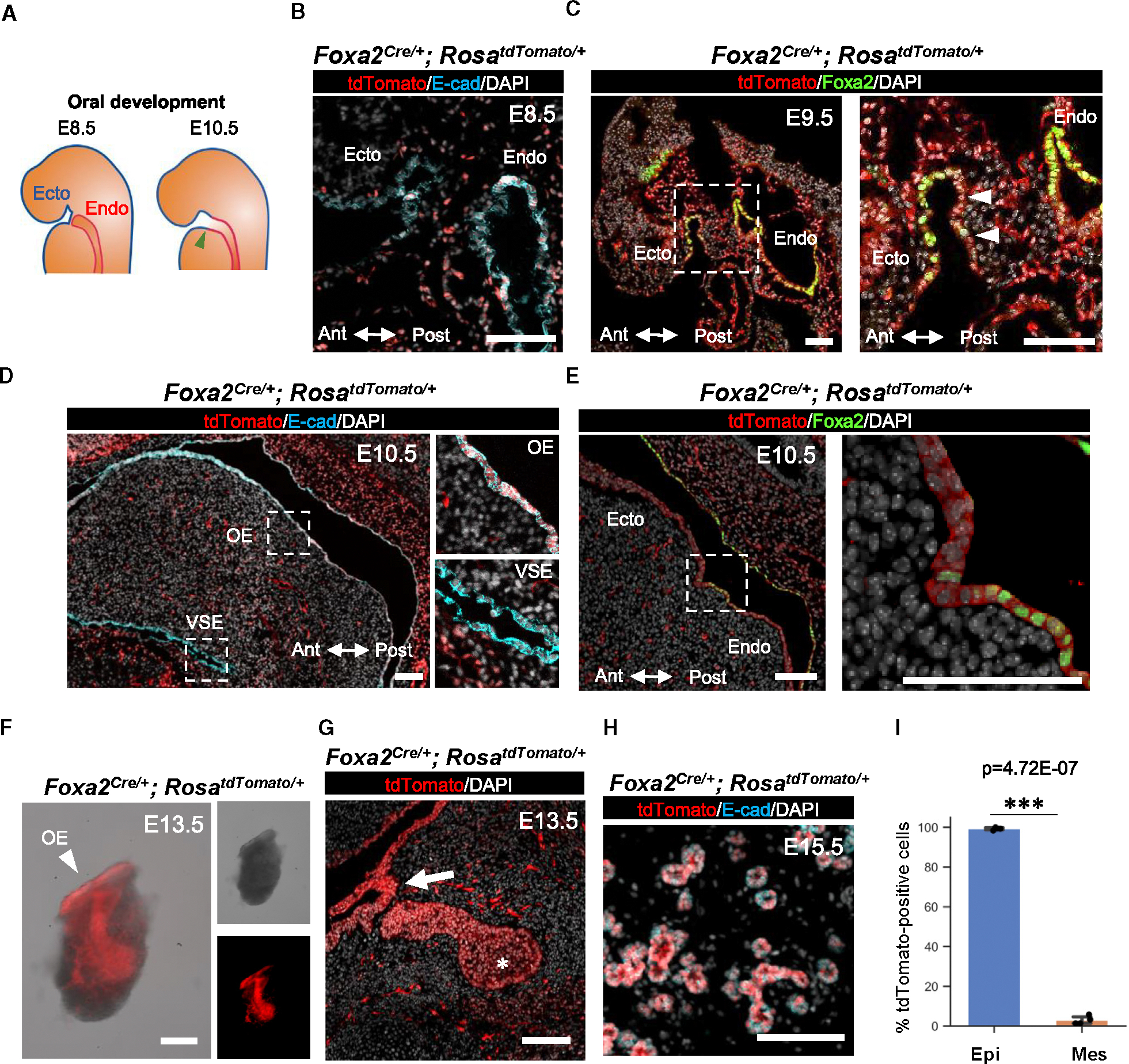
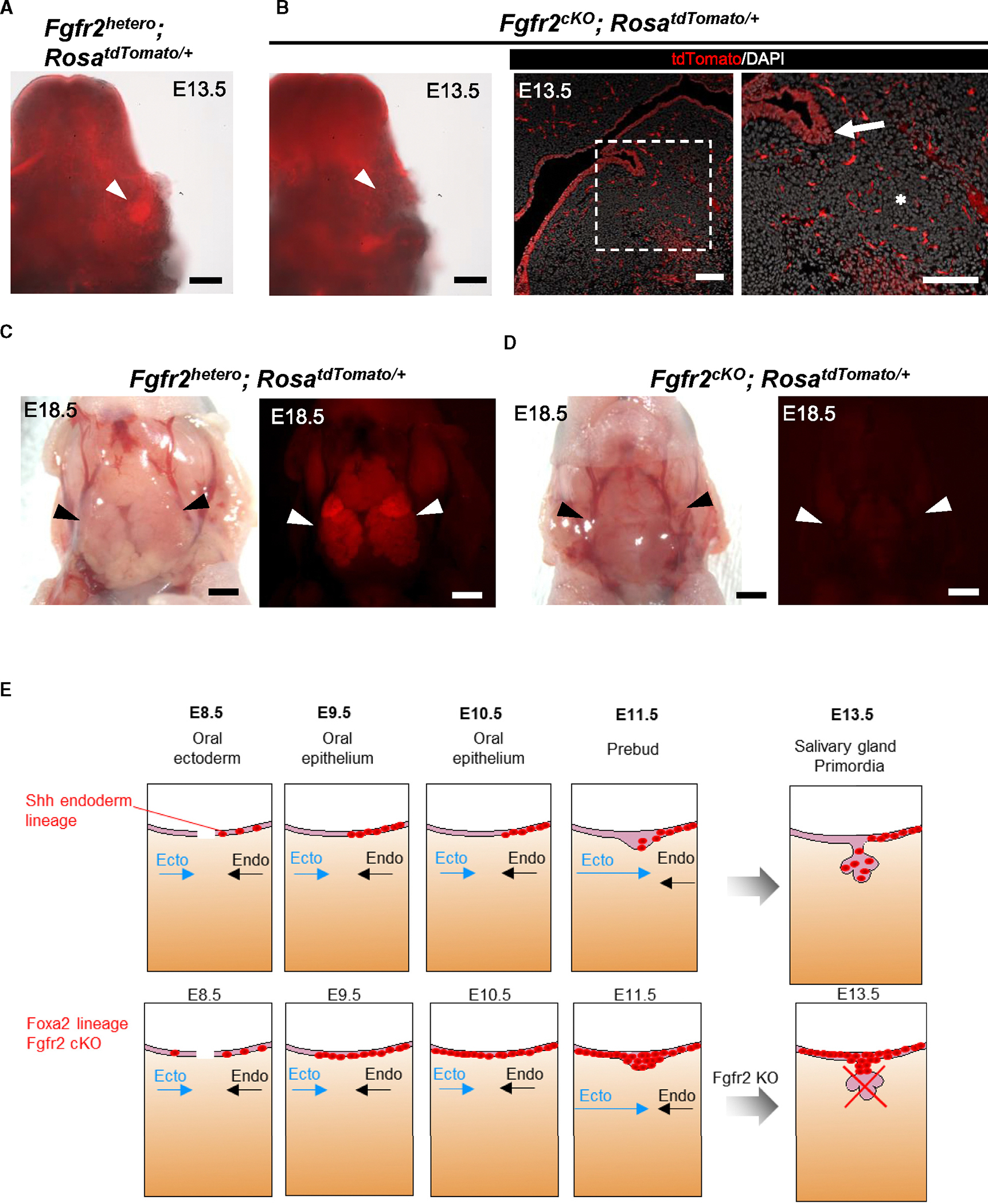
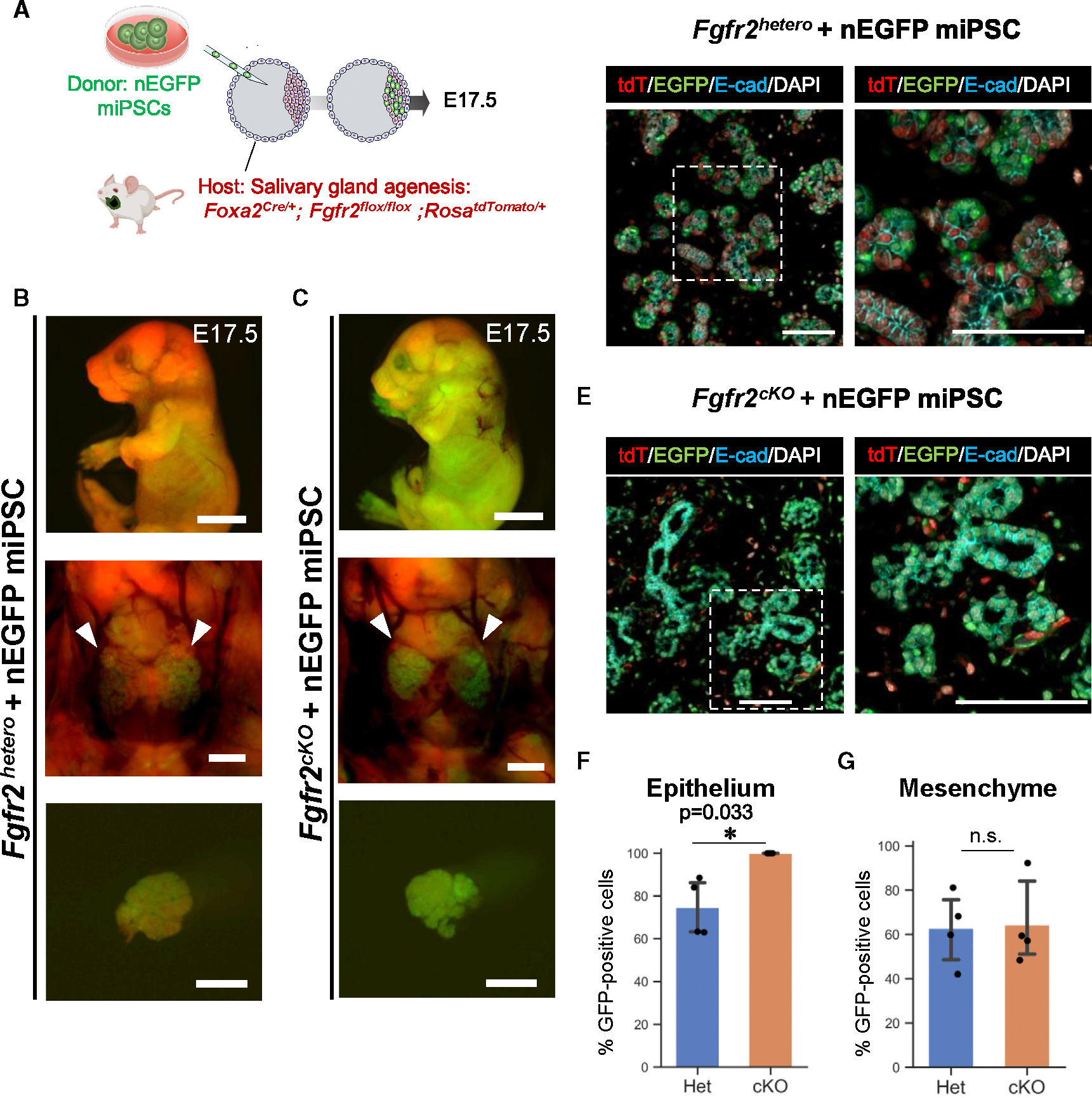
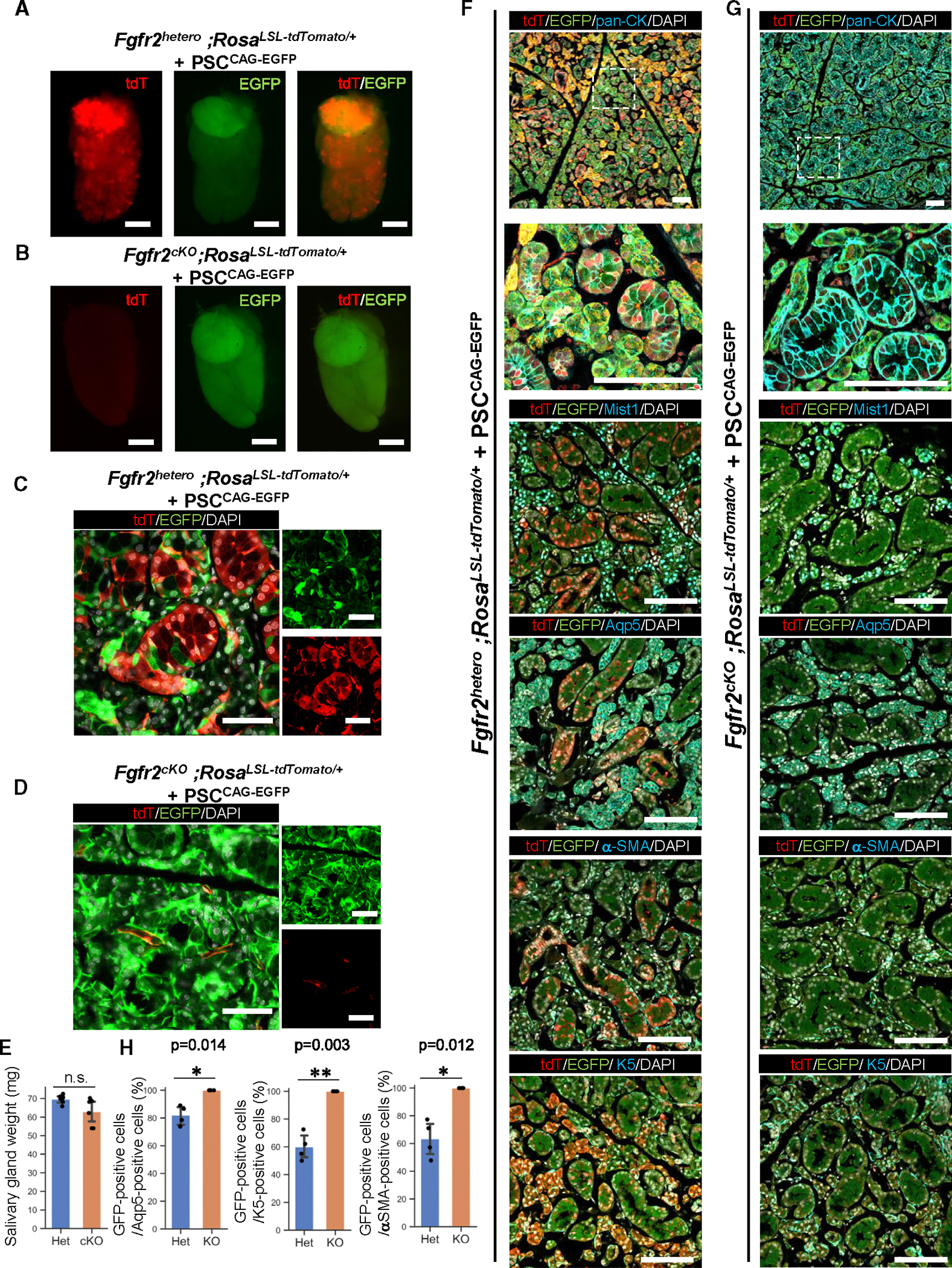
Whole salivary gland generation and transplantation offer potential therapies for salivary gland dysfunction. However, the specific lineage required to engineer complete salivary glands has remained elusive. In this study, we identify the Foxa2 lineage as a critical lineage for salivary gland development through conditional blastocyst complementation (CBC). Foxa2 lineage marking begins at the boundary between the endodermal and ectodermal regions of the oral epithelium before the formation of the primordial salivary gland, thereby labeling the entire gland. Ablation of Fgfr2 within the Foxa2 lineage in mice leads to salivary gland agenesis. We reversed this phenotype by injecting donor pluripotent stem cells into the mouse blastocysts, resulting in mice that survived to adulthood with salivary glands of normal size, comparable to those of their littermate controls. These findings demonstrate that CBC-based salivary gland regeneration serves as a foundational experimental approach for future advanced cell-based therapies.
Keywords: CP: Stem cell research; Fgfr2; blastocyst complementation; chimera; conditional blastocyst complementation; organ generation; pluripotent stem cell; saliva; salivary gland.
Copyright © 2024 The Authors. Published by Elsevier Inc. All rights reserved.
Conflict of interest statement
Declaration of interests The authors declare no competing interests.
Figures
Update of
-
Generation of salivary glands derived from pluripotent stem cells via conditional blastocyst complementation.bioRxiv [Preprint]. 2023 Nov 15:2023.11.13.566845. doi: 10.1101/2023.11.13.566845. bioRxiv. 2023. Update in: Cell Rep. 2024 Jun 25;43(6):114340. doi: 10.1016/j.celrep.2024.114340. PMID: 38014349 Free PMC article. Updated. Preprint.
References
-
- Atkinson JC, Grisius M, and Massey W (2005). Salivary hypofunction and xerostomia: diagnosis and treatment. Dent. Clin. North Am. 49, 309–326. - PubMed
-
- Feng J, van der Zwaag M, Stokman MA, van Os R, and Coppes RP (2009). Isolation and characterization of human salivary gland cells for stem cell transplantation to reduce radiation-induced hyposalivation. Radiother. Oncol. 92, 466–471. - PubMed
-
- Srinivasan PP, Patel VN, Liu S, Harrington DA, Hoffman MP, Jia X, Witt RL, Farach-Carson MC, and Pradhan-Bhatt S (2017). Primary Salivary Human Stem/Progenitor Cells Undergo Microenvironment-Driven Acinar-Like Differentiation in Hyaluronate Hydrogel Culture. Stem Cells Transl. Med. 6, 110–120. - PMC - PubMed
-
- Pringle S, Maimets M, Van Der Zwaag M, Stokman MA, Van Gosliga D, Zwart E, Witjes MJH, De Haan G, Van Os R, and Coppes RP (2016). Human salivary gland stem cells functionally restore radiation damaged salivary glands. Stem Cell. 34, 640–652. - PubMed
MeSH terms
Substances
Grants and funding
LinkOut - more resources
Full Text Sources
Molecular Biology Databases
Miscellaneous
