


Comparative genomics of Giardia duodenalis sub-assemblage AI beaver (Be-2) and human (WB-C6) strains show remarkable homozygosity, sequence similarity, and conservation of VSP genes
- PMID: 38866814
- PMCID: PMC11169602
- DOI: 10.1038/s41598-024-63783-5
Comparative genomics of Giardia duodenalis sub-assemblage AI beaver (Be-2) and human (WB-C6) strains show remarkable homozygosity, sequence similarity, and conservation of VSP genes
Abstract
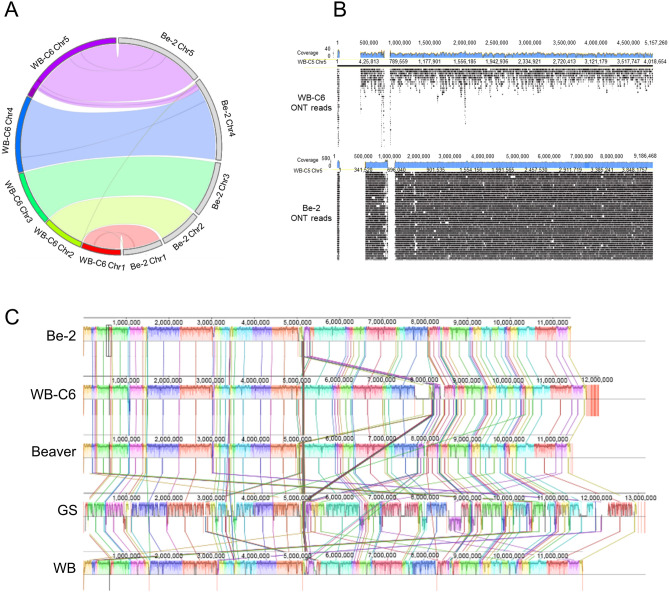
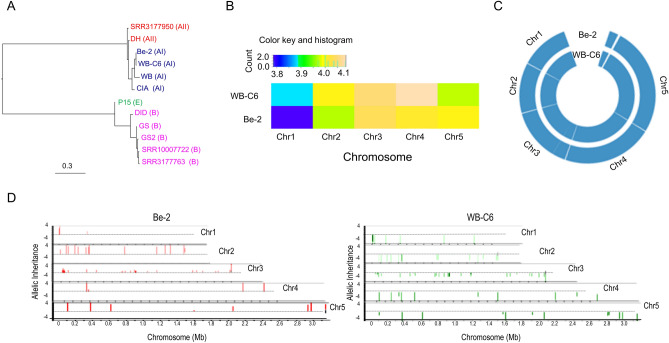
Giardia duodenalis, a major cause of waterborne infection, infects a wide range of mammalian hosts and is subdivided into eight genetically well-defined assemblages named A through H. However, fragmented genomes and a lack of comparative analysis within and between the assemblages render unclear the molecular mechanisms controlling host specificity and differential disease outcomes. To address this, we generated a near-complete de novo genome of AI assemblage using the Oxford Nanopore platform by sequencing the Be-2 genome. We generated 148,144 long-reads with quality scores of > 7. The final genome assembly consists of only nine contigs with an N50 of 3,045,186 bp. This assembly agrees closely with the assembly of another strain in the AI assemblage (WB-C6). However, a critical difference is that a region previously placed in the five-prime region of Chr5 belongs to Chr4 of Be-2. We find a high degree of conservation in the ploidy, homozygosity, and the presence of cysteine-rich variant-specific surface proteins (VSPs) within the AI assemblage. Our assembly provides a nearly complete genome of a member of the AI assemblage of G. duodenalis, aiding population genomic studies capable of elucidating Giardia transmission, host range, and pathogenicity.
Keywords: Giardia; Annotation; Genome assembly; Long-read sequencing; Ploidy; Synteny.
© 2024. This is a U.S. Government work and not under copyright protection in the US; foreign copyright protection may apply.
Conflict of interest statement
The authors declare no competing interests.
Figures

References
-
- The World Health report 1996—fighting disease, fostering development. World Health Forum18, 1–8 (1997). - PubMed
Publication types
MeSH terms
Substances
Grants and funding
LinkOut - more resources
Full Text Sources
