


SARS-CoV-2 Delta variant remains viable in environmental biofilms found in meat packaging plants
- PMID: 38870232
- PMCID: PMC11175435
- DOI: 10.1371/journal.pone.0304504
SARS-CoV-2 Delta variant remains viable in environmental biofilms found in meat packaging plants
Abstract
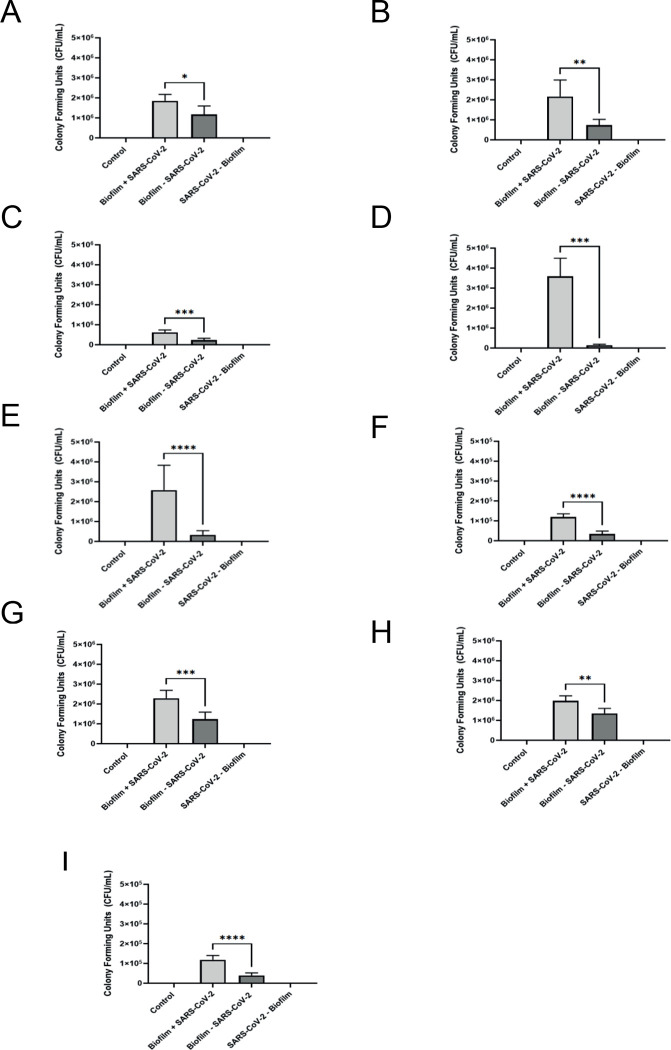
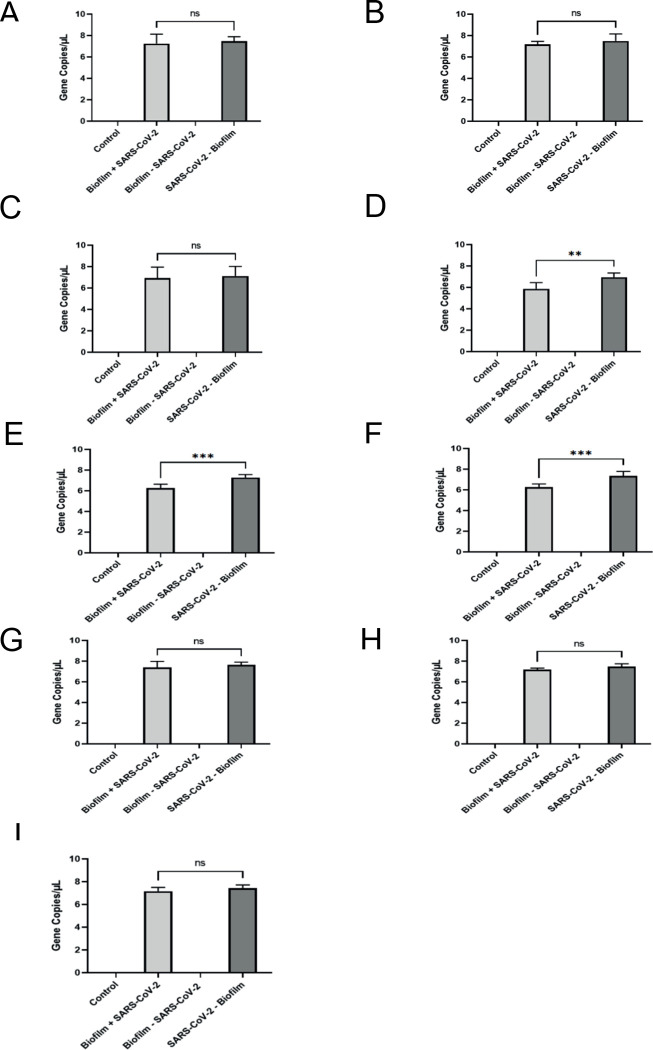
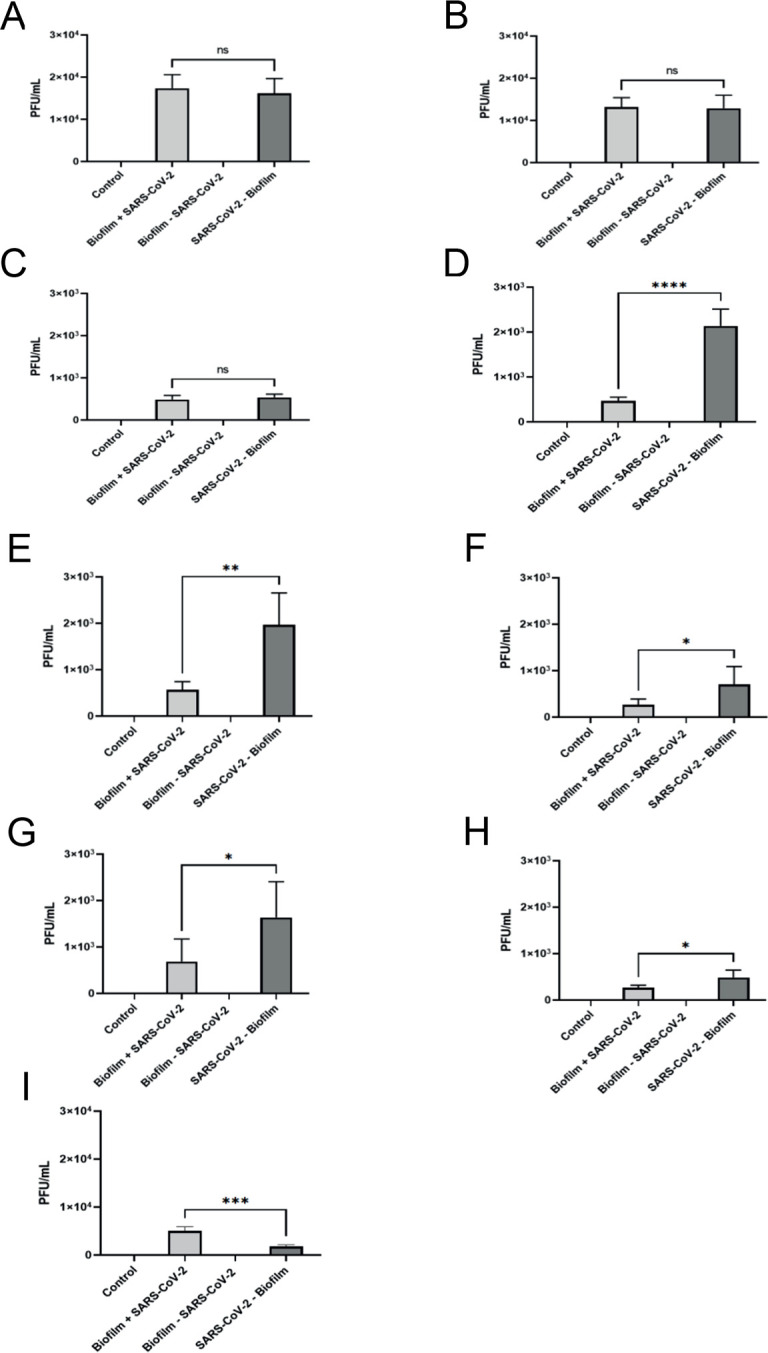
To determine why SARS-CoV-2 appears to thrive specifically well in meat packaging plants, we used SARS-CoV-2 Delta variant and meat packaging plant drain samples to develop mixed-species biofilms on materials commonly found within meat packaging plants (stainless steel (SS), PVC, and ceramic tile). Our data provides evidence that SARS-CoV-2 Delta variant remained viable on all the surfaces tested with and without an environmental biofilm after the virus was inoculated with the biofilm for 5 days at 7°C. We observed that SARS-CoV-2 Delta variant was able to remain infectious with each of the environmental biofilms by conducting plaque assay and qPCR experiments, however, we detected a significant reduction in viability post-exposure to Plant B biofilm on SS, PVC, and on ceramic tile chips, and to Plant C biofilm on SS and PVC chips. The numbers of viable SARS-CoV-2 Delta viral particles was 1.81-4.57-fold high than the viral inoculum incubated with the Plant B and Plant C environmental biofilm on SS, and PVC chips. We did not detect a significant difference in viability when SARS-CoV-2 Delta variant was incubated with the biofilm obtained from Plant A on any of the materials tested and SARS-CoV-2 Delta variant had higher plaque numbers when inoculated with Plant C biofilm on tile chips, with a 2.75-fold difference compared to SARS-CoV-2 Delta variant on tile chips by itself. In addition, we detected an increase in the biofilm biovolume in response to SARS-CoV-2 Delta variant which is also a concern for food safety due to the potential for foodborne pathogens to respond likewise when they come into contact with the virus. These results indicate a complex virus-environmental biofilm interaction which correlates to the different bacteria found in each biofilm. Our results also indicate that there is the potential for biofilms to protect SARS-CoV-2 from disinfecting agents and remaining prevalent in meat packaging plants.
Copyright: © 2024 Featherstone et al. This is an open access article distributed under the terms of the Creative Commons Attribution License, which permits unrestricted use, distribution, and reproduction in any medium, provided the original author and source are credited.
Conflict of interest statement
The authors have declared that no competing interests exist.
Figures
References
MeSH terms
Substances
Supplementary concepts
LinkOut - more resources
Full Text Sources
Miscellaneous
