


Osteogenic mechanism of chlorogenic acid and its application in clinical practice
- PMID: 38873428
- PMCID: PMC11169668
- DOI: 10.3389/fphar.2024.1396354
Osteogenic mechanism of chlorogenic acid and its application in clinical practice
Abstract
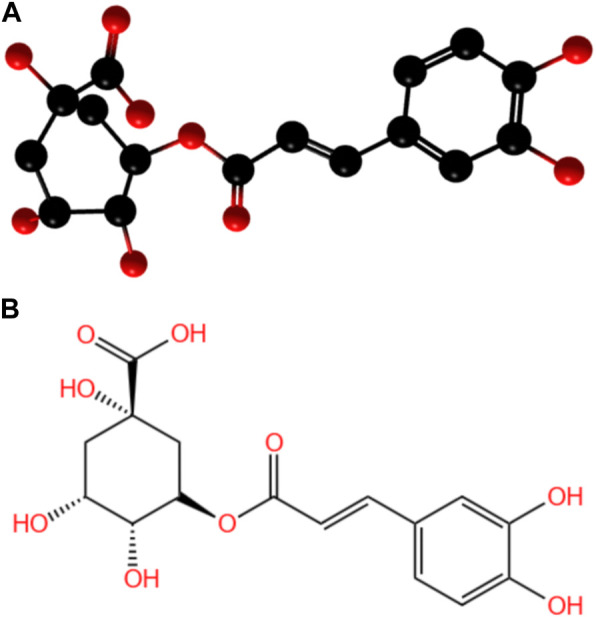
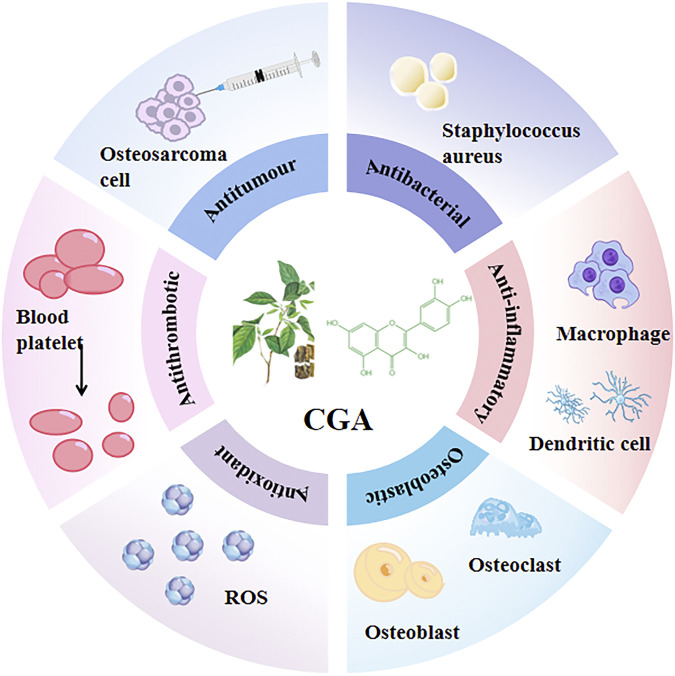
Natural polyphenols may have a role in counteracting oxidative stress, which is associated with aging and several bone-related diseases. Chlorogenic acid (CGA) is a naturally occurring polyphenolic compound formed by the esterification of caffeic and quininic acids with osteogenic, antioxidant, and anti-inflammatory properties. This review discusses the potential of CGA to enhance osteogenesis by increasing the osteogenic capacity of mesenchymal stem cells (MSCs), osteoblast survival, proliferation, differentiation, and mineralization, as well as its ability to attenuate osteoclastogenesis by enhancing osteoclast apoptosis and impeding osteoclast regeneration. CGA can be involved in bone remodeling by acting directly on pro-osteoclasts/osteoblasts or indirectly on osteoclasts by activating the nuclear factor kB (RANK)/RANK ligand (RANKL)/acting osteoprotegerin (OPG) system. Finally, we provide perspectives for using CGA to treat bone diseases.
Keywords: chlorogenic acid; osteoblast; osteoclast; osteoporosis; periodontitis.
Copyright © 2024 Shen, Zhang, Zhang, Wei, Wang and Han.
Conflict of interest statement
The authors declare that the research was conducted in the absence of any commercial or financial relationships that could be construed as a potential conflict of interest.
Figures


References
-
- Arfian N., Wahyudi D. A. P., Zulfatina I. B., Citta A. N., Anggorowati N., Multazam A., et al. (2019). Chlorogenic acid attenuates kidney ischemic/reperfusion injury via reducing inflammation, tubular injury, and myofibroblast formation. Biomed. Res. Int. 2019, 5423703. 10.1155/2019/5423703 - DOI - PMC - PubMed
Publication types
LinkOut - more resources
Full Text Sources
Research Materials
