


Peganum harmala L. extract-based Gold (Au) and Silver (Ag) nanoparticles (NPs): Green synthesis, characterization, and assessment of antibacterial and antifungal properties
- PMID: 38873463
- PMCID: PMC11167161
- DOI: 10.1002/fsn3.4112
Peganum harmala L. extract-based Gold (Au) and Silver (Ag) nanoparticles (NPs): Green synthesis, characterization, and assessment of antibacterial and antifungal properties
Abstract
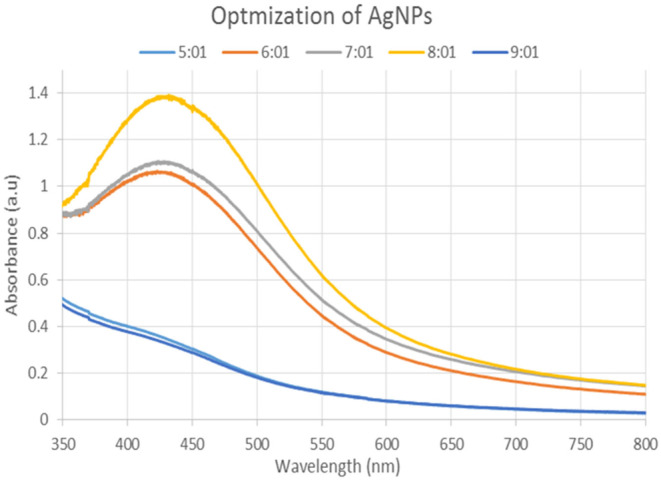
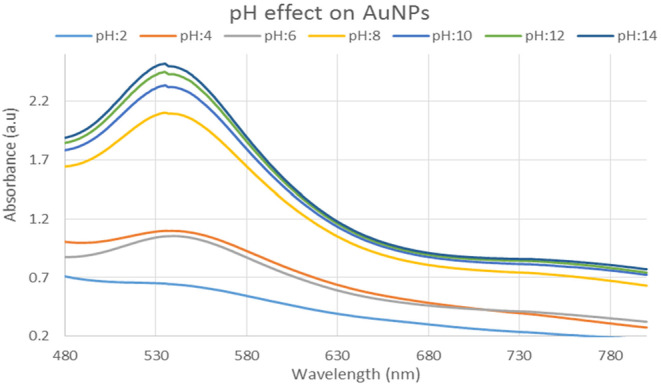
During the last decade, nanotechnology has attained a significant place among the scientific community for the biosynthesis of plant-based nanoparticles owing to its effective, safe, and eco-friendly nature. Hence, keeping in view the significance of nanotechnology, the current study was conducted to develop, characterize (UV-visible spectroscopy, scanning electron microscopy, Fourier-transform infrared spectroscopy, and energy-dispersive X-ray spectroscopy), and assess the antimicrobial (antibacterial and antifungal) properties of Peganum harmala L. Extract-based Gold (Au) and Silver (Ag) nanoparticles (NPs). Characteristic absorption peaks at 420 and 540 nm revealed the formation of AgNPs and AuNPs, respectively. SEM images revealed that both silver and gold nanoparticles were oval and spherical with average size ranging from 42 to 72 and 12.6 to 35.7 nm, respectively. Similarly, FT-IR spectra revealed that the functional groups such as hydroxyl, carboxyl, and polyphenolic groups of biomolecules present in the extract are possibly responsible for reducing metallic ions and the formation of nanoparticles. Likewise, the EDX analysis confirmed the presence of silver and gold in synthesized NPs. Furthermore, the AgNPs and AuNPs showed good antibacterial and antifungal activities. The maximum antibacterial and antifungal activity was noticed for P. harmala extract against Pseudomonas aeroginosa (21 mm) and Candida albicon (18 mm), respectively. Whereas, the maximum antibacterial and antifungal activities of synthesized AgNPs were observed against Salmonella typhi (25 mm) and Penicillium notatum (36 mm), respectively. Moreover, in the case of AuNPs, the highest antibacterial and antifungal activity of synthesized AuNPs was noticed against Escherichia coli (25 mm) and C. albicon (31 mm), respectively. Findings of this study revealed that P. harmala extract and biosynthesized NPs (silver and gold) possessed significant antibacterial and antifungal properties against different bacterial (Bacillus subtilis, Staphylococcus aureus, E. coli, P. aeroginosa, and S. typhi) and fungal (C. albicans, Aspergillus Niger, and P. notatum) strains. Further studies must be carried out to assess the probable mechanism of action associated with these antimicrobial properties.
Keywords: Peganum harmala; Ag and Au NPs; antibacterial; antifungal activity.
© 2024 The Authors. Food Science & Nutrition published by Wiley Periodicals LLC.
Conflict of interest statement
All the authors declare no conflict of interest.
Figures





References
-
- Abu‐Tahon, M. A. , Ghareib v, M. , & Abdallah, W. E. (2020). Environmentally benign rapid biosynthesis of extracellular gold nanoparticles using Aspergillus flavus and their cytotoxic and catalytic activities. Process Biochemistry, 95, 1–11. 10.1016/j.procbio.2020.04.015 - DOI
-
- Adebayo, E. , Ishola, O. , Taiwo, O. , Majolagbe, O. , & Adekeye, B. (2009). Evaluations of the methanol extract of Ficus exasperata stem bark, leaf and root for phytochemical analysis and antimicrobial activities. African Journal of Plant Science, 3(12), 283–287.
-
- Ahmad, S. , Ali, M. , Ansari, S. H. , & Ahmed, F. (2010). Phytoconstituents from the galls of Pistacia integerrima Stewart. Journal of Saudi Chemical Society, 14(4), 409–412. 10.1016/j.jscs.2010.05.003 - DOI
-
- Alhumaydhi, F. A. , Khan, I. , Rauf, A. , Qureshi, M. N. , Aljohani, A. S. , Khan, S. A. , Khalil, A. A. , El‐Esawi, M. A. , & Muhammad, N. (2021). Synthesis, characterization, biological activities, and catalytic applications of alcoholic extract of saffron (Crocus sativus) flower stigma‐based gold nanoparticles. Green Processing and Synthesis, 10(1), 230–245. 10.1515/gps‐2021‐0024 - DOI
LinkOut - more resources
Full Text Sources
