


Effect of long COVID-19 syndrome on health-related quality of life: a cross-sectional study
- PMID: 38873510
- PMCID: PMC11169885
- DOI: 10.3389/fpsyg.2024.1394068
Effect of long COVID-19 syndrome on health-related quality of life: a cross-sectional study
Abstract
Purpose: This study aimed to assess the association of anxiety, headache, and insomnia on the QoL of patients with long COVID-19.
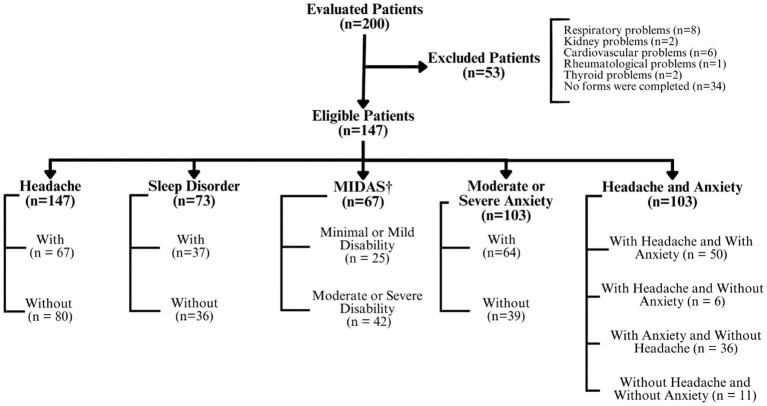
Methods: We conducted a cross-sectional survey between August 2020 and March 2023. A total of 200 participants were eligible, 53 were excluded and 147 patients with long COVID were included. QoL was evaluated across eight domains using the 36-Item Short Form Health Survey (SF-36). Standardized protocols including the Beck Anxiety Inventory (BAI) (n = 103), Pittsburgh Sleep Quality Index (PSQI) (n = 73), and Migraine Disability Assessment (MIDAS) (n = 67) were also used.
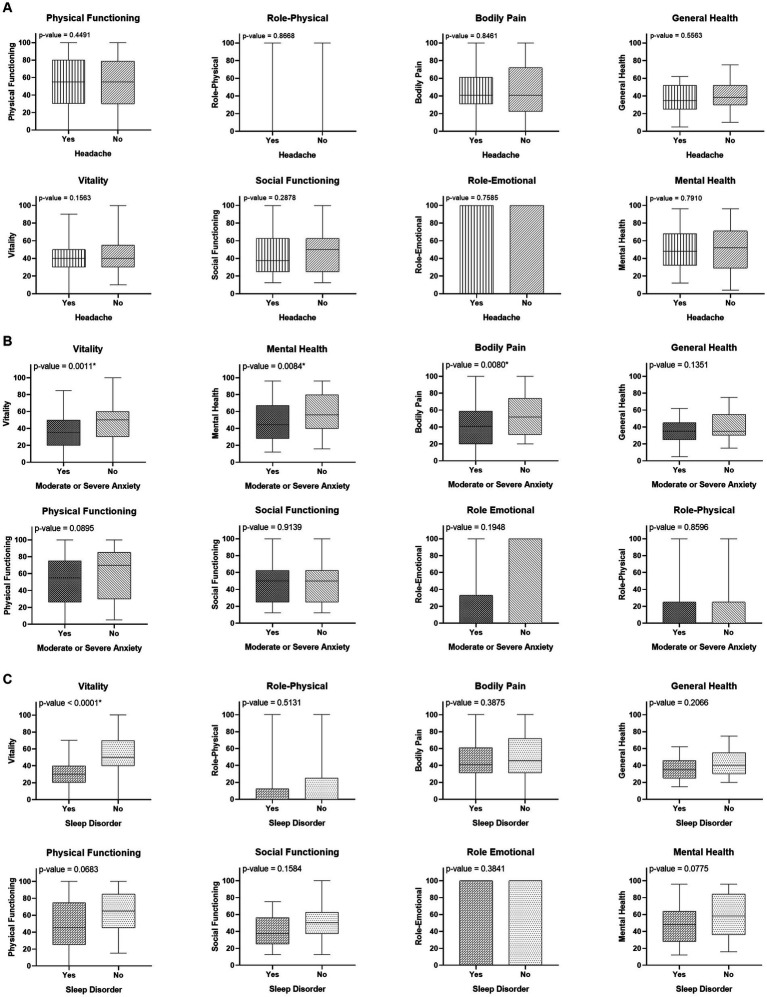
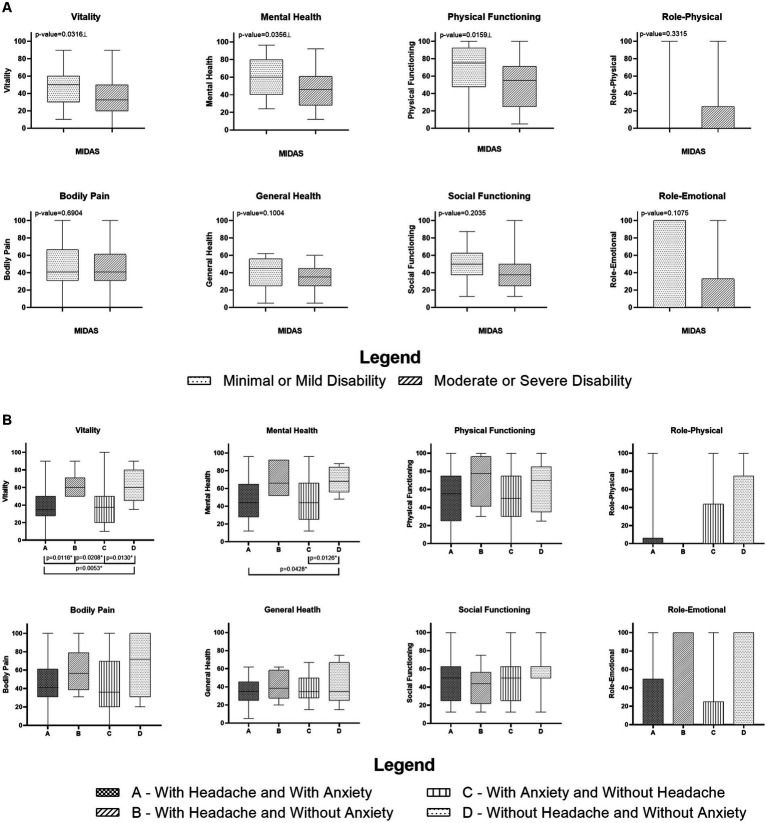
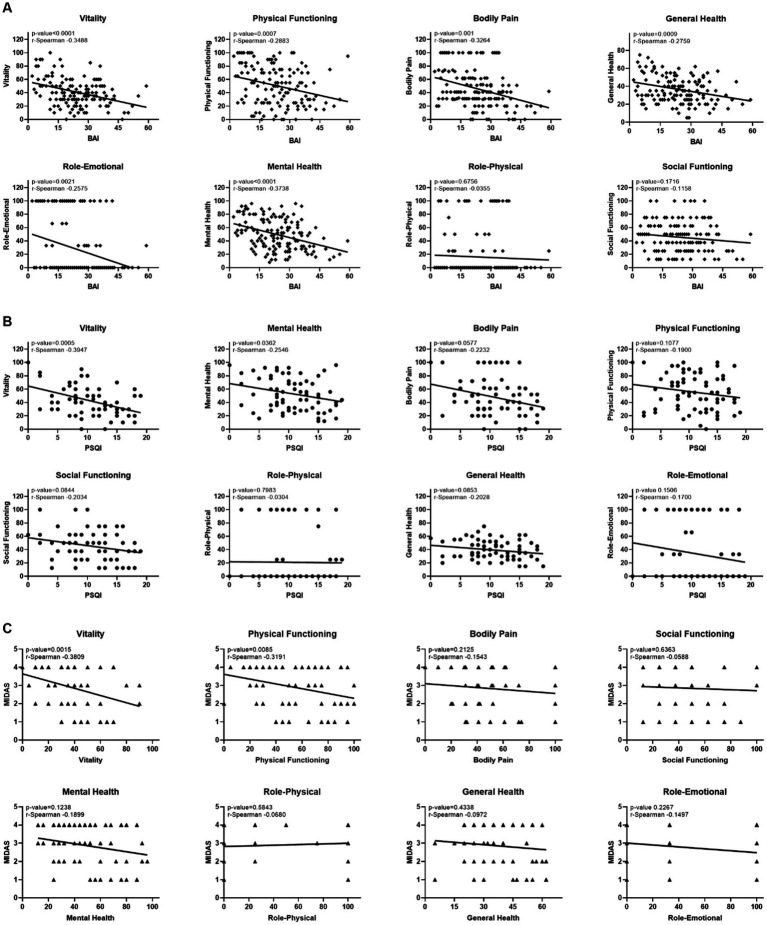
Results: Participants with sleep disorders had significantly lower Vitality (p < 0.001). Participants with anxiety disorders had significantly lower Vitality (p = 0.001), poorer Mental Health (p = 0.008), and more severe Bodily Pain (p = 0.008). Participants with headache had significantly lower Vitality (p = 0.032), poorer Mental Health (p = 0.036), and poorer Physical Functioning (p = 0.016). Participants with both headache and anxiety had significantly lower Vitality (p = 0.005) and Mental Health (p = 0.043) domain scores. Correlation analysis revealed that higher scores for anxiety, sleep disorder, and headache were independently correlated with poorer QoL across various domains. The presence of sleep disorder was associated with a fourfold increase in risk of experiencing diminished Vitality (odds ratio [OR]4.47; 95% CI 1.01-19.69; p = 0.048).
Conclusion: Participants with anxiety, sleep, and headache disorders tended to have a worse QoL. The Vitality and Mental Health domains were the most adversely affected in patients with long COVID. Sleep disorders were associated with a fourfold increase in the risk of poor Vitality.
Keywords: anxiety; headache; post COVID-19 condition; quality of life; sleep quality.
Copyright © 2024 Rodrigues, Paranhos, da Silva, Xavier, Silva, da Silva, de Vasconcelos, Peixoto, Panzetti, Tavares, Reis, Launé, Palácios, Vasconcelos, Quaresma and Falcão.
Conflict of interest statement
JQ is a member of the editorial board of Frontiers in Cardiovascular Medicine. This had no impact on the peer review process and the final decision. The remaining authors declare that the research was conducted in the absence of any commercial or financial relationships that could be construed as a potential conflict of interest. The author(s) declared that they were an editorial board member of Frontiers, at the time of submission. This had no impact on the peer review process and the final decision.
Figures
References
-
- Abdelghani M., Hamed M. G., Said A., Fouad E. (2022). Evaluation of perceived fears of COVID-19 virus infection and its relationship to health-related quality of life among patients with diabetes mellitus in Egypt during pandemic: a developing country single-center study. Diabetol Int. 13, 108–116. doi: 10.1007/s13340-021-00511-8, PMID: - DOI - PMC - PubMed
-
- Alves de Oliveira B. F., Bottino M. J., Nobre P., Nobre C. A. (2021). Deforestation and climate change are projected to increase heat stress risk in the Brazilian Amazon. Commun. Earth Environ. 2:207. doi: 10.1038/s43247-021-00275-8 - DOI
-
- Araujo P. A. B. d., Sties S. W., Wittkopf P. G., Netto A. S., Gonzáles A. I., Lima D. P., et al. (2015). Índice da qualidade do sono de pittsburgh para uso na reabilitação cardiopulmonar e metabólica. Rev. Bras. Med. Esporte 21, 472–475. doi: 10.1590/1517-869220152106147561 - DOI
LinkOut - more resources
Full Text Sources
