Astroviruses in terrestrial Malagasy mammals
- PMID: 38875307
- PMCID: PMC11262628
- DOI: 10.1371/journal.pntd.0012263
Astroviruses in terrestrial Malagasy mammals
Abstract
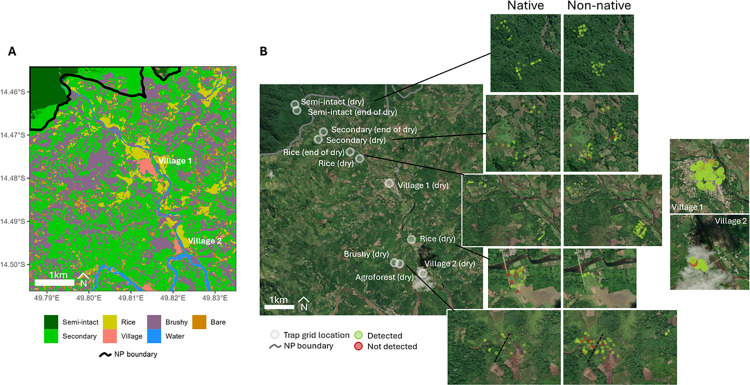
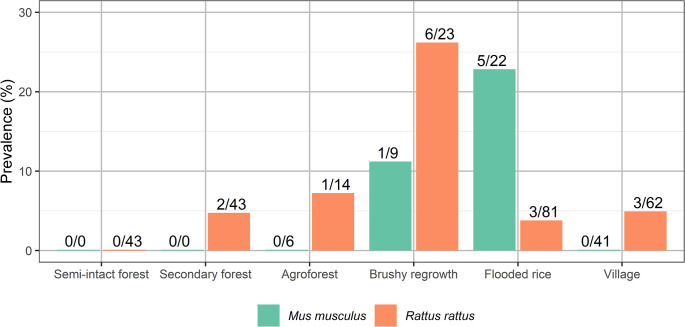
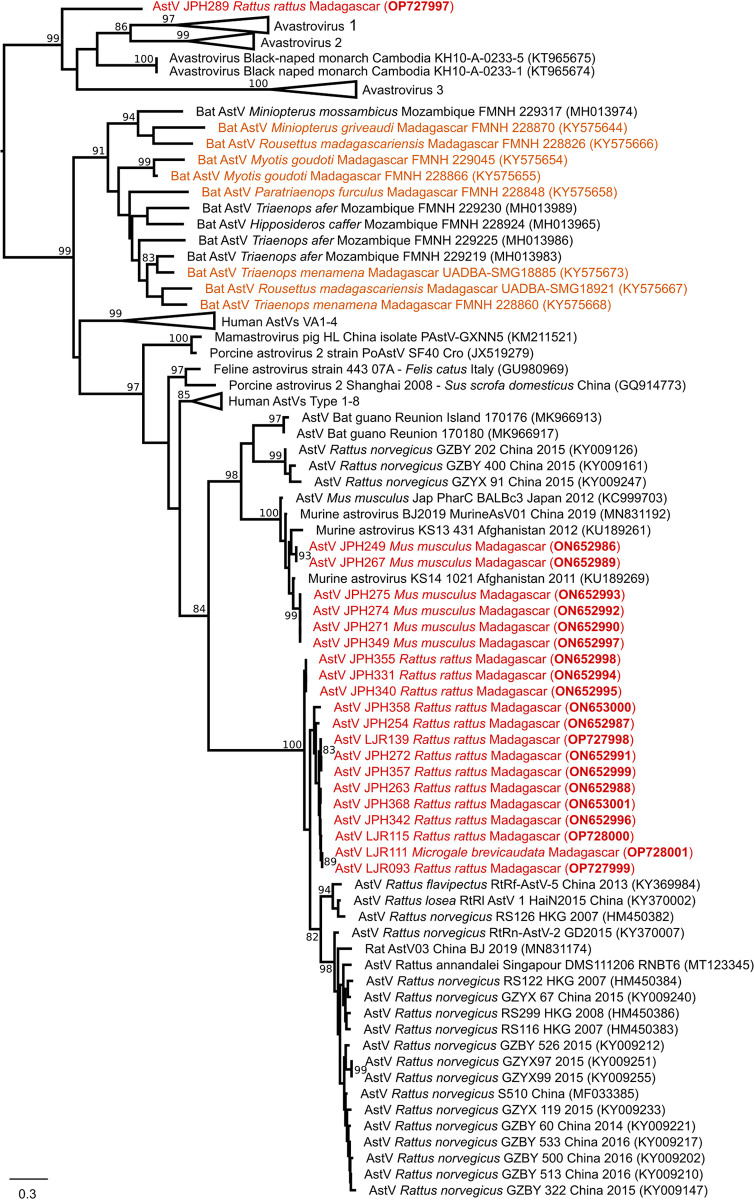
Small terrestrial mammals are major hosts of infectious agents responsible for zoonotic diseases. Astroviruses (AstVs)-the cause of non-bacterial gastroenteritis mainly affecting young children-have been detected in a wide array of mammalian and avian host species. However, understanding the factors that influence AstV infection within and across hosts is limited. Here, we investigated the impact of land use changes on AstVs in terrestrial small mammals in rural northeastern Madagascar. We sampled 515 small mammals, representing seven endemic and four introduced species. Twenty-two positive samples were identified, all but one of which were found in the introduced species Mus musculus and Rattus rattus (family Muridae), with a positivity rate of 7.7% (6/78) and 5.6% (15/266), respectively. The non-introduced rodent case was from an endemic shrew-tenrec (family Tenrecidae). We found the highest positivity rate of AstVs infection in brushy regrowth (17.5%, 7/40) as compared to flooded rice fields (4.60%, 8/174), secondary forest (4.1%, 3/74), agroforest (3.6%, 1/28), village (2.61%, 3/115), and semi-intact forest (0%, 0/84). A phylogenetic analysis revealed an association between AstVs and their rodent host species. None of the viruses were phylogenetically related to AstVs previously described in Malagasy bats. This study supports AstV circulation in synanthropic animals in agricultural habitats of Madagascar and highlights the need to assess the spillover risk to human populations in rural areas.
Copyright: © 2024 Carcauzon et al. This is an open access article distributed under the terms of the Creative Commons Attribution License, which permits unrestricted use, distribution, and reproduction in any medium, provided the original author and source are credited.
Conflict of interest statement
The authors have declared that no competing interests exist.
Figures
References
-
- Boga JA, Melón S, Nicieza I, I de Diego, Villar M, Parra F, et al. Etiology of sporadic cases of pediatric acute gastroenteritis in Asturias, Spain, and genotyping and characterization of norovirus strains involved. J Clin Microbiol. 2004;42: 2668–2674. doi: 10.1128/JCM.42.6.2668-2674.2004 - DOI - PMC - PubMed
MeSH terms
Grants and funding
LinkOut - more resources
Full Text Sources