Studying Retroviral Life Cycles Using Visible Viruses and Live Cell Imaging
- PMID: 38876144
- PMCID: PMC11697243
- DOI: 10.1146/annurev-virology-100422-012608
Studying Retroviral Life Cycles Using Visible Viruses and Live Cell Imaging
Abstract
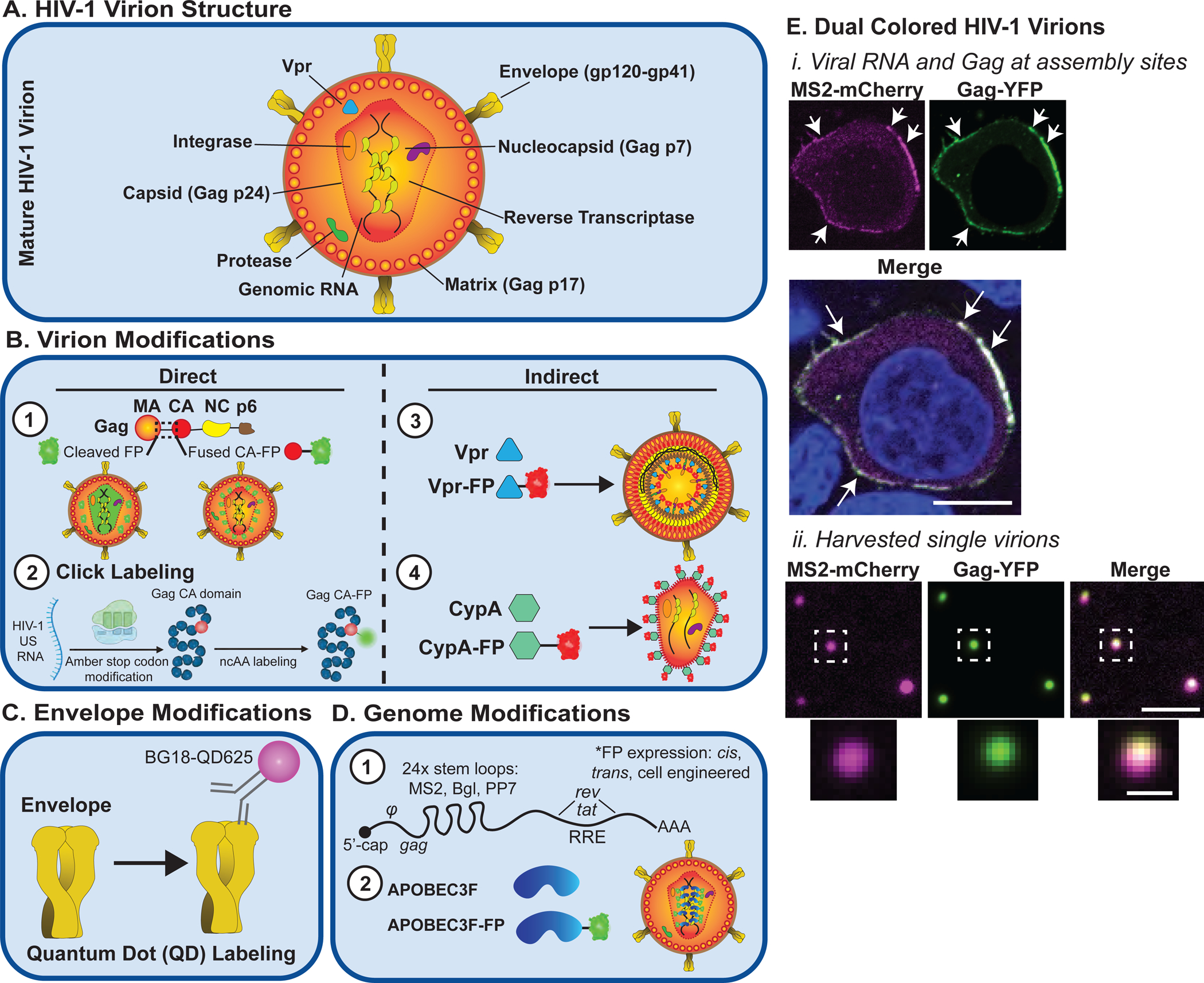
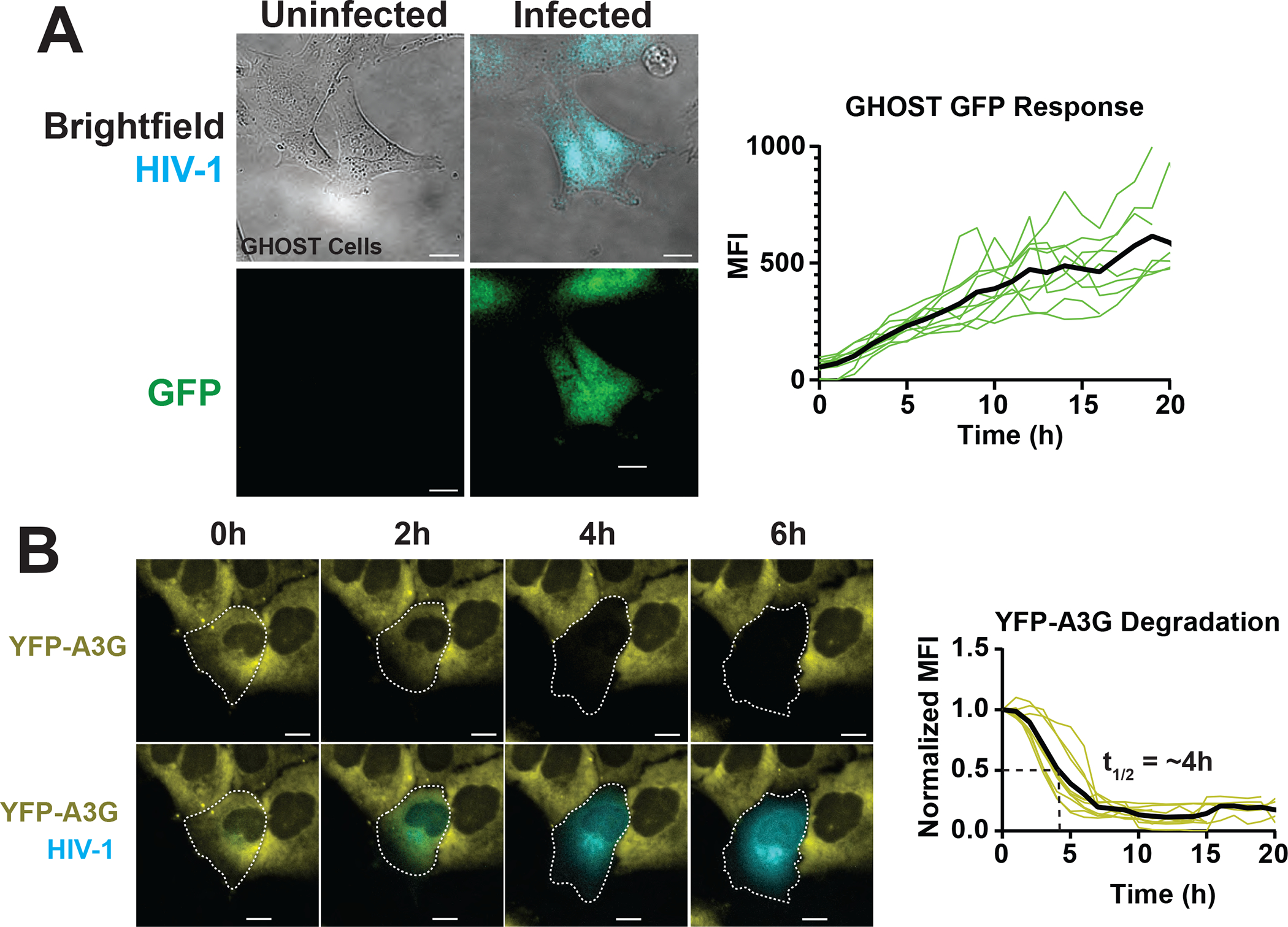
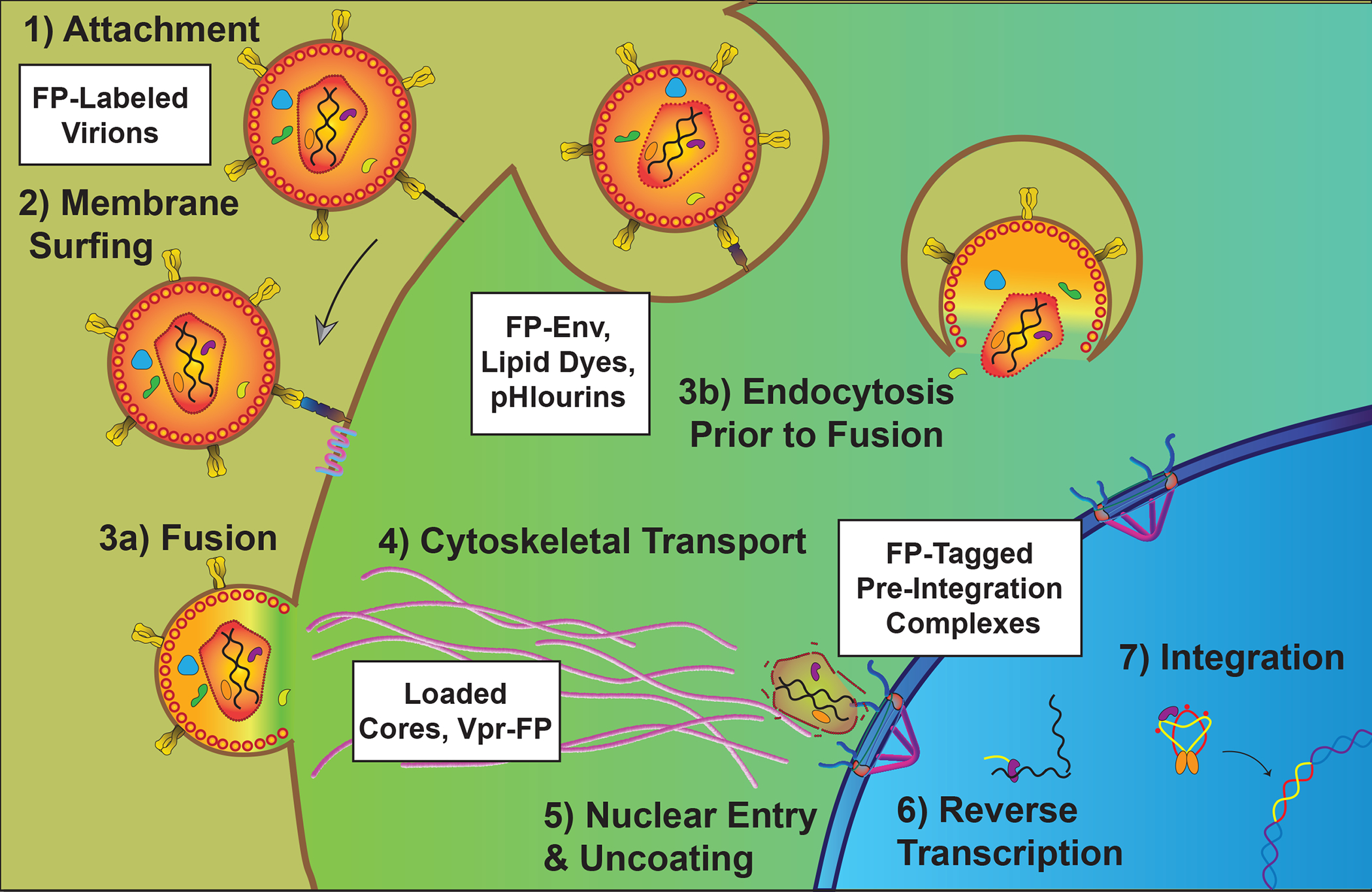
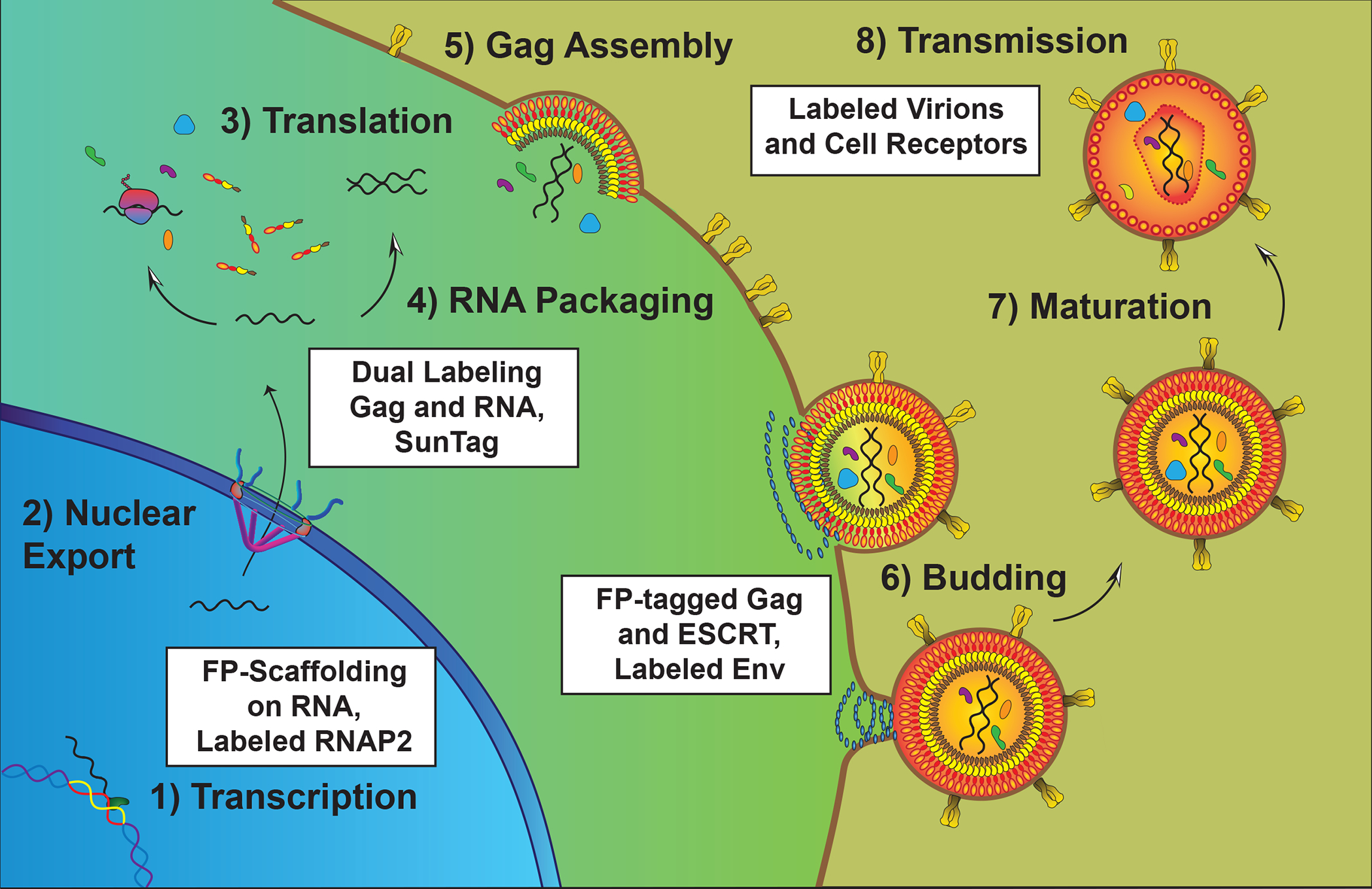
Viruses exploit key host cell factors to accomplish each individual stage of the viral replication cycle. To understand viral pathogenesis and speed the development of new antiviral strategies, high-resolution visualization of virus-host interactions is needed to define where and when these events occur within cells. Here, we review state-of-the-art live cell imaging techniques for tracking individual stages of viral life cycles, focusing predominantly on retroviruses and especially human immunodeficiency virus type 1, which is most extensively studied. We describe how visible viruses can be engineered for live cell imaging and how nonmodified viruses can, in some instances, be tracked and studied indirectly using cell biosensor systems. We summarize the ways in which live cell imaging has been used to dissect the retroviral life cycle. Finally, we discuss select challenges for the future including the need for better labeling strategies, increased resolution, and multivariate systems that will allow for the study of full viral replication cycles.
Keywords: fluorescence microscopy; live cell imaging; time-lapse imaging; virus replication.
Figures
References
-
- Bernal JD, Fankuchen I. 1937. Structure Types of Protein Crystals from Virus-infected Plants. Nature. 139(3526):923–24
-
- Brenner S, Horne RW. 1959. A negative staining method for high resolution electron microscopy of viruses. Biochim Biophys Acta. 34:103–10 - PubMed
-
- Arnheiter H, Dubois-Dalcq M, Lazzarini RA. 1984. Direct visualization of protein transport and processing in the living cell by microinjection of specific antibodies. Cell. 39(1):99–109 - PubMed
Publication types
MeSH terms
Grants and funding
LinkOut - more resources
Full Text Sources