


Metagenomic approach revealed the mobility and co-occurrence of antibiotic resistomes between non-intensive aquaculture environment and human
- PMID: 38877573
- PMCID: PMC11179227
- DOI: 10.1186/s40168-024-01824-x
Metagenomic approach revealed the mobility and co-occurrence of antibiotic resistomes between non-intensive aquaculture environment and human
Abstract
Background: Aquaculture is an important food source worldwide. The extensive use of antibiotics in intensive large-scale farms has resulted in resistance development. Non-intensive aquaculture is another aquatic feeding model that is conducive to ecological protection and closely related to the natural environment. However, the transmission of resistomes in non-intensive aquaculture has not been well characterized. Moreover, the influence of aquaculture resistomes on human health needs to be further understood. Here, metagenomic approach was employed to identify the mobility of aquaculture resistomes and estimate the potential risks to human health.
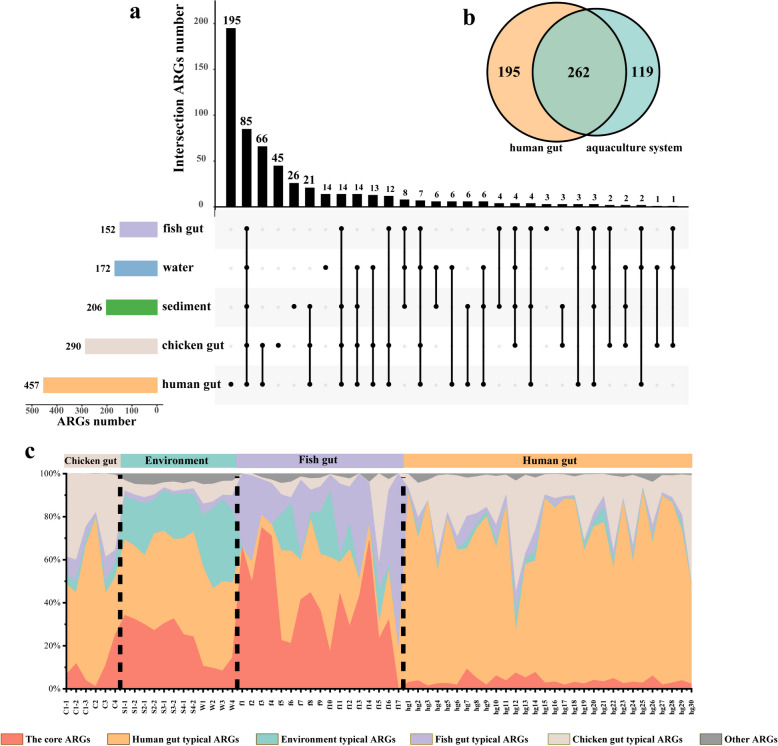
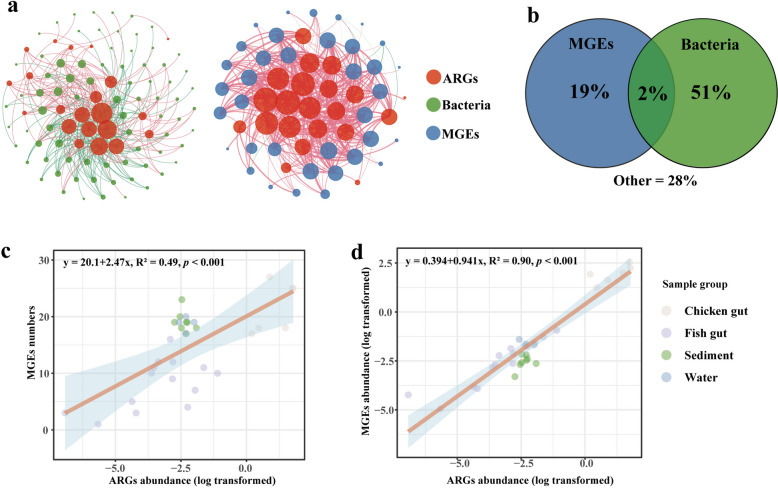
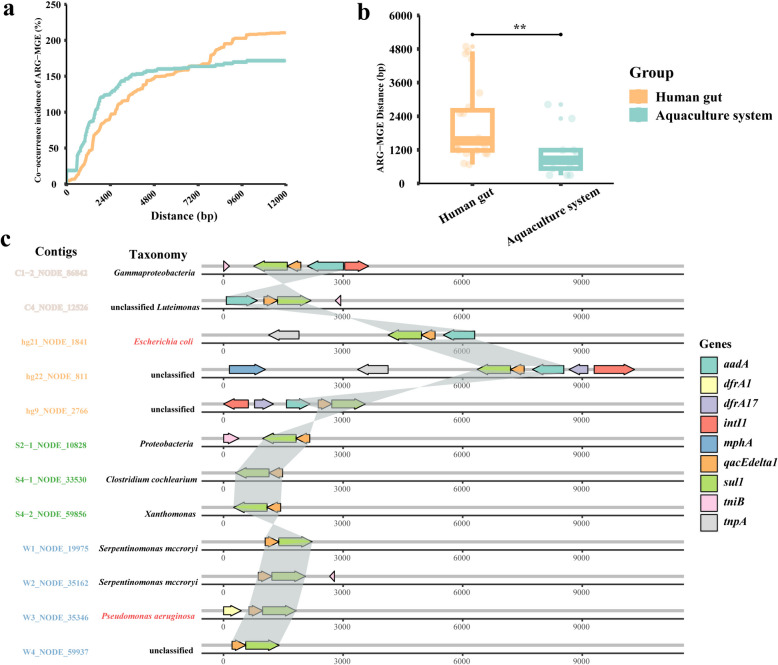
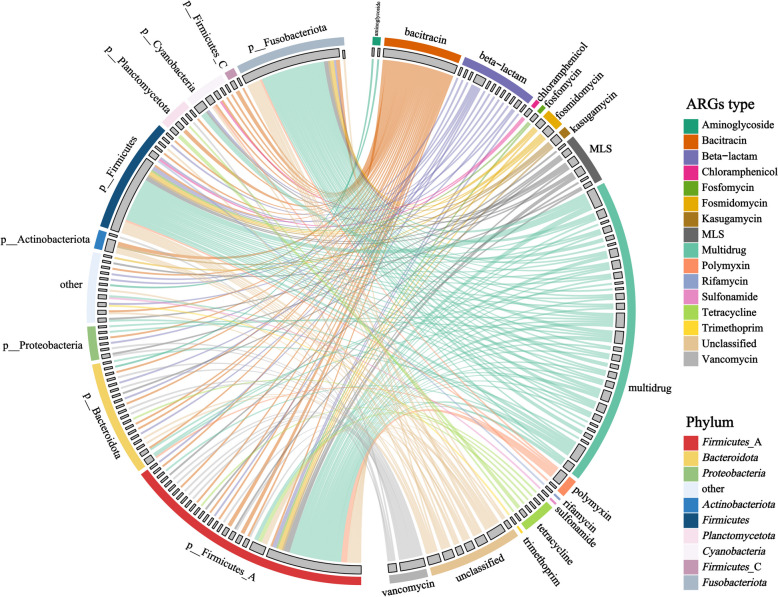
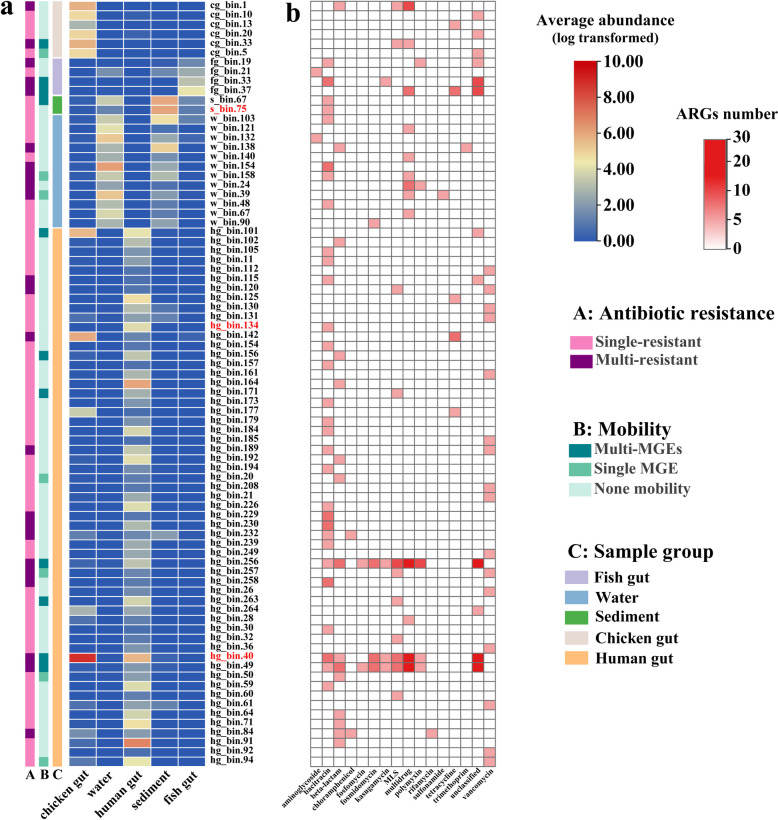
Results: The results demonstrated that antibiotic resistance genes (ARGs) were widely present in non-intensive aquaculture systems and the multidrug type was most abundant accounting for 34%. ARGs of non-intensive aquaculture environments were mainly shaped by microbial communities accounting for 51%. Seventy-seven genera and 36 mobile genetic elements (MGEs) were significantly associated with 23 ARG types (p < 0.05) according to network analysis. Six ARGs were defined as core ARGs (top 3% most abundant with occurrence frequency > 80%) which occupied 40% of ARG abundance in fish gut samples. Seventy-one ARG-carrying contigs were identified and 75% of them carried MGEs simultaneously. The qacEdelta1 and sul1 formed a stable combination and were detected simultaneously in aquaculture environments and humans. Additionally, 475 high-quality metagenomic-assembled genomes (MAGs) were recovered and 81 MAGs carried ARGs. The multidrug and bacitracin resistance genes were the most abundant ARG types carried by MAGs. Strikingly, Fusobacterium_A (opportunistic human pathogen) carrying ARGs and MGEs were identified in both the aquaculture system and human guts, which indicated the potential risks of ARG transfer.
Conclusions: The mobility and pathogenicity of aquaculture resistomes were explored by a metagenomic approach. Given the observed co-occurrence of resistomes between the aquaculture environment and human, more stringent regulation of resistomes in non-intensive aquaculture systems may be required. Video Abstract.
Keywords: ARG mobility; Aquaculture; Metagenome; One Health; Resistome.
© 2024. The Author(s).
Conflict of interest statement
The authors declare no competing interests.
Figures

References
-
- FAO. The State of World fisheries and aquaculture 2020. Sustainability in action. Rome: FAO; 2020. p. 244. 10.4060/ca9229en.
-
- Herrero M, Wirsenius S, Henderson B, Rigolot C, Thornton P, Havlík P, de Boer I, Gerber PJ. Livestock and the environment: what have we learned in the past decade? Annu Rev Environ Resour. 2015;40(1):177–202. doi: 10.1146/annurev-environ-031113-093503. - DOI
MeSH terms
Substances
Grants and funding
- 2022A1515011961/Natural Science Foundation of Guangdong Province
- 2022A1515011961/Natural Science Foundation of Guangdong Province
- 2022A1515011961/Natural Science Foundation of Guangdong Province
- 2022A1515011961/Natural Science Foundation of Guangdong Province
- 22193062/National Natural Science Foundation of China
LinkOut - more resources
Full Text Sources
Medical
