


Socio-demographic variation in diagnosis of and prescribing for common mental illnesses among children and young people during the COVID-19 pandemic: time series analysis of primary care electronic health records
- PMID: 38877779
- PMCID: PMC11652419
- DOI: 10.1111/jcpp.14026
Socio-demographic variation in diagnosis of and prescribing for common mental illnesses among children and young people during the COVID-19 pandemic: time series analysis of primary care electronic health records
Abstract
Background: The impact of the COVID-19 pandemic on the mental health of children and young people (CYP) has been widely reported. Primary care electronic health records were utilised to examine trends in the diagnosing, recording and treating of these common mental disorders by ethnicity and social deprivation in Greater Manchester, England.
Methods: Time-series analyses conducted using Greater Manchester Care Record (GMCR) data examined all diagnosed episodes of anxiety disorders and depression and prescribing of anxiolytics and antidepressants among patients aged 6-24 years. The 41-month observation period was split into three epochs: Pre-pandemic (1/2019-2/2020); Pandemic Phase 1 (3/2020-6/2021); Pandemic Phase 2 (7/2021-5/2022). Rate ratios for all CYP specific to sex, age, ethnicity, and neighbourhood-level Indices of Multiple Deprivation (IMD) quintile were modelled using negative binomial regression.
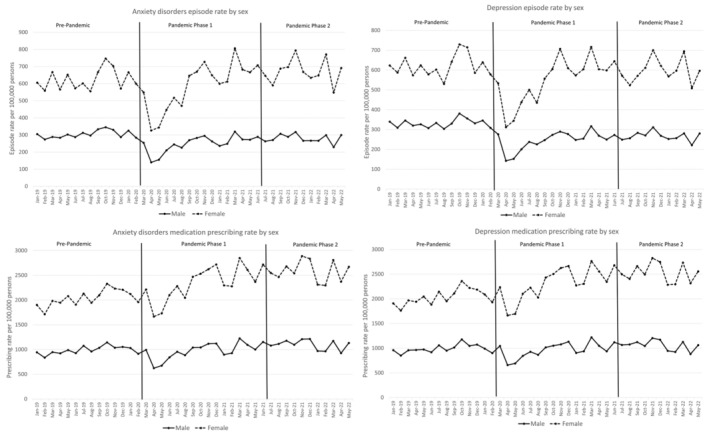
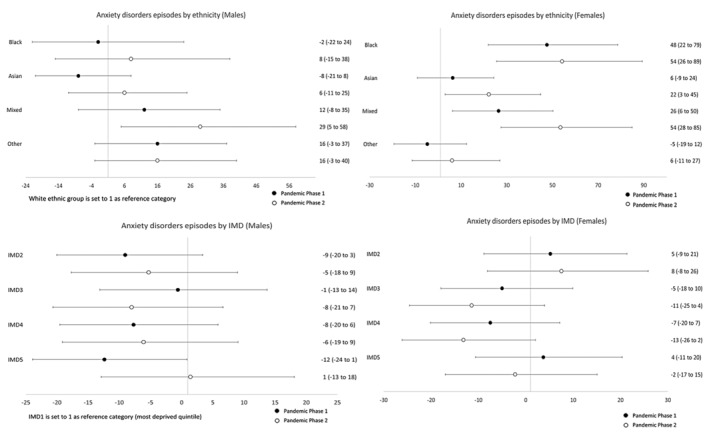
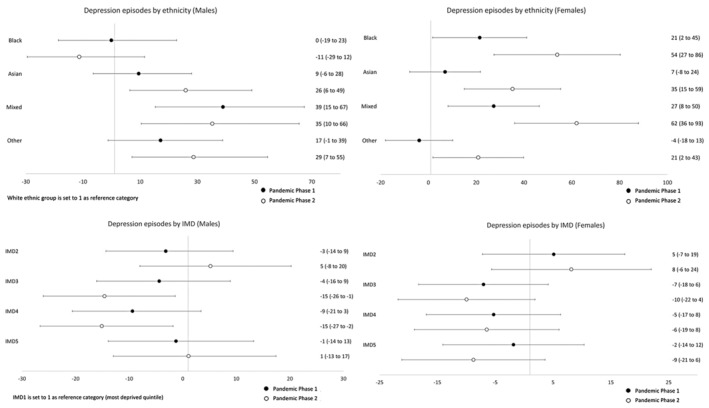
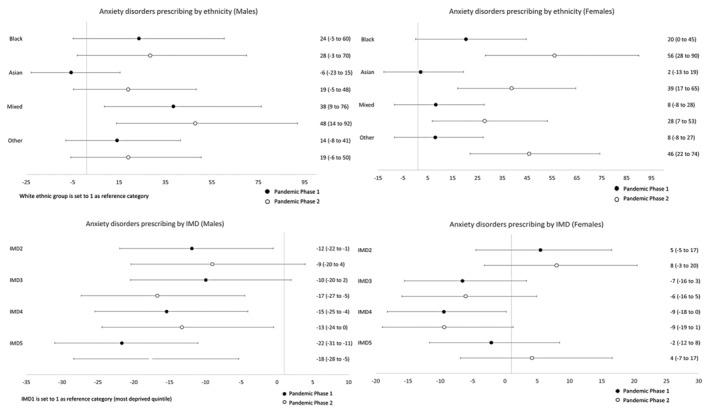
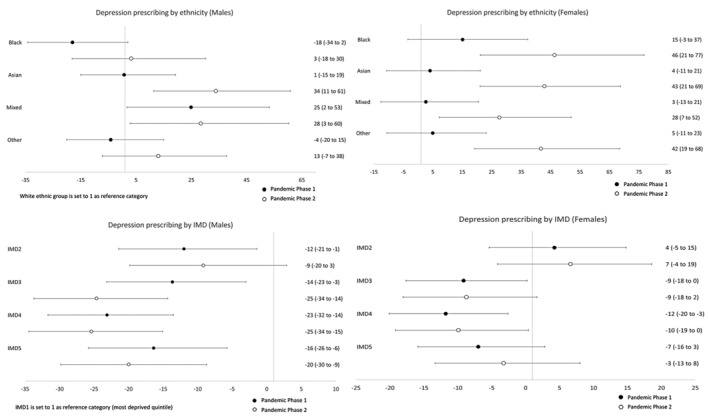
Results: Depression and anxiety disorder rates were highest in females, CYP aged 19-24, and White and 'Other' ethnic groups. During Pandemic Phase 1, rates for these diagnoses fell in all demographic subgroups and then rose to similar levels as those recorded pre-pandemic. In Pandemic Phase 2, rates in Black and Mixed-ethnicity females rose to a significantly greater degree (by 54% and 62%, respectively) than those in White females. Prescribing rates increased throughout the study period, with significantly greater rises observed in non-White females and males. The temporal trends were mostly homogeneous across deprivation quintiles.
Conclusion: The observed fluctuations in frequency of recorded common mental illness diagnoses likely reflect service accessibility and patients' differential propensities to consult as well as changing levels of distress and psychopathology in the population. However, psychotropic medication prescribing increased throughout the observation period, possibly indicating a sustained decline in mental health among CYP, and also clinicians' responses to problems presented. The comparatively greater increases in frequencies of diagnosis recording and medication prescribing among ethnic minority groups warrants further investigation.
Keywords: Anxiety disorders; COVID‐19; children and young people; depression; deprivation; ethnicity; general practice.
© 2024 The Author(s). Journal of Child Psychology and Psychiatry published by John Wiley & Sons Ltd on behalf of Association for Child and Adolescent Mental Health.
Figures
References
-
- Ahmad, G. , McManus, S. , Cooper, C. , Hatch, S.L. , & Das‐Munshi, J. (2022). Prevalence of common mental disorders and treatment receipt for people from ethnic minority backgrounds in England: Repeated cross‐sectional surveys of the general population in 2007 and 2014. British Journal of Psychiatry, 221, 520–527. - PMC - PubMed
-
- Banks, J. , & Xu, X. (2020). The mental health effects of the first two months of lockdown during the COVID‐19 pandemic in the UK*. Fiscal Studies, 41, 685–708.
-
- Brown, J. , & Kirk‐Wade, E. (2021). Coronavirus: A history of English lockdown laws . House of Commons Libary Briefing Paper.
MeSH terms
Substances
Grants and funding
LinkOut - more resources
Full Text Sources
Medical
