


Effective concentration of herbal anaesthetics Origanum vulgare L. oil and its effects on stress parameters in Nile tilapia (Oreochromis niloticus)
- PMID: 38879883
- PMCID: PMC11180457
- DOI: 10.1002/vms3.1492
Effective concentration of herbal anaesthetics Origanum vulgare L. oil and its effects on stress parameters in Nile tilapia (Oreochromis niloticus)
Abstract
Background: Using anaesthetics is an important application in aquaculture especially where the fish transportation, vaccination, grading, sorting activities and many other handling operations have been conducted during the different stages of production periods in the farms or hatcheries.
Objectives: This study aimed to evaluate the efficacy of oregano essential oil (OO) as an anaesthetic for Nile tilapia and to determine the optimal concentration and post-application stress effects compared to clove oil (CO).
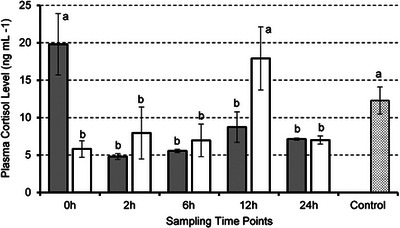
Methods: Nile tilapia juveniles were exposed to different concentrations of OO (20-40-60-80-100 mg L-1) and CO (50 mg L-1) for different time periods to determine the optimal concentration and exposure time. After the effective concentration of OO was determined, in the second experiment, stress parameters (glucose, plasma cortisol) were analysed after 0, 2, 6, 12 and 24 h of application. The results compared to the control group and CO results.
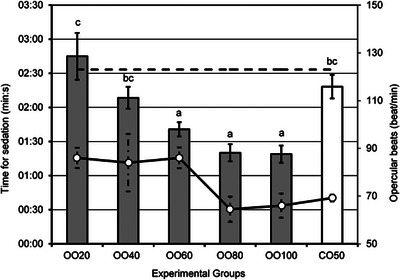
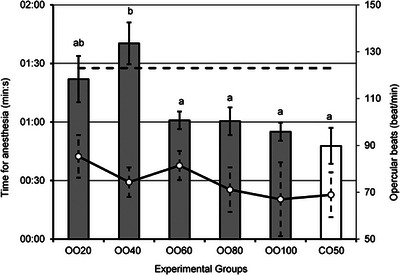
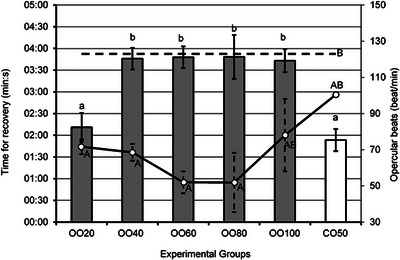
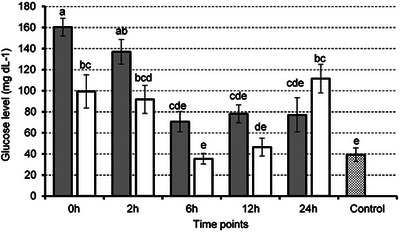
Results: The study found that OO which has carvacrol compound higher than 78% was an efficient anaesthetic for Nile tilapia, and the effective concentration was found to be 60 mg L-1. No significant differences were found between opercular beats in any concentration of OO and CO. Basal glucose level in blood without anaesthesia application and recorded at 39.33 mg dL-1 and significantly lower than OO and CO at first two sampling points, 0 and 2 h (p < 0.05). According to plasma cortisol level results, although CO experimental group showed secondary stress response at 12 h (17.91 ± 4.21 ng mL-1), OO and CO group cortisol levels decreased at 24 h after anaesthesia application 7.13 ± 0.14and 7.01 ± 0.54 ng mL-1, respectively, below the control group cortisol concentration (12.28 ± 1.81 ng mL-1).
Conclusions: These findings have important implications for the aquaculture industry as the use of OO as an anaesthetic could reduce the stress and mortality associated with traditional anaesthetics. Further research is needed to evaluate the efficacy of OO as an anaesthetic agent for other fish species and to determine the optimal concentration and exposure time for different species.
Keywords: anaesthesia; glucose; herbal oil; plasma cortisol; tilapia culture.
© 2024 The Author(s). Veterinary Medicine and Science published by John Wiley & Sons Ltd.
Conflict of interest statement
The authors declare no conflicts of interest.
Figures
References
-
- Aydın, B. , Akhan, S. , Gümüş, E. , & Özbaş, M. (2019). Anesthetic efficacy of clove oil and 2‐phenoxyethanol on doctor fish, Garra rufa (Heckel, 1843). Boletim do Instituto de Pesca, 45(4), e506.
-
- Azad, I. S. , Al‐Yaqout, A. , & Al‐Roumi, M. (2014). Antibacterial and immunity enhancement properties of anaesthetic doses of thyme (Thymus vulgaris) oil and three other anesthetics in Sparidentax hasta and Acanthopagrus latus . Journal of King Saud University—Science, 26(2), 101–106. 10.1016/j.jksus.2013.12.003 - DOI
-
- Baldisserotto, B. , Barata, L. E. , Silva, A. S. , Lobato, W. F. , Silva, L. L. , Toni, C. , & Silva, L. V. (2018). Anesthesia of tambaqui Colossoma macropomum (Characiformes: Serrasalmidae) with the essential oils of Aniba rosaeodora and Aniba parviflora and their major compound, linalool. Neotropical Ichthyology, 16(1), e170128. 10.1590/1982-0224-20170128 - DOI
-
- Barcellos, L. J. , Kreutz, L. C. , de Souza, C. D. , Rodrigues, L. B. , Fioreze, I. , Quevedo, R. M. , Cericato, L. , Soso, A. B. , Fagundes, M. , Conrad, J. , Lacerda, L. A. , & Terra, S. (2004). Hematological changes in jundiá (Rhamdia quelen Quoy and Gaimard Pimelodidae) after acute and chronic stress caused by usual aquacultural management, with emphasis on immunosuppressive effects. Aquaculture, 237, 229–236. 10.1016/j.aquaculture.2004.03.026 - DOI
-
- Barreto, R. E. , & Volpato, G. L. (2006). Ventilatory frequency of Nile tilapia subjected to different stressors. Journal of Experimental Animal Science, 43(3), 189–196. 10.1016/j.jeas.2006.05.001 - DOI
Publication types
MeSH terms
Substances
Grants and funding
LinkOut - more resources
Full Text Sources
