


Pharmacological Effect of In Vitro Antioxidant Property and Green Synthesis of Silver Nanoparticles (AgNPs) Utilizing Murraya koenigii Antibacterial Application
- PMID: 38882802
- PMCID: PMC11174184
- DOI: 10.4103/jpbs.jpbs_567_23
Pharmacological Effect of In Vitro Antioxidant Property and Green Synthesis of Silver Nanoparticles (AgNPs) Utilizing Murraya koenigii Antibacterial Application
Abstract
Background: Nonessential heavy metals pose a significant threat to human health due to their toxicity. Mercury, in particular, is identified as a hazardous metal. The study aims to detect mercury using colorimetric analysis with Murraya koenigii, emphasizing the eco-friendliness of the method.
Aims and objectives: The primary objective is to detect mercury using a colorimetric analysis method employing Murraya koenigii. Additionally, the study aims to investigate the eco-friendliness of this detection method.
Materials and methods: Colorimetric analysis was conducted using Murraya koenigii to detect mercury. Ultraviolet-visible (UV-vis) spectroscopy was employed to detect the formation of silver nanoparticles (AgNPs), with a characteristic surface plasmon resonance (SPR) band observed. X-ray diffraction (XRD) data analysis was performed to determine the crystalline nature and size of AgNPs. Scanning electron microscopy (SEM) was utilized to visualize the morphology of AgNPs. Fourier transform infrared (FTIR) spectroscopy was employed to identify functional groups involved in reducing silver ions. Antibacterial properties of synthesized AgNPs were tested against various microorganisms, including Escherichia coli, Staphylococcus aureus, Streptococcus mutans, and Enterococcus faecalis.
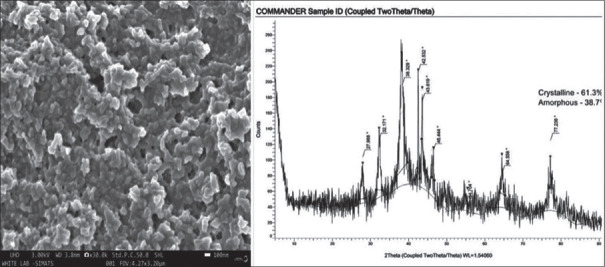
Results: Mercury was successfully detected using colorimetric analysis with Murraya koenigii. Formation of AgNPs was confirmed by UV-vis spectroscopy, with a characteristic SPR band at 418 nm. AgNPs were found to be crystalline with an average size of 5.20 nm, as determined by XRD analysis. SEM images revealed spherical and polycrystalline AgNPs. FTIR spectra indicated the involvement of the -OH group of compounds in the extract in reducing silver ions. Synthesized AgNPs exhibited antibacterial properties against various microorganisms.
Conclusion: A sustainable and eco-friendly method for synthesizing AgNPs using Murraya koenigii extract was successfully developed. This method not only detected mercury but also demonstrated antibacterial properties against various microorganisms. The study underscores the health implications of nonessential heavy metals, emphasizing the importance of eco-friendly detection and mitigation methods.
Keywords: Antioxidant; Murraya koenigii; SEM; XRD; good health and well-being; silver nanoparticle.
Copyright: © 2024 Journal of Pharmacy and Bioallied Sciences.
Conflict of interest statement
There are no conflicts of interest.
Figures





References
-
- Lee SB, Cha KH, Kim SN, Altantsetseg S, Shatar S, Sarangerel O, et al. The antimicrobial activity of essential oil from dracocephalum foetidum against pathogenic microorganisms. J Microbiol. 2007;45:53–7. - PubMed
-
- Ali H, Khan E, Ilahi I. Environmental chemistry and ecotoxicology of hazardous heavy metals: Environmental persistence, toxicity, and bioaccumulation. J Chem 2019. 2019 doi: 10.1155/2019/6730305.
-
- Mechergui K, Coelho JA, Serra MC, Lamine SB, Boukhchina S, Khouja ML. Essential oils of Origanum vulgare L. subsp. glandulosum (Desf.) Ietswaart from Tunisia: Chemical composition and antioxidant activity. J Sci Food Agric. 2010;90:1745–9. - PubMed
-
- Valko M, Leibfritz D, Moncol J, Cronin MT, Mazur M, Telser J. Free radicals and antioxidants in normal physiological functions and human disease. Int J Biochem Cell Biol. 2007;39:44–84. - PubMed
LinkOut - more resources
Full Text Sources