


Low potassium activation of proximal mTOR/AKT signaling is mediated by Kir4.2
- PMID: 38886379
- PMCID: PMC11183202
- DOI: 10.1038/s41467-024-49562-w
Low potassium activation of proximal mTOR/AKT signaling is mediated by Kir4.2
Abstract
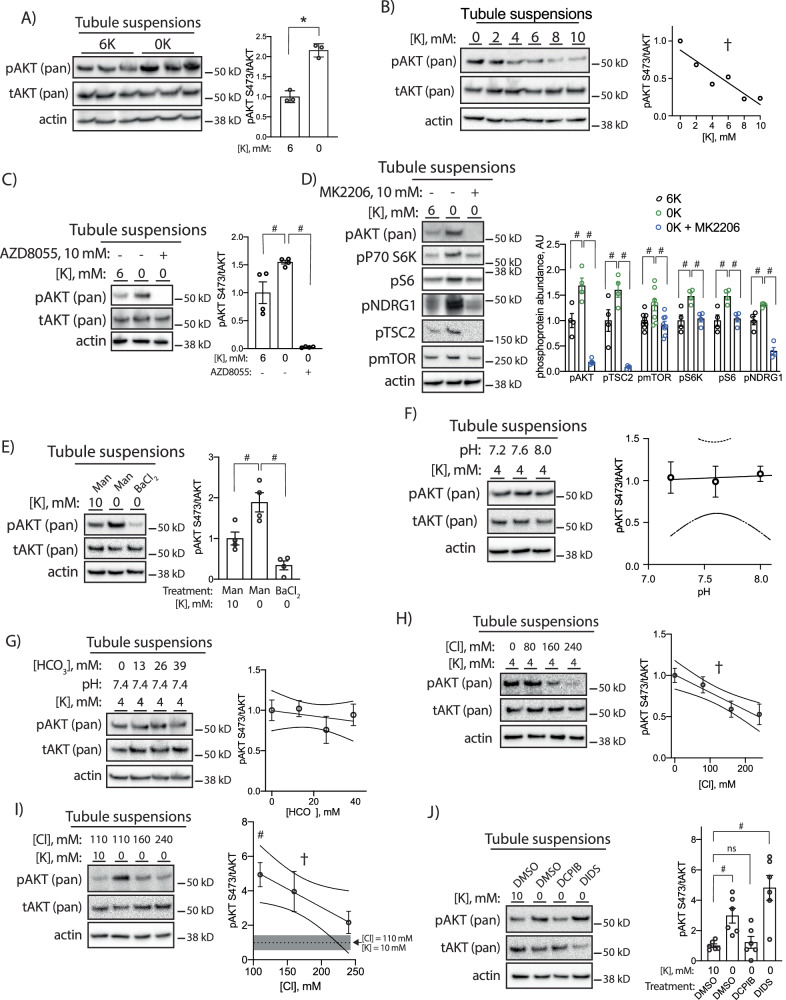
The renal epithelium is sensitive to changes in blood potassium (K+). We identify the basolateral K+ channel, Kir4.2, as a mediator of the proximal tubule response to K+ deficiency. Mice lacking Kir4.2 have a compensated baseline phenotype whereby they increase their distal transport burden to maintain homeostasis. Upon dietary K+ depletion, knockout animals decompensate as evidenced by increased urinary K+ excretion and development of a proximal renal tubular acidosis. Potassium wasting is not proximal in origin but is caused by higher ENaC activity and depends upon increased distal sodium delivery. Three-dimensional imaging reveals Kir4.2 knockouts fail to undergo proximal tubule expansion, while the distal convoluted tubule response is exaggerated. AKT signaling mediates the dietary K+ response, which is blunted in Kir4.2 knockouts. Lastly, we demonstrate in isolated tubules that AKT phosphorylation in response to low K+ depends upon mTORC2 activation by secondary changes in Cl- transport. Data support a proximal role for cell Cl- which, as it does along the distal nephron, responds to K+ changes to activate kinase signaling.
© 2024. The Author(s).
Conflict of interest statement
The authors declare no competing interests.
Figures




References
MeSH terms
Substances
Grants and funding
LinkOut - more resources
Full Text Sources
Medical
Molecular Biology Databases
Miscellaneous
