


Evolving Strategies for Extracellular Vesicles as Future Cardiac Therapeutics: From Macro- to Nano-Applications
- PMID: 38892376
- PMCID: PMC11173118
- DOI: 10.3390/ijms25116187
Evolving Strategies for Extracellular Vesicles as Future Cardiac Therapeutics: From Macro- to Nano-Applications
Abstract
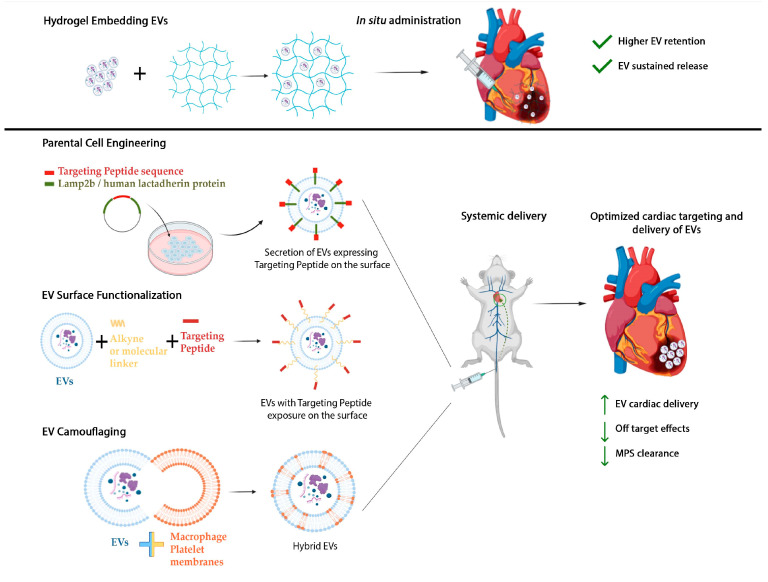
Cardiovascular disease represents the foremost cause of mortality and morbidity worldwide, with a steadily increasing incidence due to the growth of the ageing population. Cardiac dysfunction leading to heart failure may arise from acute myocardial infarction (MI) as well as inflammatory- and cancer-related chronic cardiomyopathy. Despite pharmacological progress, effective cardiac repair represents an unmet clinical need, with heart transplantation being the only option for end-stage heart failure. The functional profiling of the biological activity of extracellular vesicles (EVs) has recently attracted increasing interest in the field of translational research for cardiac regenerative medicine. The cardioprotective and cardioactive potential of human progenitor stem/cell-derived EVs has been reported in several preclinical studies, and EVs have been suggested as promising paracrine therapy candidates for future clinical translation. Nevertheless, some compelling aspects must be properly addressed, including optimizing delivery strategies to meet patient needs and enhancing targeting specificity to the cardiac tissue. Therefore, in this review, we will discuss the most relevant aspects of the therapeutic potential of EVs released by human progenitors for cardiovascular disease, with a specific focus on the strategies that have been recently implemented to improve myocardial targeting and administration routes.
Keywords: delivery; extracellular vesicle; heart disease; myocardial targeting; paracrine effect; sustained release.
Conflict of interest statement
The authors declare no conflicts of interest.
Figures
References
Publication types
MeSH terms
LinkOut - more resources
Full Text Sources
