


CaMKIV-Mediated Phosphorylation Inactivates Freud-1/CC2D1A Repression for Calcium-Dependent 5-HT1A Receptor Gene Induction
- PMID: 38892382
- PMCID: PMC11172825
- DOI: 10.3390/ijms25116194
CaMKIV-Mediated Phosphorylation Inactivates Freud-1/CC2D1A Repression for Calcium-Dependent 5-HT1A Receptor Gene Induction
Abstract
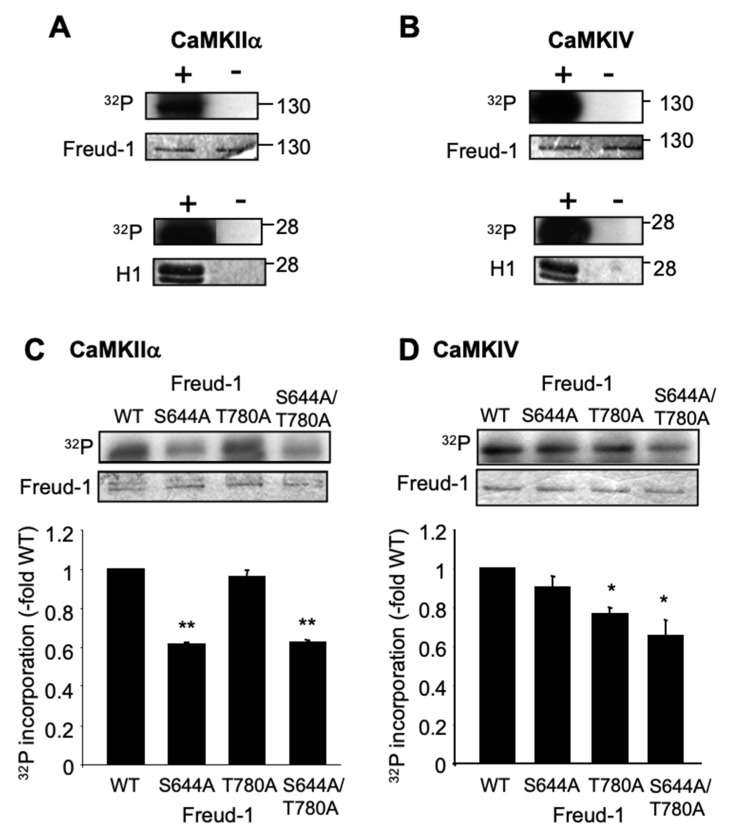
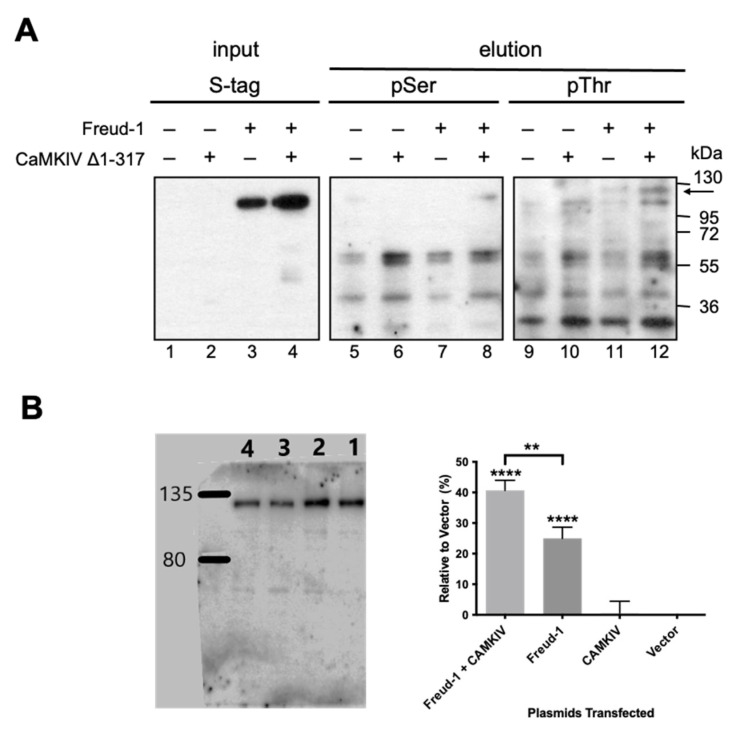
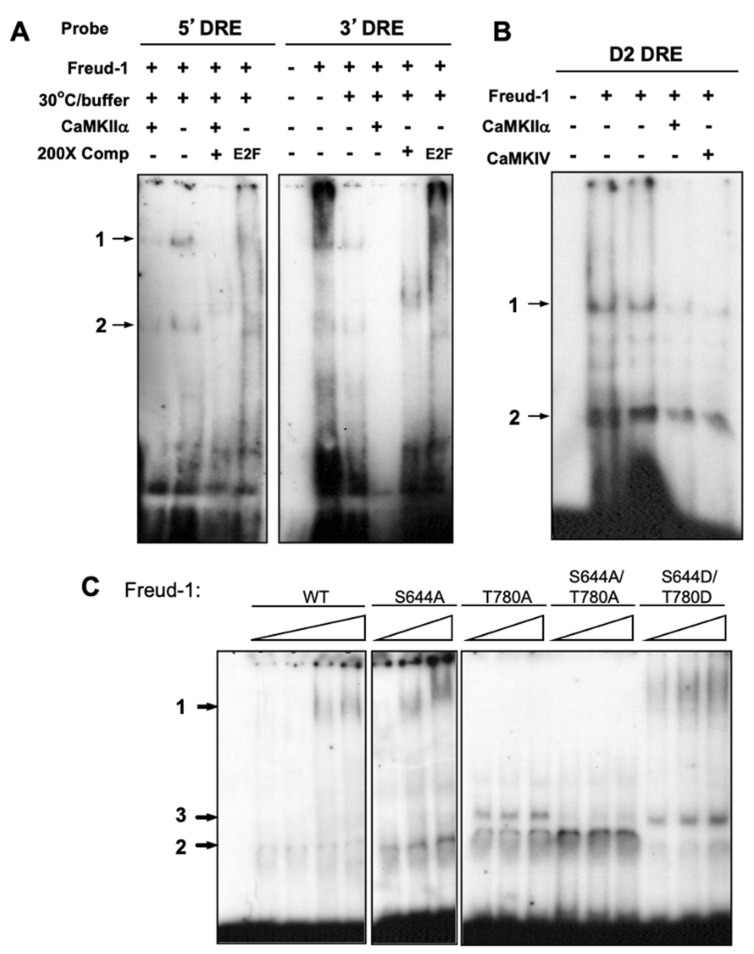
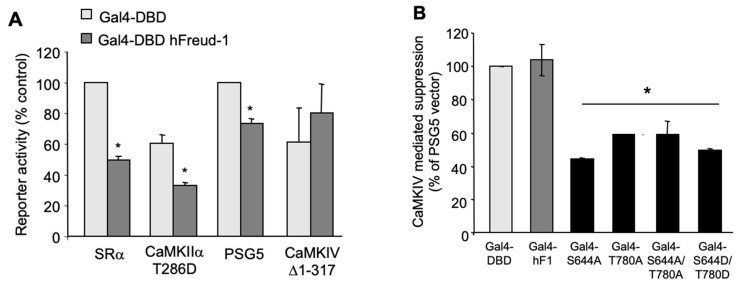
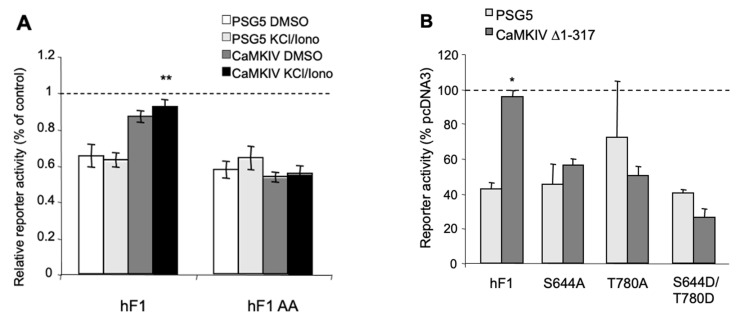
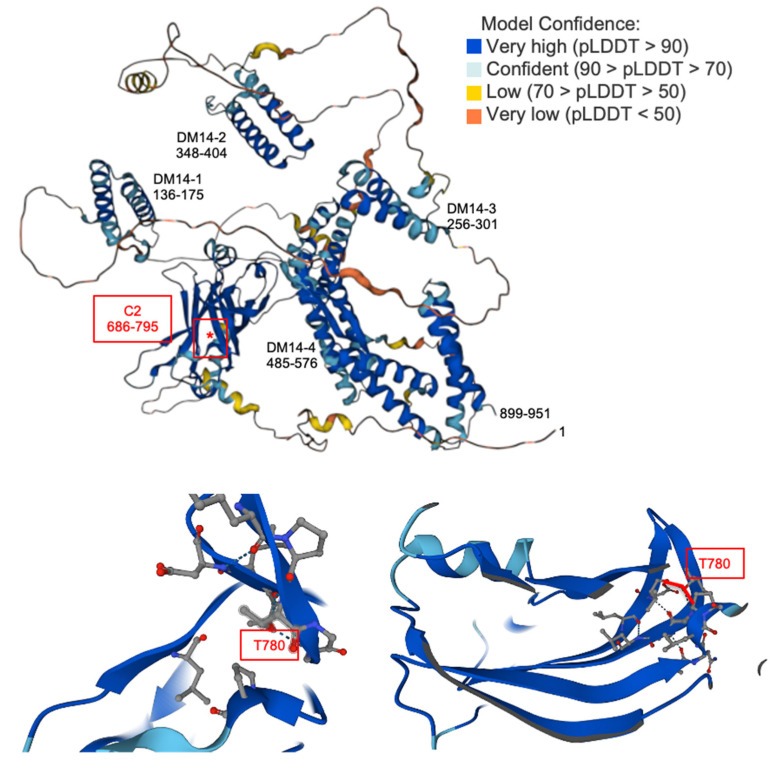
Calcium calmodulin-dependent protein kinase (CaMK) mediates calcium-induced neural gene activation. CaMK also inhibits the non-syndromic intellectual disability gene, Freud-1/CC2D1A, a transcriptional repressor of human serotonin-1A (5-HT1A) and dopamine-D2 receptor genes. The altered expression of these Freud-1-regulated genes is implicated in mental illnesses such as major depression and schizophrenia. We hypothesized that Freud-1 is blocked by CaMK-induced phosphorylation. The incubation of purified Freud-1 with either CaMKIIα or CaMKIV increased Freud-1 phosphorylation that was partly prevented in Freud-1-Ser644Ala and Freud-1-Thr780Ala CaMK site mutants. In human SK-N-SH neuroblastoma cells, active CaMKIV induced the serine and threonine phosphorylation of Freud-1, and specifically increased Freud-1-Thr780 phosphorylation in transfected HEK-293 cells. The activation of purified CaMKIIα or CaMKIV reduced Freud-1 binding to its DNA element on the 5-HT1A and dopamine-D2 receptor genes. In SK-N-SH cells, active CaMKIV but not CaMKIIα blocked the Freud-1 repressor activity, while Freud-1 Ser644Ala, Thr780Ala or dual mutants were resistant to inhibition by activated CaMKIV or calcium mobilization. These results indicate that the Freud-1 repressor activity is blocked by CaMKIV-induced phosphorylation at Thr780, resulting in the up-regulation of the target genes, such as the 5-HT1A receptor gene. The CaMKIV-mediated inhibition of Freud-1 provides a novel de-repression mechanism to induce 5-HT1A receptor expression for the regulation of cognitive development, behavior and antidepressant response.
Keywords: 5-HT1A receptor; gene repression; major depressive disorder; phosphorylation; raphe; transcription factor.
Conflict of interest statement
The authors declare no conflicts of interest.
Figures
References
-
- Matsuda A., Suzuki Y., Honda G., Muramatsu S., Matsuzaki O., Nagano Y., Doi T., Shimotohno K., Harada T., Nishida E., et al. Large-scale identification and characterization of human genes that activate NF-kappaB and MAPK signaling pathways. Oncogene. 2003;22:3307–3318. doi: 10.1038/sj.onc.1206406. - DOI - PubMed
-
- Millar A.M., Souslova T., Albert P.R. The Freud-1/CC2D1A family: Multifunctional regulators implicated in mental retardation. In: Tan P.U., editor. Latest Findings in Intellectual and Developmental Disabilities Research. InTech; Rijeka, Croatia: 2012. pp. 279–302. - DOI
-
- Basel-Vanagaite L., Attia R., Yahav M., Ferland R.J., Anteki L., Walsh C.A., Olender T., Straussberg R., Magal N., Taub E., et al. The CC2D1A, a member of a new gene family with C2 domains, is involved in autosomal recessive non-syndromic mental retardation. J. Med. Genet. 2006;43:203–210. doi: 10.1136/jmg.2005.035709. - DOI - PMC - PubMed
-
- Manzini M.C., Xiong L., Shaheen R., Tambunan D.E., Di Costanzo S., Mitisalis V., Tischfield D.J., Cinquino A., Ghaziuddin M., Christian M., et al. CC2D1A regulates human intellectual and social function as well as NF-kappaB signaling homeostasis. Cell Rep. 2014;8:647–655. doi: 10.1016/j.celrep.2014.06.039. - DOI - PMC - PubMed
MeSH terms
Substances
Grants and funding
LinkOut - more resources
Full Text Sources
Miscellaneous
