


Effects of Respiratory Muscle Training on Functional Ability, Pain-Related Outcomes, and Respiratory Function in Individuals with Low Back Pain: Systematic Review and Meta-Analysis
- PMID: 38892764
- PMCID: PMC11172635
- DOI: 10.3390/jcm13113053
Effects of Respiratory Muscle Training on Functional Ability, Pain-Related Outcomes, and Respiratory Function in Individuals with Low Back Pain: Systematic Review and Meta-Analysis
Abstract
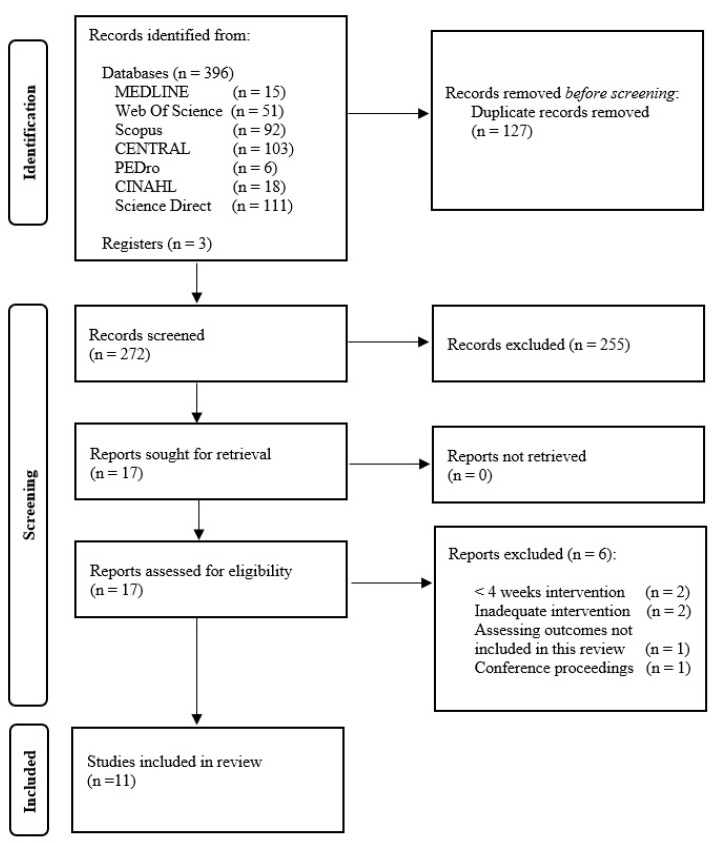
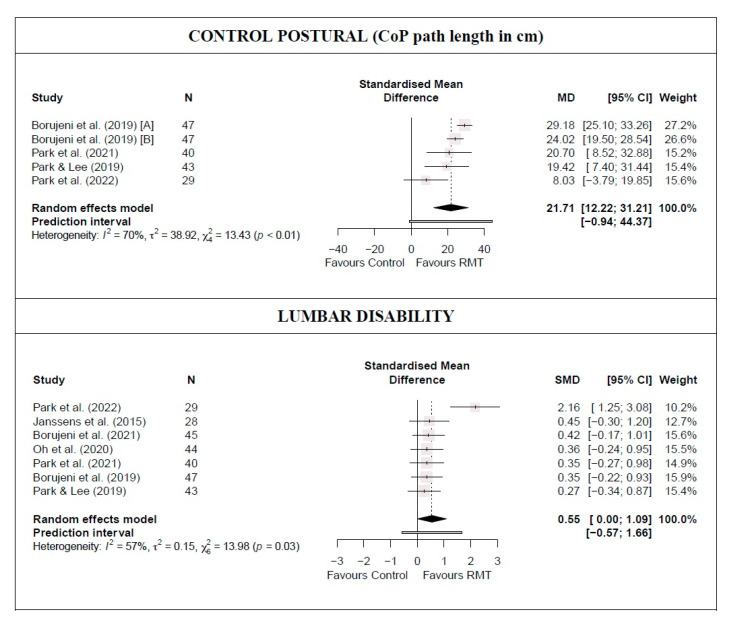
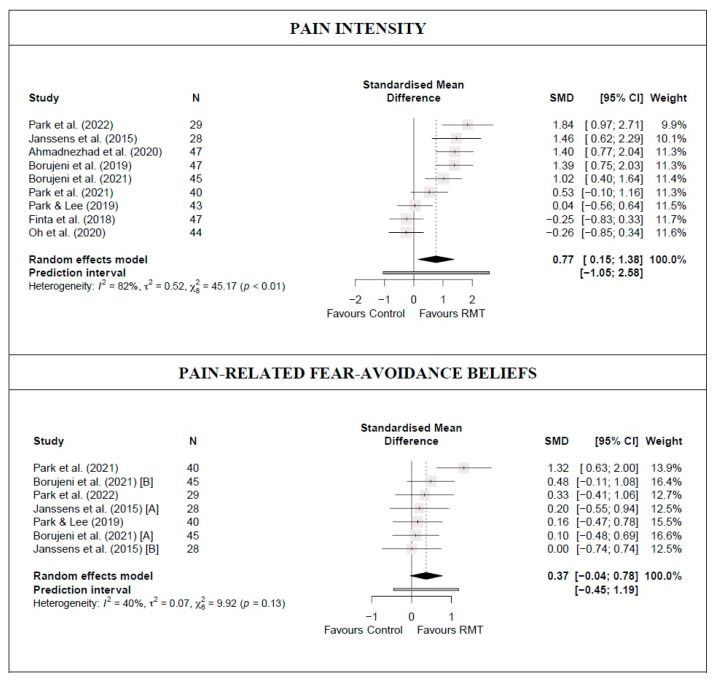
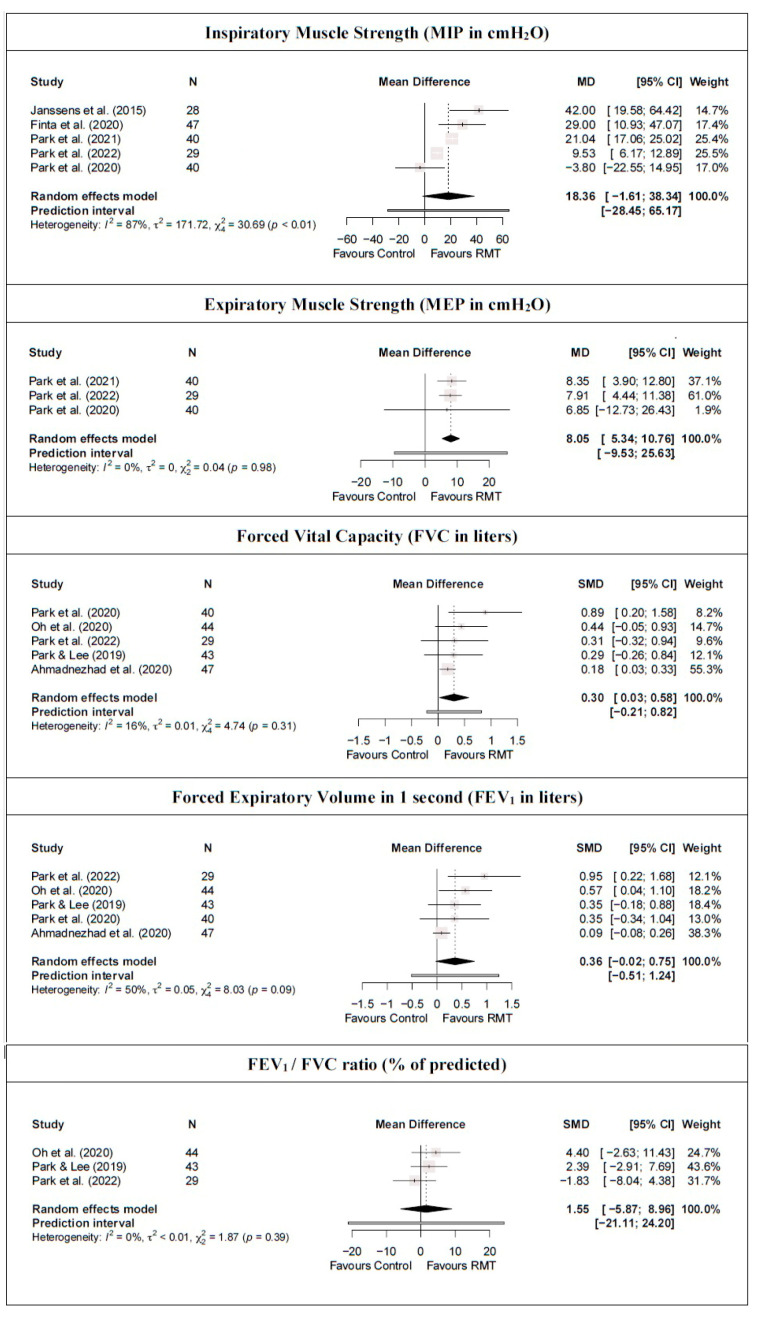
Objectives: The aim of this meta-analysis was to determine the effects of respiratory muscle training (RMT) on functional ability, pain-related outcomes, and respiratory function in individuals with sub-acute and chronic low back pain (LBP). Methods: The study selection was as follows: (participants) adult individuals with >4 weeks of LBP; (intervention) RMT; (comparison) any comparison RMT (inspiratory or expiratory or mixed) versus control; (outcomes) postural control, lumbar disability, pain-related outcomes, pain-related fear-avoidance beliefs, respiratory muscle function, and pulmonary function; and (study design) randomized controlled trials. Results: 11 studies were included in the meta-analysis showing that RMT produces a statistically significant increase in postural control (mean difference (MD) = 21.71 [12.22; 31.21]; decrease in lumbar disability (standardized mean difference (SMD) = 0.55 [0.001; 1.09]); decrease in lumbar pain intensity (SMD = 0.77 [0.15; 1.38]; increase in expiratory muscle strength (MD = 8.05 [5.34; 10.76]); and increase in forced vital capacity (FVC) (MD = 0.30 [0.03; 0.58]) compared with a control group. However, RMT does not produce an increase in inspiratory muscle strength (MD = 18.36 [-1.61; 38.34]) and in forced expiratory volume at the first second (FEV1) (MD = 0.36 [-0.02; 0.75]; and in the FEV1/FVC ratio (MD = 1.55 [-5.87; 8.96]) compared with the control group. Conclusions: RMT could improve expiratory muscle strength and FVC, with a moderate quality of evidence, whereas a low quality of evidence suggests that RMT could improve postural control, lumbar disability, and pain intensity in individuals with sub-acute and chronic LBP. However, more studies of high methodological quality are needed to strengthen the results of this meta-analysis.
Keywords: disability; low back pain; pain threshold; postural balance; respiratory function tests; respiratory muscle training.
Conflict of interest statement
The authors declare no conflicts of interest.
Figures
References
-
- Fujii R., Imai R., Shigetoh H., Tanaka S., Morioka S. Task-specific fear influences abnormal trunk motor coordination in workers with chronic low back pain: A relative phase angle analysis of object-lifting. BMC Musculoskelet. Disord. 2022;23:161. doi: 10.1186/s12891-022-05118-x. - DOI - PMC - PubMed
-
- Osumi M., Sumitani M., Otake Y., Nishigami T., Mibu A., Nishi Y., Imai R., Sato G., Nagakura Y., Morioka S. Kinesiophobia modulates lumbar movements in people with chronic low back pain: A kinematic analysis of lumbar bending and returning movement. Eur. Spine J. 2019;28:1572–1578. doi: 10.1007/s00586-019-06010-4. - DOI - PubMed
Publication types
LinkOut - more resources
Full Text Sources
Miscellaneous
