


Deep Learning-Based Nystagmus Detection for BPPV Diagnosis
- PMID: 38894208
- PMCID: PMC11175138
- DOI: 10.3390/s24113417
Deep Learning-Based Nystagmus Detection for BPPV Diagnosis
Abstract
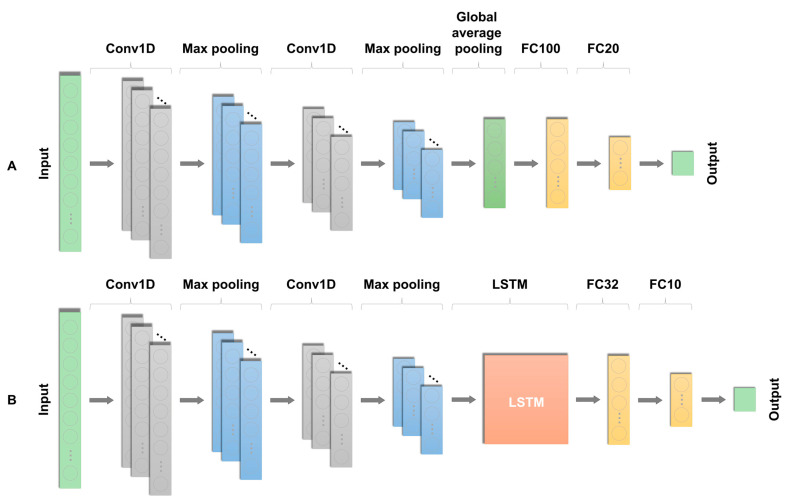
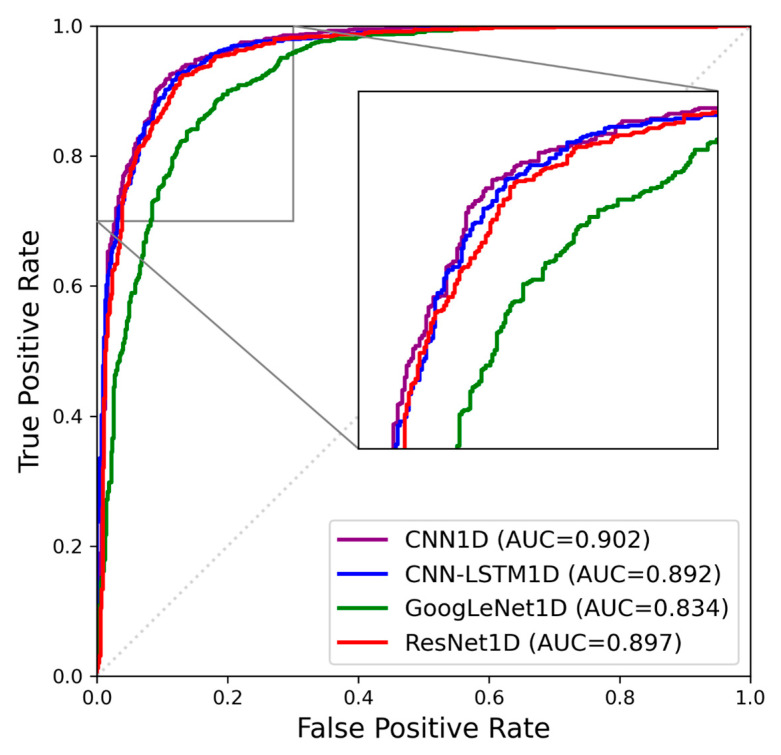
In this study, we propose a deep learning-based nystagmus detection algorithm using video oculography (VOG) data to diagnose benign paroxysmal positional vertigo (BPPV). Various deep learning architectures were utilized to develop and evaluate nystagmus detection models. Among the four deep learning architectures used in this study, the CNN1D model proposed as a nystagmus detection model demonstrated the best performance, exhibiting a sensitivity of 94.06 ± 0.78%, specificity of 86.39 ± 1.31%, precision of 91.34 ± 0.84%, accuracy of 91.02 ± 0.66%, and an F1-score of 92.68 ± 0.55%. These results indicate the high accuracy and generalizability of the proposed nystagmus diagnosis algorithm. In conclusion, this study validates the practicality of deep learning in diagnosing BPPV and offers avenues for numerous potential applications of deep learning in the medical diagnostic sector. The findings of this research underscore its importance in enhancing diagnostic accuracy and efficiency in healthcare.
Keywords: benign paroxysmal positional vertigo; convolutional neural network; horizontal nystagmus; nystagmus detection; pupil tracking.
Conflict of interest statement
Author Sung Ho Cho was employed by the company AMJ Co., Ltd. The remaining authors declare that the research was conducted in the absence of any commercial or financial relationships that could be construed as a potential conflict of interest.
Figures
References
-
- Eggers S.D.Z., Bisdorff A., Von Brevern M., Zee D.S., Kim J.-S., Perez-Fernandez N., Welgampola M.S., Della Santina C.C., Newman-Toker D.E. Classification of Vestibular Signs and Examination Techniques: Nystagmus and Nystagmus-Like Movements. J. Vestib. Res. 2019;29:57–87. doi: 10.3233/VES-190658. - DOI - PMC - PubMed
-
- Buttner U., Helmchen C., Brandt T. Diagnostic Criteria for Central Versus Peripheral Positioning Nystagmus and Vertigo: A Review. Acta Otolaryngol. 1999;119:1–5. - PubMed
MeSH terms
Grants and funding
LinkOut - more resources
Full Text Sources
Medical
