


Long-term efficacy and safety of XEN-45 gel stent implantation in patients with normal-tension glaucoma
- PMID: 38902667
- PMCID: PMC11191175
- DOI: 10.1186/s12886-024-03522-6
Long-term efficacy and safety of XEN-45 gel stent implantation in patients with normal-tension glaucoma
Abstract
Background: Minimally invasive bleb surgery using the XEN-45 gel stent has not been established for the treatment of normal-tension glaucoma (NTG). The main objective of this study was to evaluate the long-term treatment efficacy and safety of XEN-45 in eyes with uncontrolled NTG.
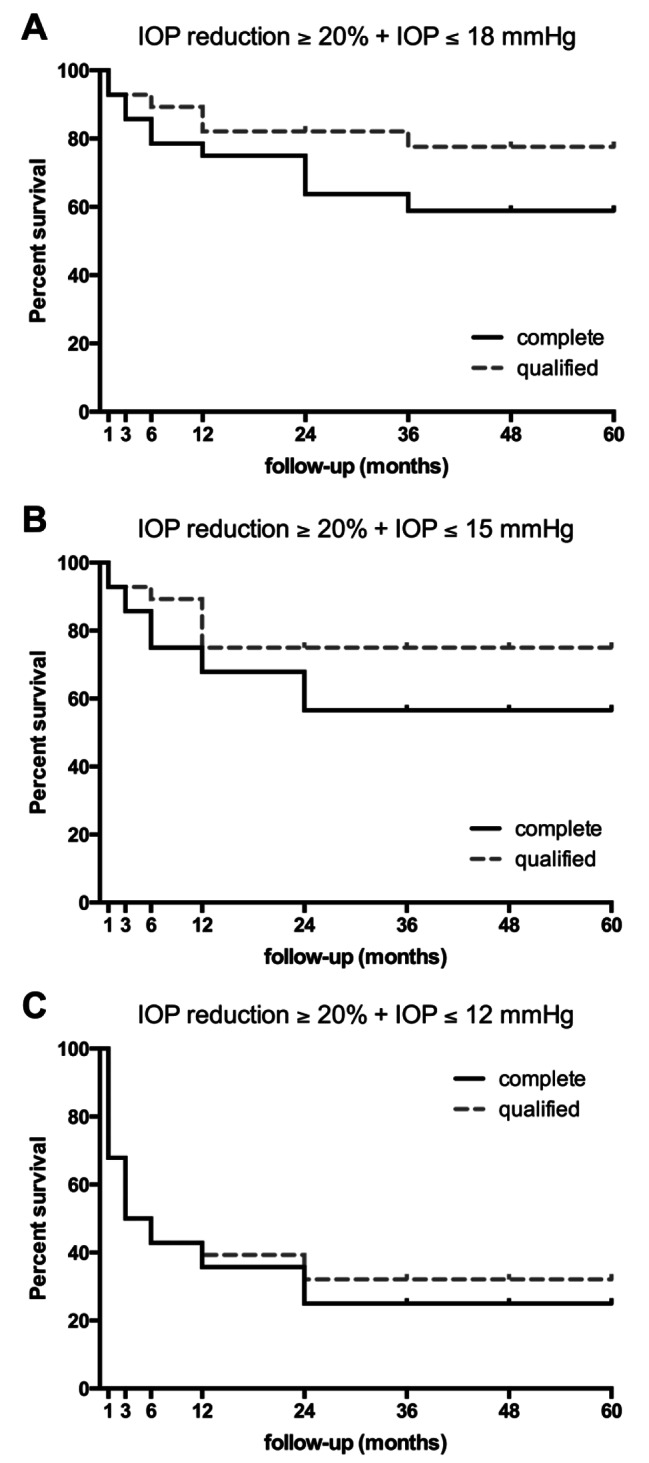
Methods: A retrospective analysis of patients with NTG who underwent XEN-45 gel stent implantation at university hospital Tuebingen between 2016 and 2021. The primary outcome measure was surgical success after three years defined as lowering of intraocular pressure (IOP) of ≥ 20%, with target IOP between 6 and 15 mmHg. Success was complete without and qualified irrespective of topical antiglaucoma medication use. The need for further glaucoma surgery, except for needling, was regarded as a failure. The secondary outcome measures included changes in mean IOP, number of antiglaucoma medications, and needling and complication rates.
Results: Twenty-eight eyes from 23 patients were included in the final analysis. Complete and qualified success rates were 56.5% and 75% after three years, respectively. Mean postoperative IOP ± standard deviation decreased significantly after three years from 19.3 ± 2.0 mmHg at baseline to 13.7 ± 4.2 mmHg (n = 22; p < 0.0001). The median number of antiglaucoma medications decreased from 2 (range 0-4) to 0 after three years (range 0-3; p < 0.0001). Sixteen eyes (57%) required a median of 1 (range 1-3) needling procedures. One eye required further glaucoma surgery. No sight-threatening complications were observed.
Conclusion: The XEN-45 stent is effective and safe for the long-term treatment of NTG. However, needling was frequently required to improve outcomes.
Keywords: Filtering surgery; Gel stent; MIBS; MIGS; Minimally invasive glaucoma surgery; Needling; Normal-tension glaucoma.
© 2024. The Author(s).
Conflict of interest statement
EN, CJG, DAM and JN declare no competing interest. BV has received speaker honoraria and consultancy fees from AbbVie Deutschland GmbH & Co. KG.
Figures


References
-
- Group C. Comparison of glaucomatous progression between untreated patients with normal-tension glaucoma and patients with therapeutically reduced intraocular pressures. Collaborative normal-tension Glaucoma Study Group. Am J Ophthalmol. 1998;126(4):487–97. doi: 10.1016/S0002-9394(98)00223-2. - DOI - PubMed
MeSH terms
LinkOut - more resources
Full Text Sources
