Review
. 2024 Jun 19:20:1376-1395.
doi: 10.3762/bjoc.20.120. eCollection 2024.

Synthetic applications of the Cannizzaro reaction

Affiliations
Review

Synthetic applications of the Cannizzaro reaction

Bhaskar Chatterjee et al. Beilstein J Org Chem. .

Abstract

The Cannizzaro reaction has emerged as a versatile synthetic tool for the construction of functionalized molecules. Dating back to the 19th century, this reaction, though initially used for the synthesis of an alcohol and acid functionality from aldehydes, has henceforth proven useful to generate diverse molecular entities using both intermolecular and intramolecular synthetic strategies. Immense applications in the synthesis of hydroxy acids and esters, heterocycles, fused carbocycles, natural products, and others with broad substrate scope have raised profound interest from methodological and synthetic standpoints. The ongoing development of reagents, solvents, and technologies for the Cannizzaro reaction reflects the broader trend in organic synthesis towards more sustainable and efficient practices. The focus of this review is to highlight some recent advances in synthetic strategies and applications of the Cannizzaro reaction towards the synthesis of potentially useful molecules.

Keywords: Cannizzaro reaction; Lewis acid catalyst; crossed-Cannizzaro; desymmetrization; natural products.


Figures
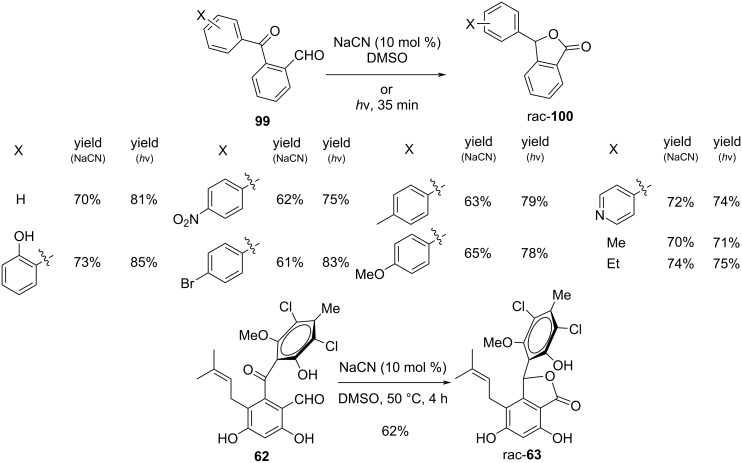
Figure 1
Figure 1
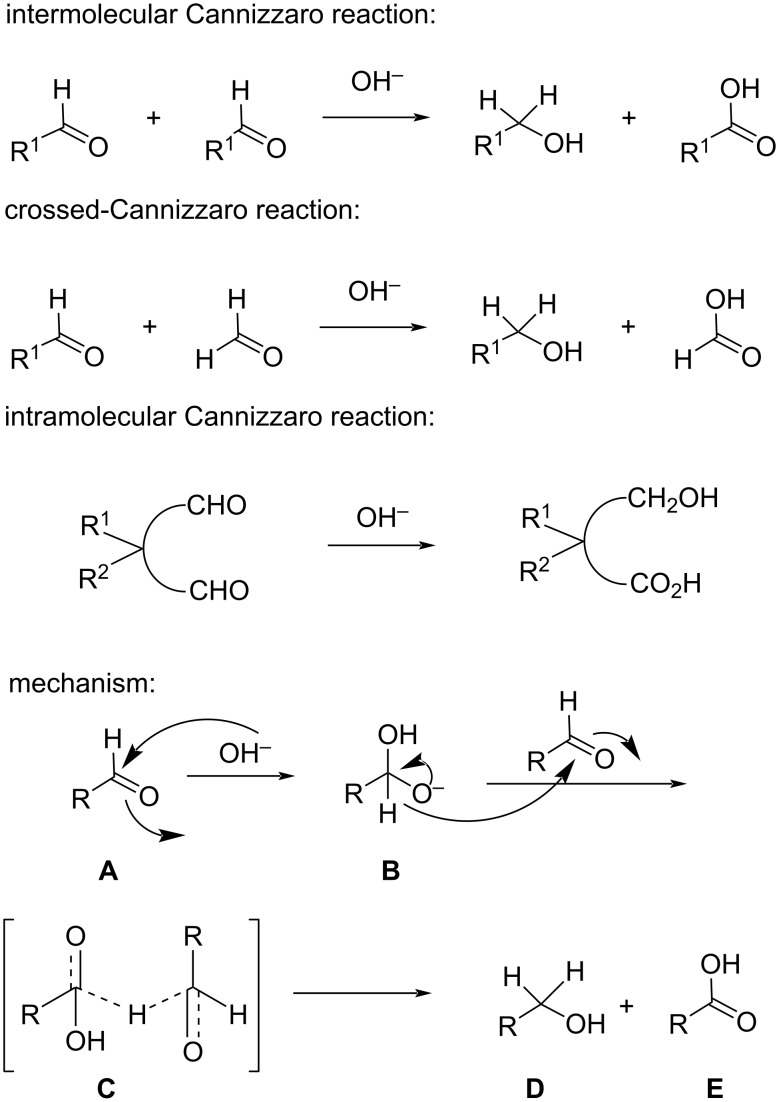
Types and mechanism of the Cannizzaro reaction.
Figure 2
Figure 2
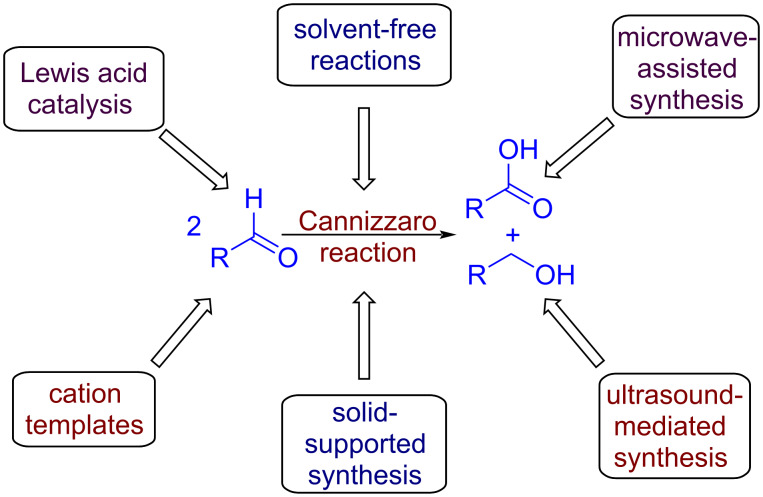
Various approaches of the Cannizzaro reaction.
Figure 3
Figure 3
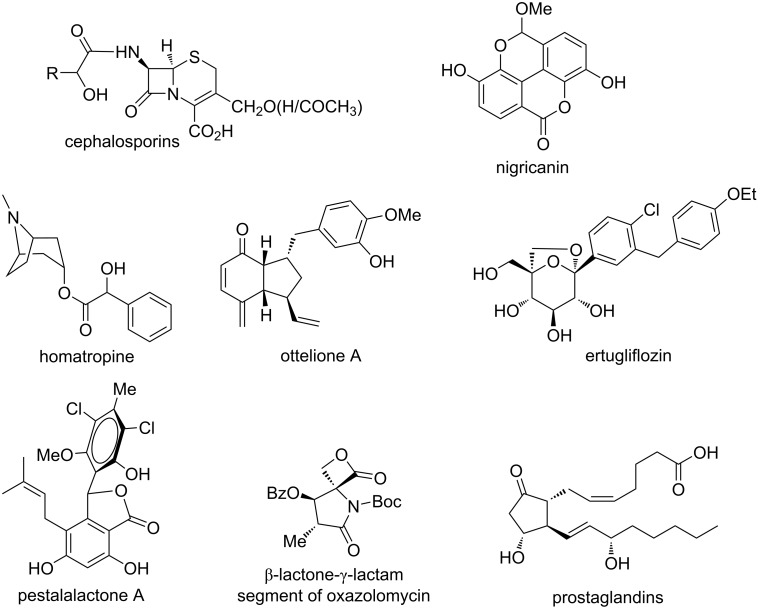
Representative molecules synthesized via the Cannizzaro reaction.
Scheme 1
Scheme 1
Intramolecular Cannizzaro reaction of aryl glyoxal hydrates using TOX catalysts.
Scheme 2
Scheme 2
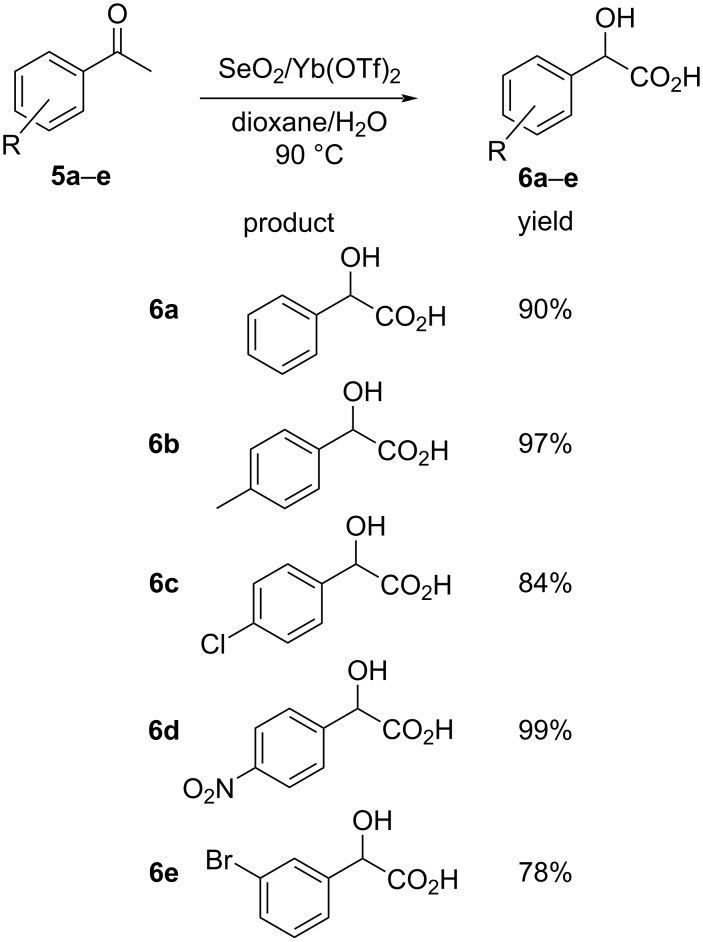
Intramolecular Cannizzaro reaction of aryl methyl ketones using ytterbium triflate/selenium dioxide.
Scheme 3
Scheme 3
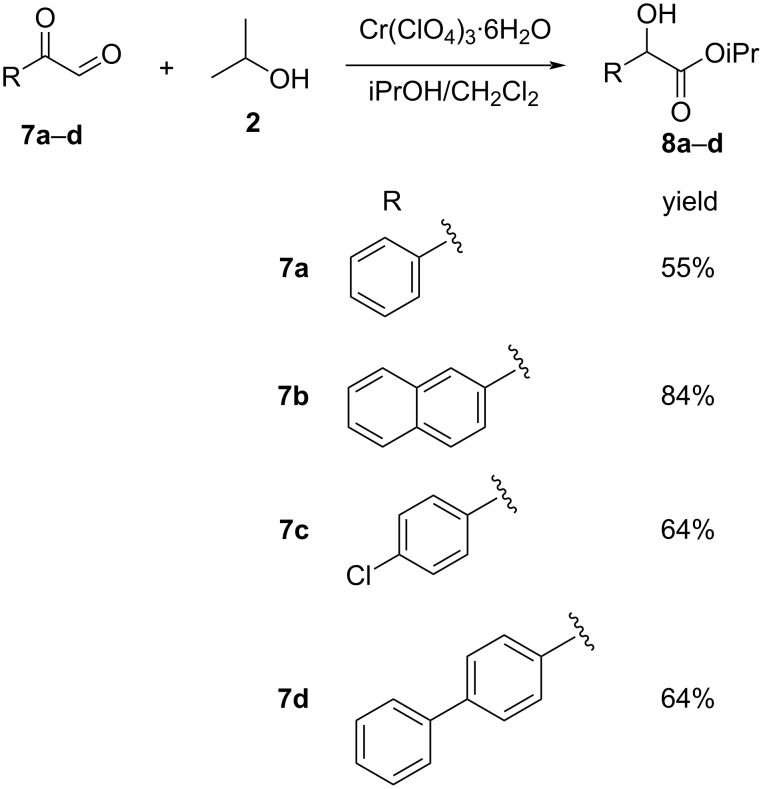
Intramolecular Cannizzaro reaction of aryl glyoxals using Cr(ClO4)3 as catalyst.
Scheme 4
Scheme 4
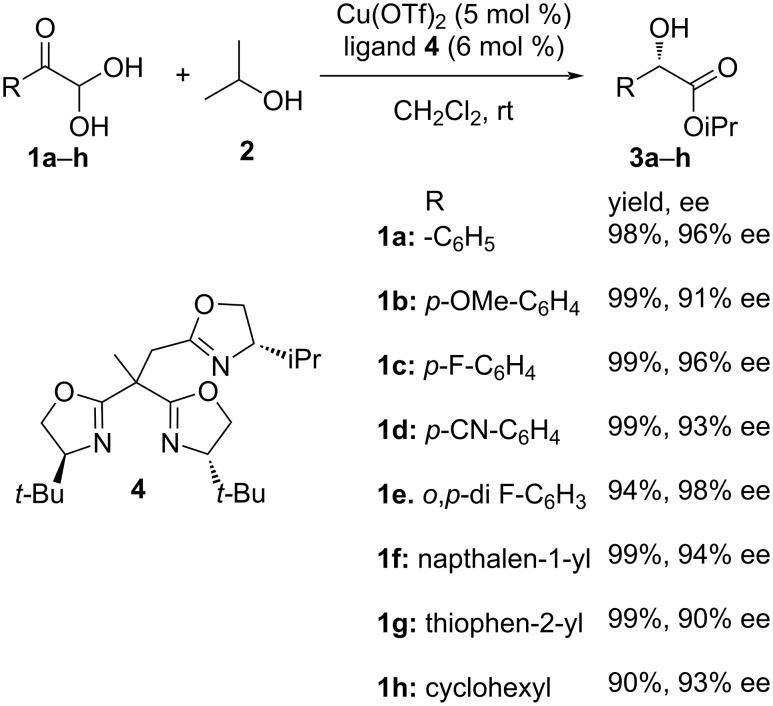
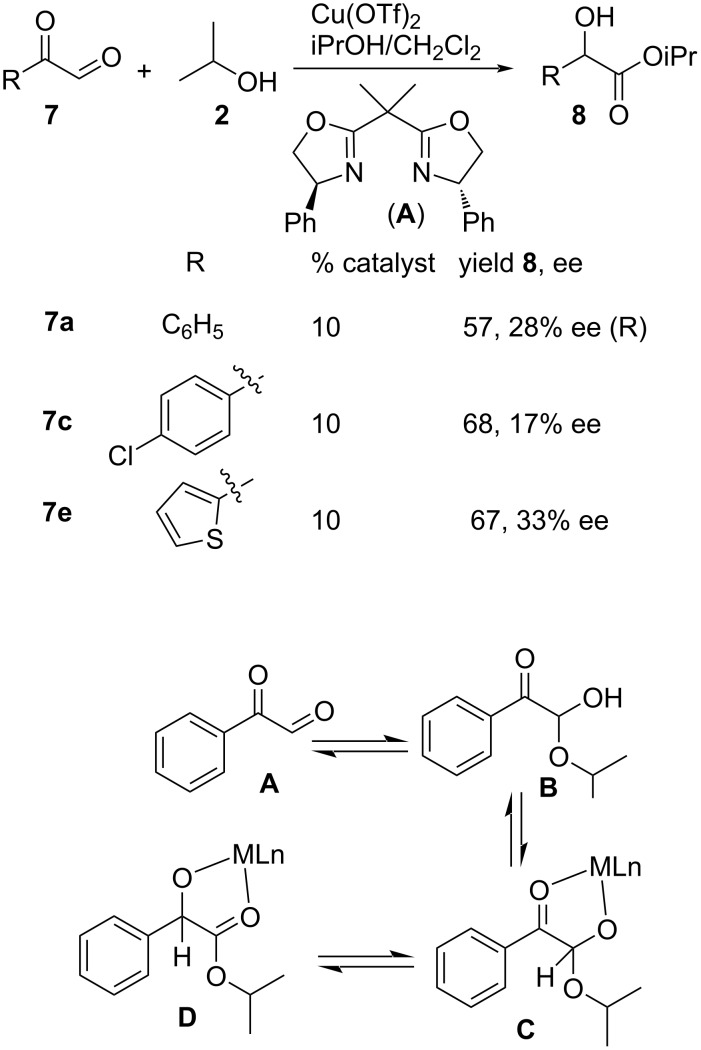
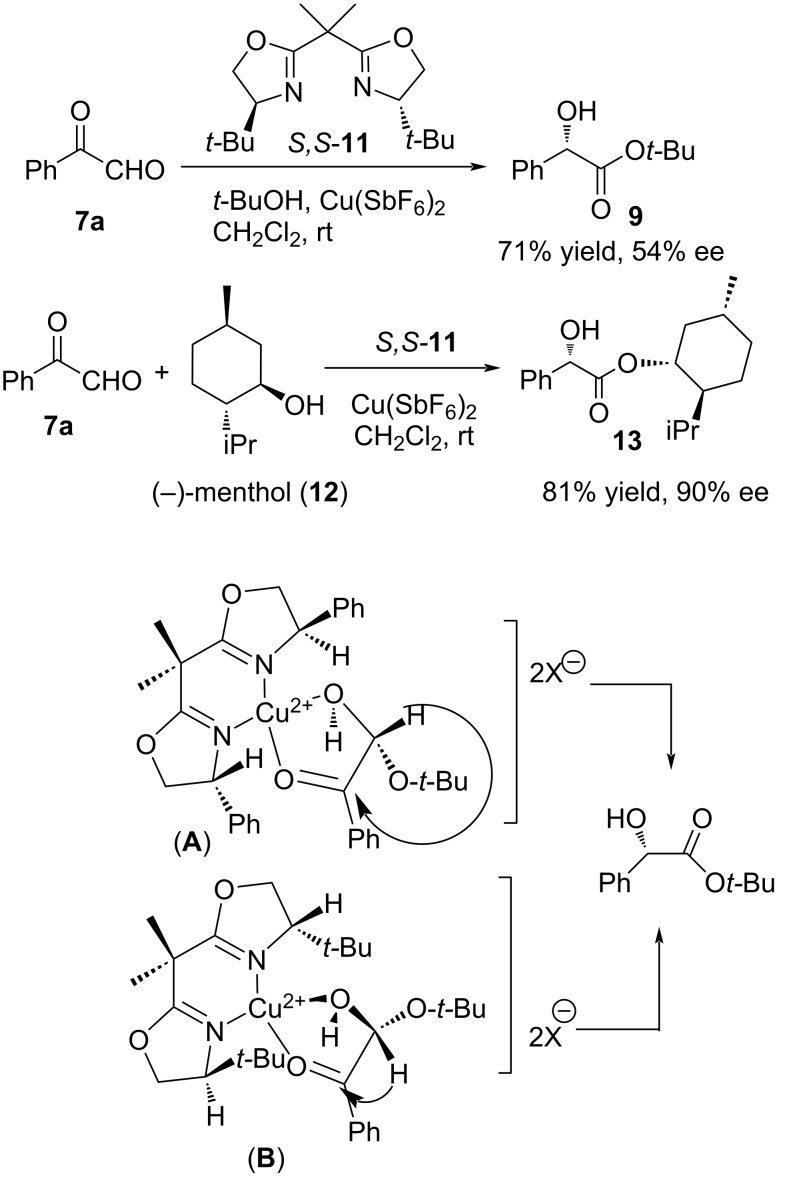
Cu(II)-PhBox-catalyzed asymmetric Cannizzaro reaction.
Scheme 5
Scheme 5
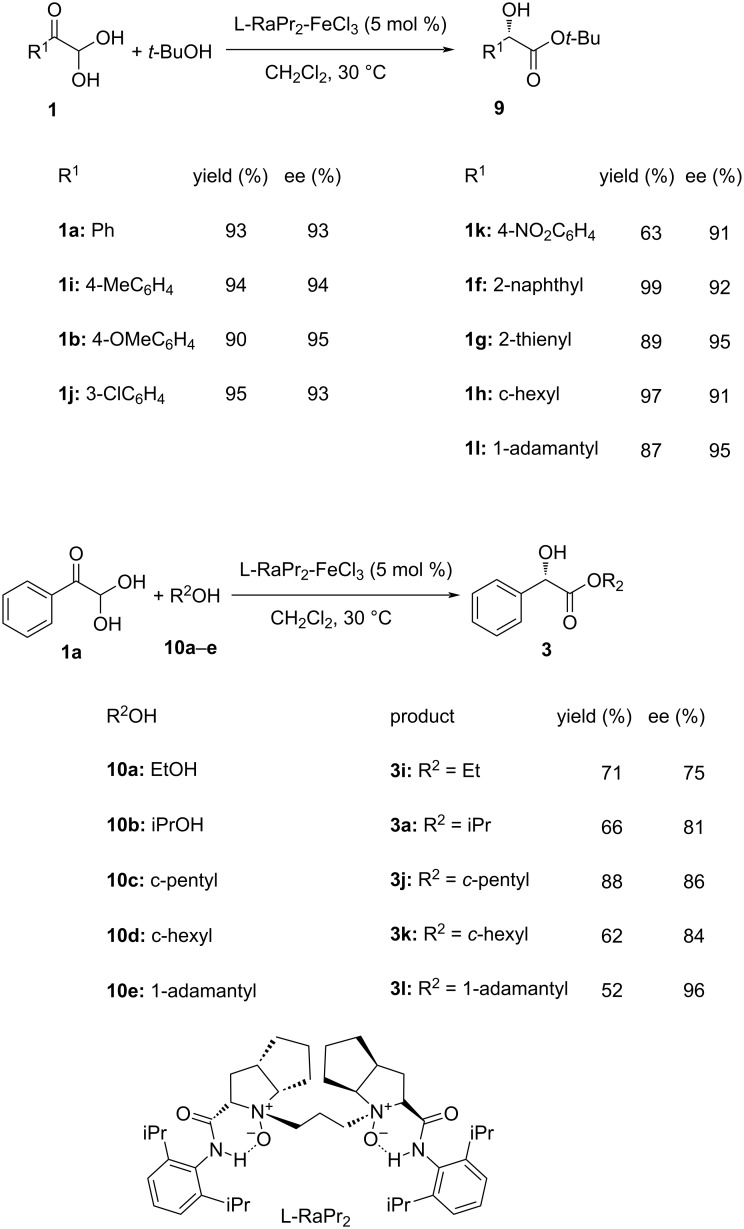
FeCl3-based chiral catalyst applied for the enantioselective intramolecular Cannizzaro reaction reported by Wu et al.
Scheme 6
Scheme 6
Copper bis-oxazoline-catalysed intramolecular Cannizzaro reaction and proposed mechanism.
Scheme 7
Scheme 7
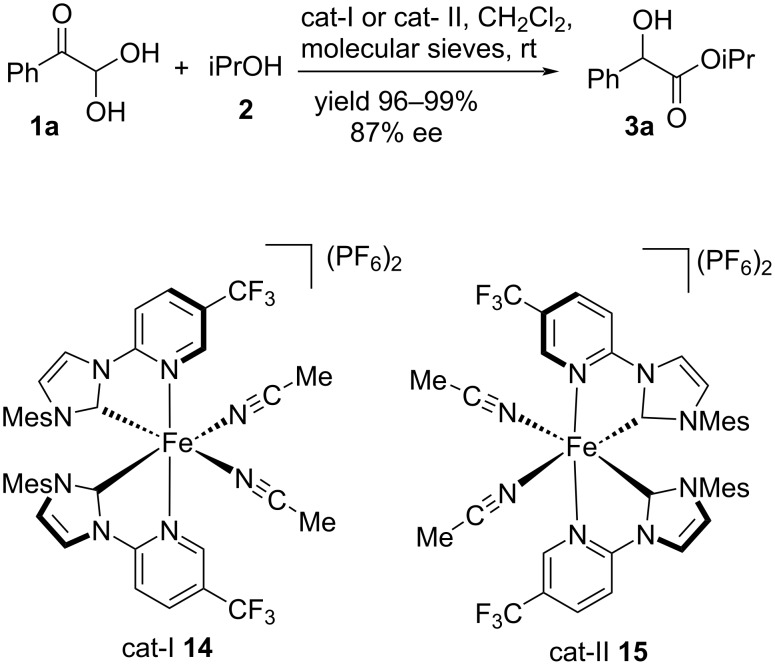
Chiral Fe catalysts-mediated enantioselective Cannizzaro reaction.
Scheme 8
Scheme 8
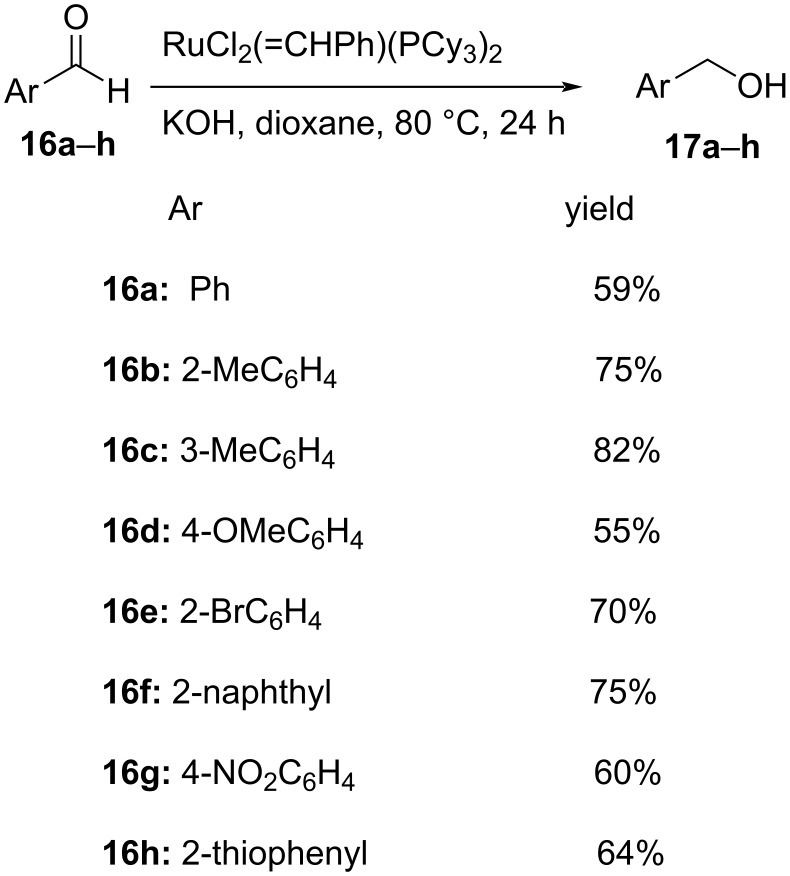
Ruthenium-catalyzed Cannizzaro reaction of aromatic aldehydes.
Scheme 9
Scheme 9
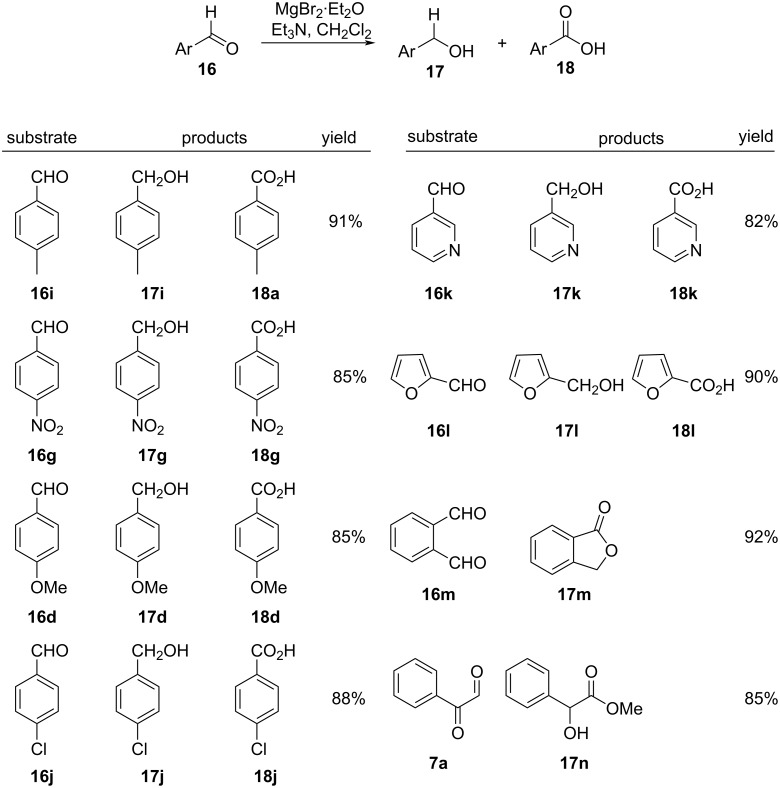
MgBr2·Et2O-assisted Cannizzaro reaction of aldehydes.
Scheme 10
Scheme 10
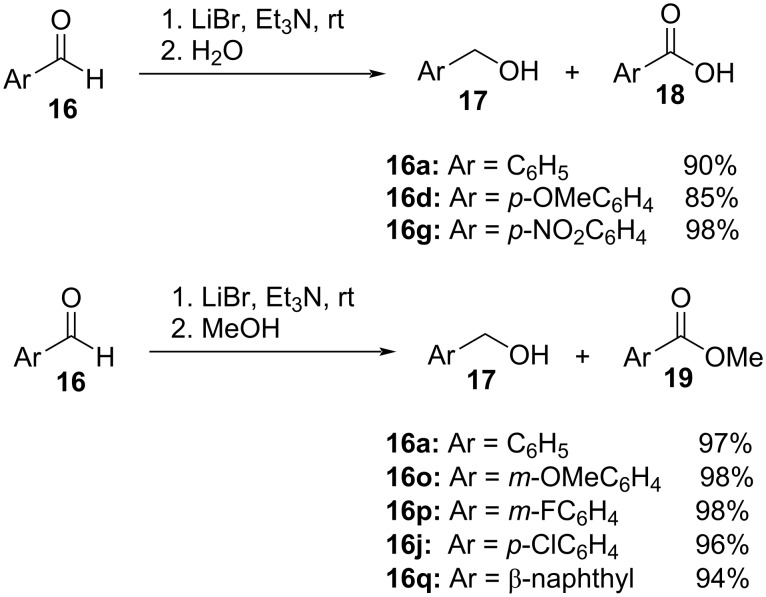
LiBr-catalyzed intermolecular Cannizzaro reaction of aldehydes.
Scheme 11
Scheme 11
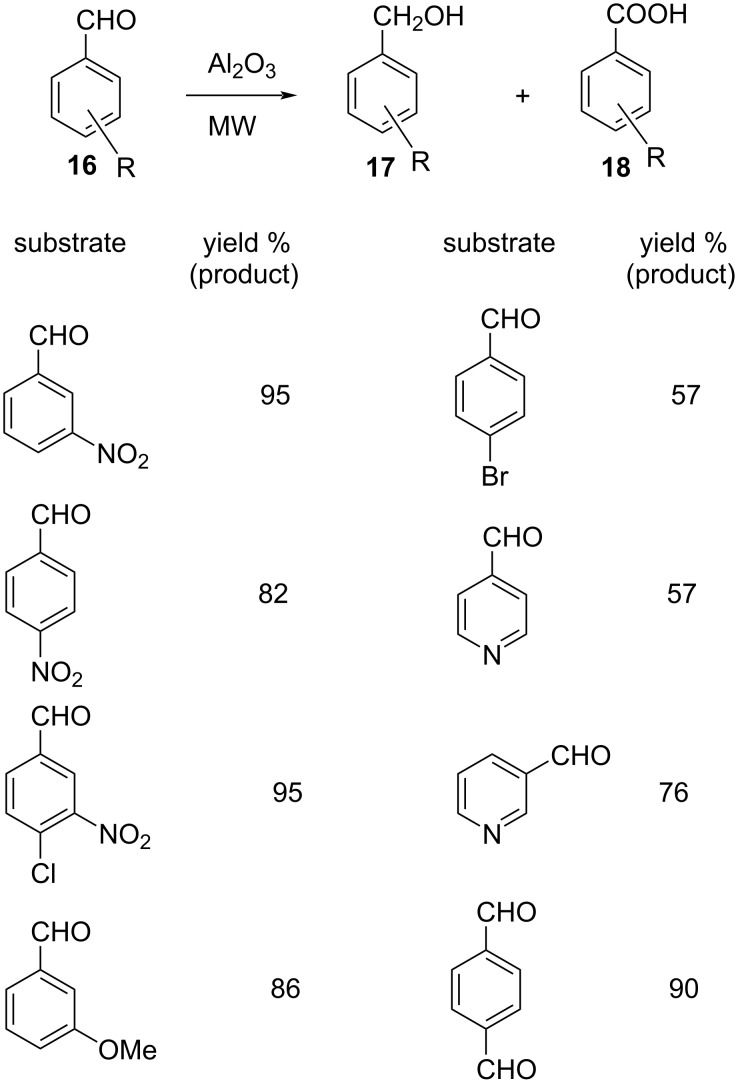
γ-Alumina as a catalyst in the Cannizzaro reaction.
Scheme 12
Scheme 12
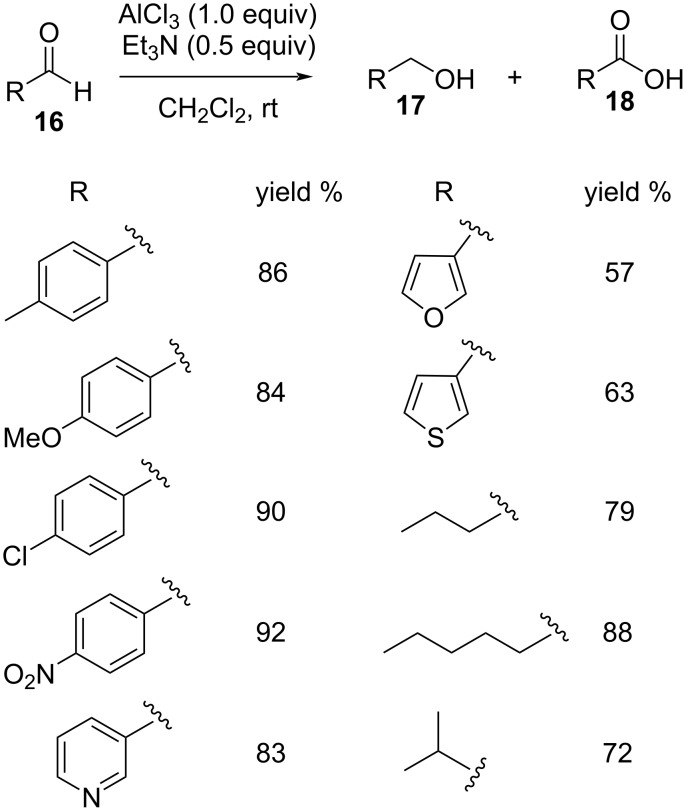
AlCl3-mediated Cannizzaro disproportionation of aldehydes.
Scheme 13
Scheme 13
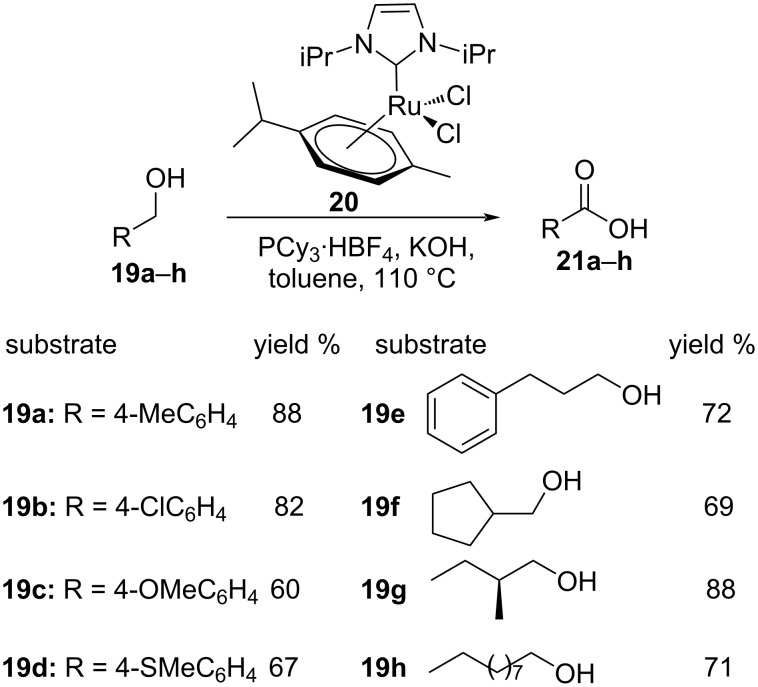
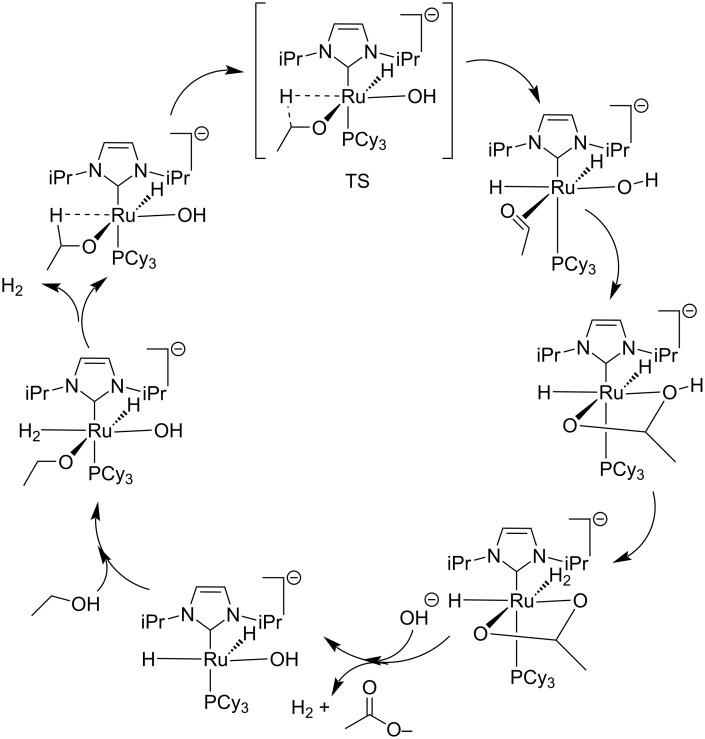
Ru–N-heterocyclic carbene catalyzed dehydrogenative synthesis of carboxylic acids.
Figure 4
Figure 4
Proposed catalytic cycle for the dehydrogenation of alcohols.
Scheme 14
Scheme 14
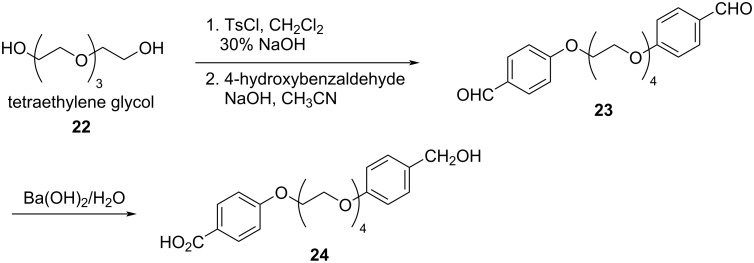
Intramolecular desymmetrization of tetraethylene glycol.
Scheme 15
Scheme 15
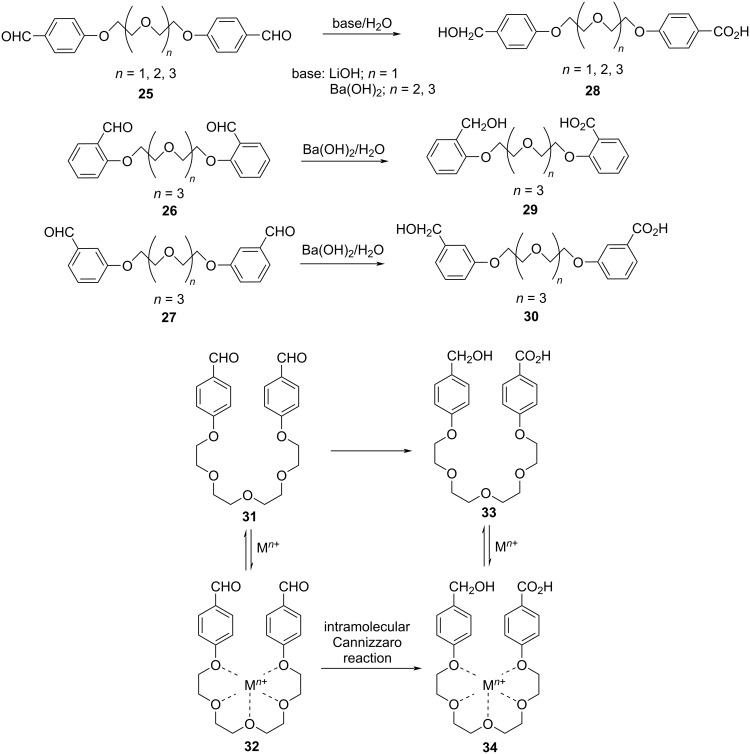
Desymmetrization of oligoethylene glycol dialdehydes.
Scheme 16
Scheme 16
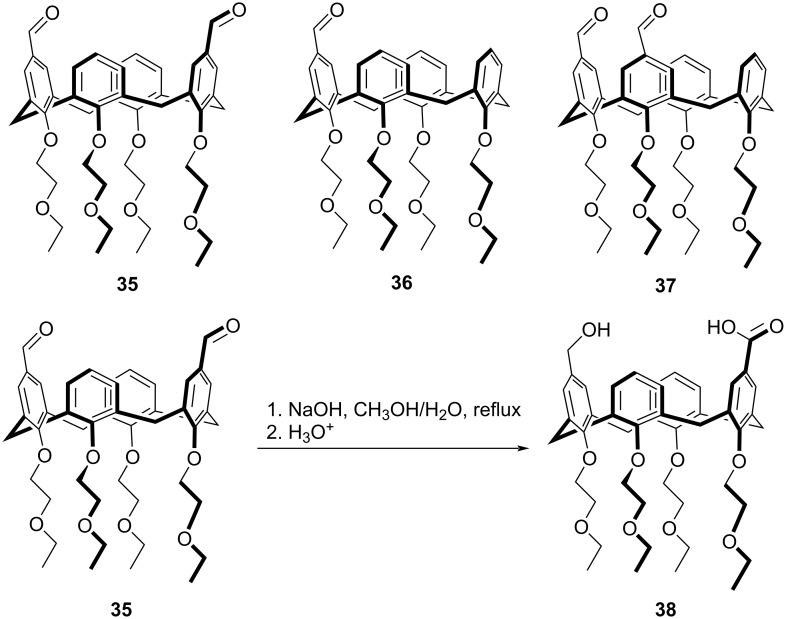
Intramolecular Cannizzaro reaction of calix[4]arene dialdehydes.
Scheme 17
Scheme 17
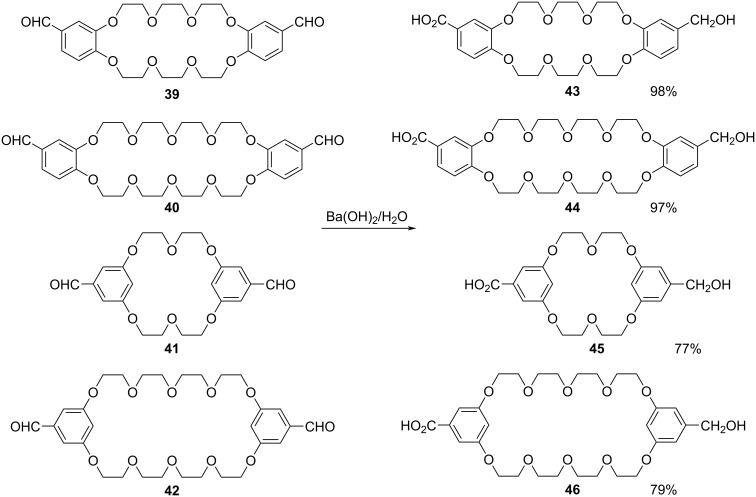
Desymmetrization of dialdehydes of symmetrical crown ethers using Ba(OH)2.
Scheme 18
Scheme 18
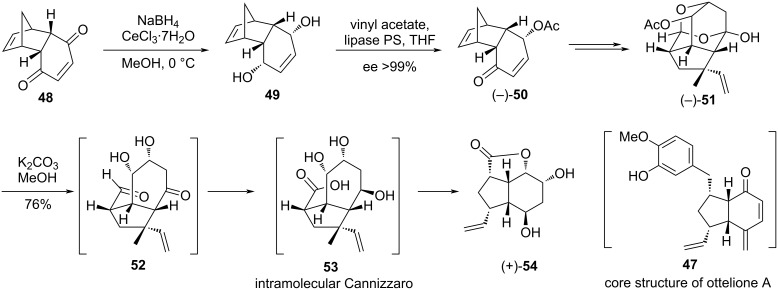
Synthesis of ottelione A (proposed) via intramolecular Cannizzaro reaction.
Scheme 19
Scheme 19
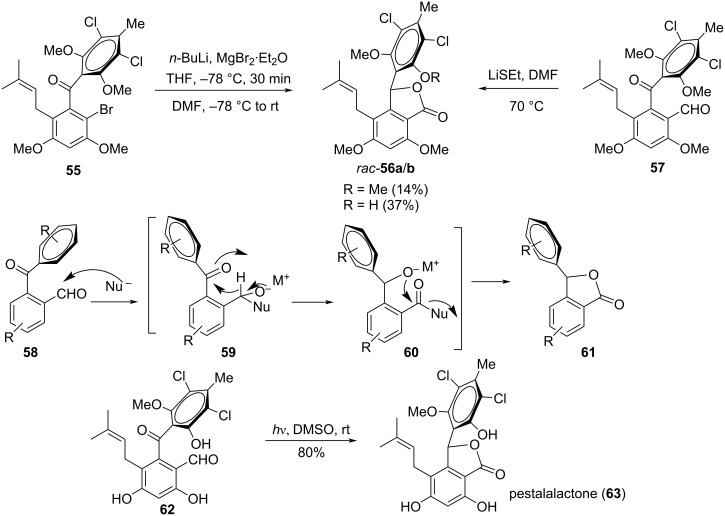
Intramolecular Cannizzaro reaction for the synthesis of pestalalactone.
Scheme 20
Scheme 20
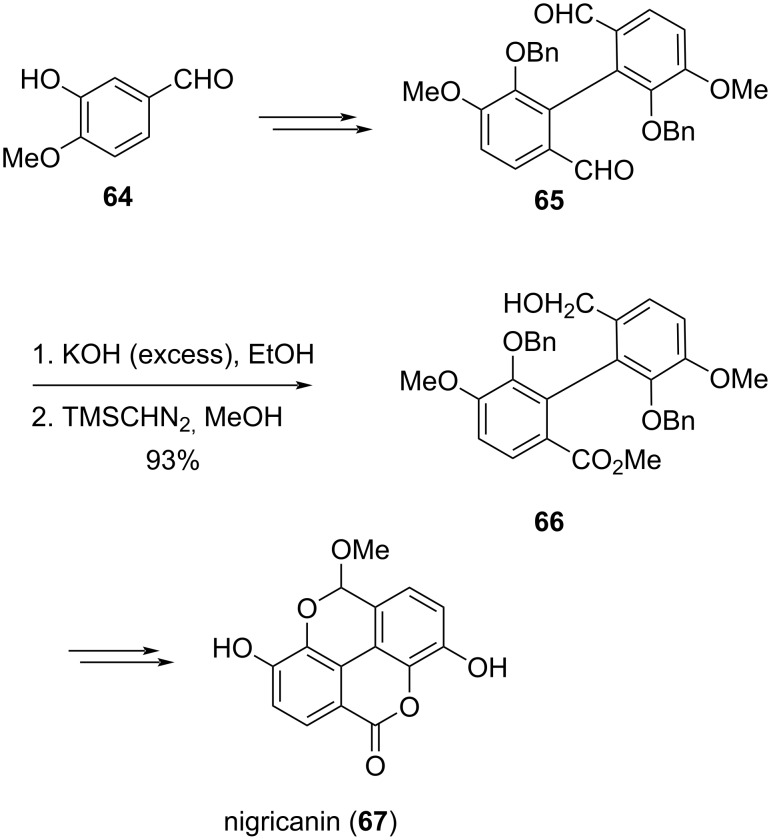
Synthetic strategy towards nigricanin involving an intramolecular Cannizzaro reaction.
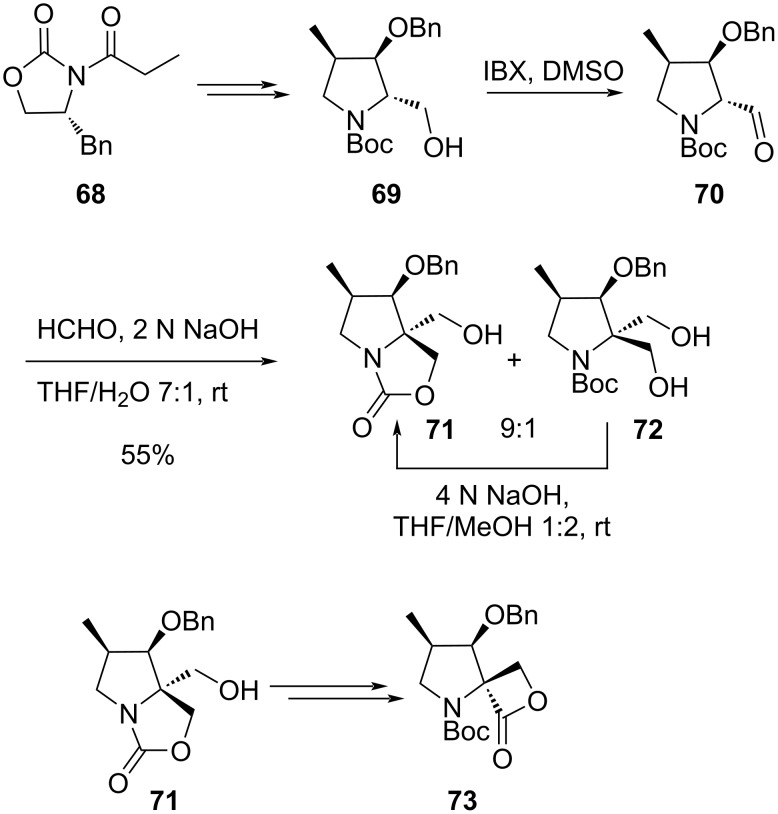
Scheme 21
Scheme 21
Spiro-β-lactone-γ-lactam part of oxazolomycins via aldol crossed-Cannizzaro reaction.
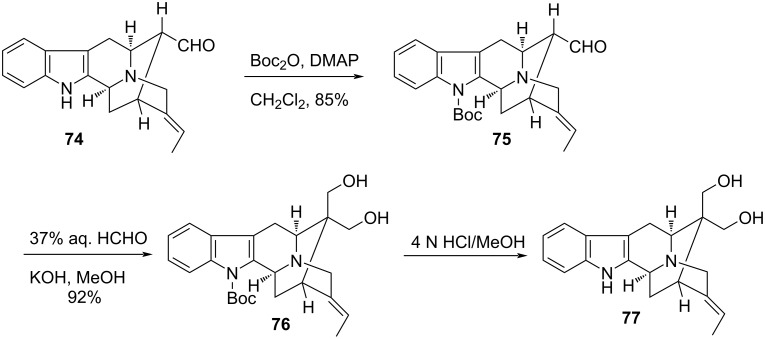
Scheme 22
Scheme 22
Synthesis of indole alkaloids via aldol crossed-Cannizzaro reaction.
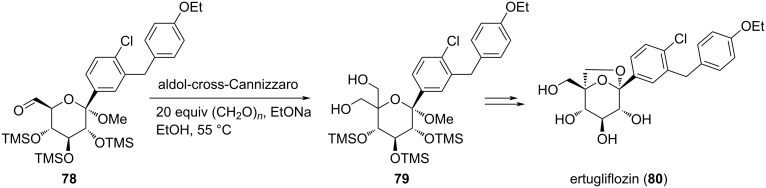
Scheme 23
Scheme 23
Aldol and crossed-Cannizzaro reaction towards the synthesis of ertuliflozin.
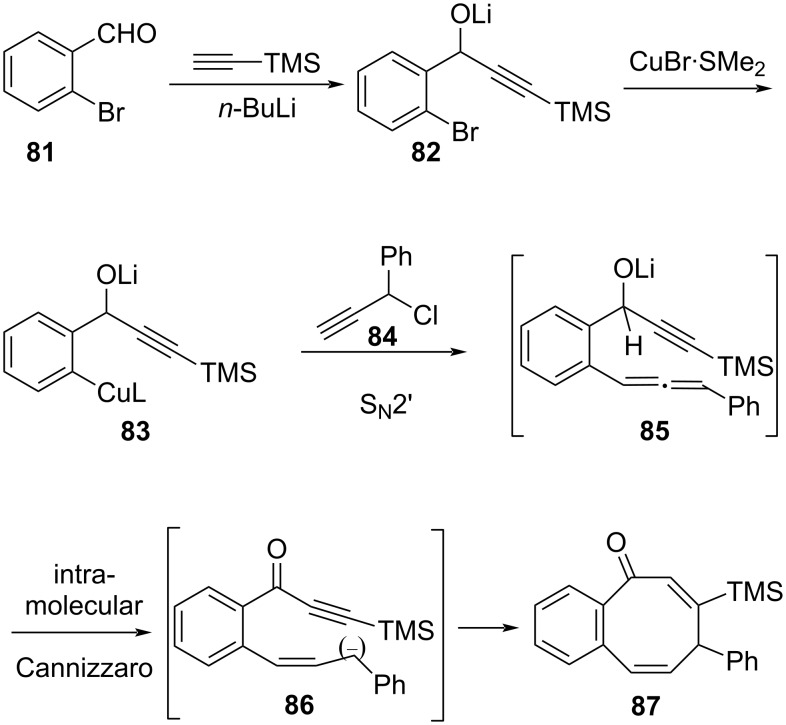
Scheme 24
Scheme 24
Synthesis of cyclooctadieneones using a Cannizzaro reaction.
Scheme 25
Scheme 25
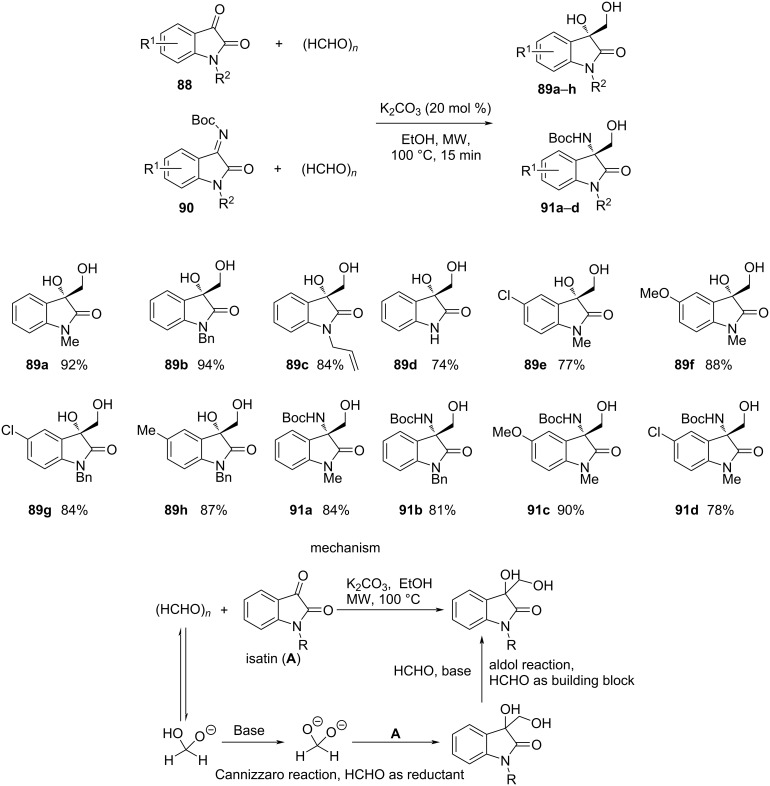
Microwave-assisted crossed-Cannizzaro reaction for the synthesis of 3,3-disubstituted oxindoles.
Scheme 26
Scheme 26
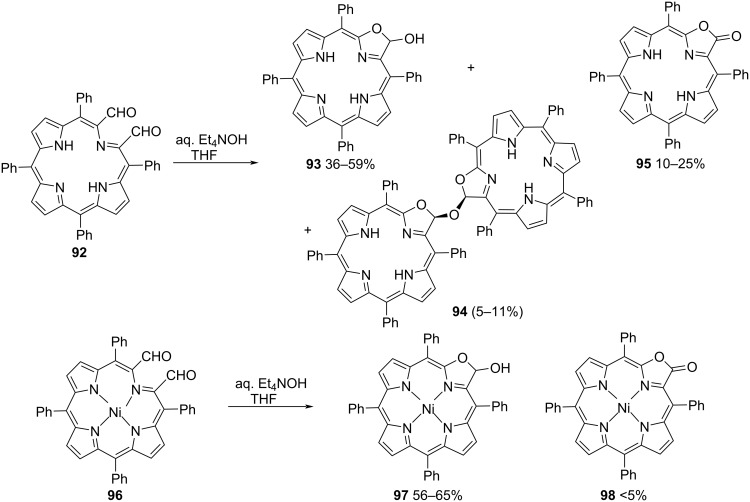
Synthesis of porphyrin-based rings using the Cannizzaro reaction.
Scheme 27
Scheme 27
Synthesis of phthalides and pestalalactone via Cannizarro–Tishchenko-type reaction.
Scheme 28
Scheme 28
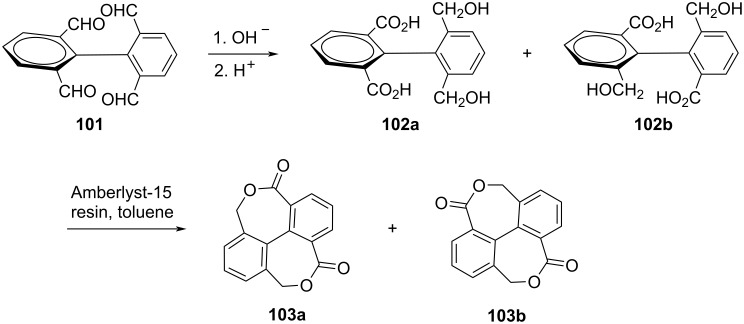
Synthesis of dibenzoheptalene bislactones via a double intramolecular Cannizzaro reaction.

References

    1. Cannizzaro S. Justus Liebigs Ann Chem. 1853;88:129–130. doi: 10.1002/jlac.18530880114. - DOI
    1. Geissman T A. Org React. 1944;2:94–113. doi: 10.1002/0471264180.or002.03. - DOI
    1. Fry E M, Wilson E J, Jr, Hudson C S. J Am Chem Soc. 1942;64:872–873. doi: 10.1021/ja01256a038. - DOI
    1. Chandrasekhar S, Srimannarayana M. Synth Commun. 2009;39:4473–4478. doi: 10.1080/00397910902916049. - DOI
    1. Ishihara K, Yano T. Org Lett. 2004;6:1983–1986. doi: 10.1021/ol0494459. - DOI - PubMed

LinkOut - more resources