


Exploring miRNAs' Based Modeling Approach for Predicting PIRA in Multiple Sclerosis: A Comprehensive Analysis
- PMID: 38928049
- PMCID: PMC11203572
- DOI: 10.3390/ijms25126342
Exploring miRNAs' Based Modeling Approach for Predicting PIRA in Multiple Sclerosis: A Comprehensive Analysis
Abstract
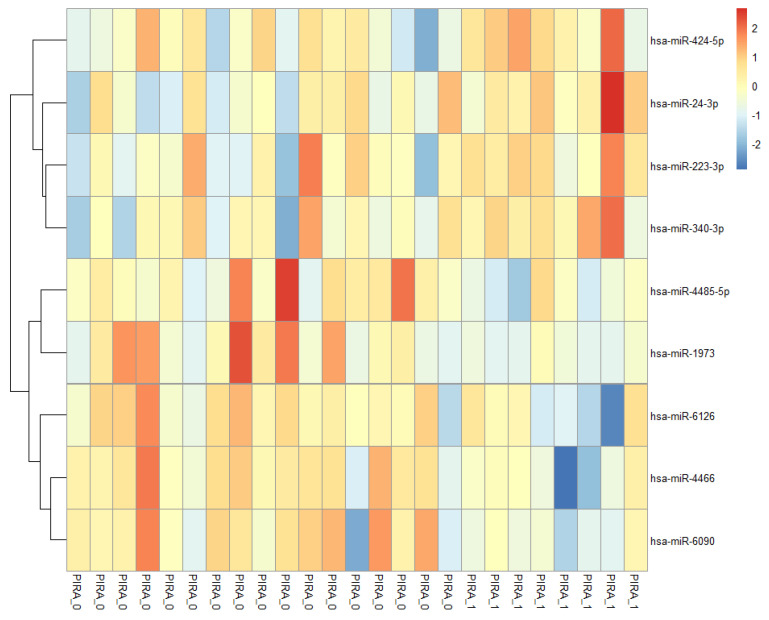
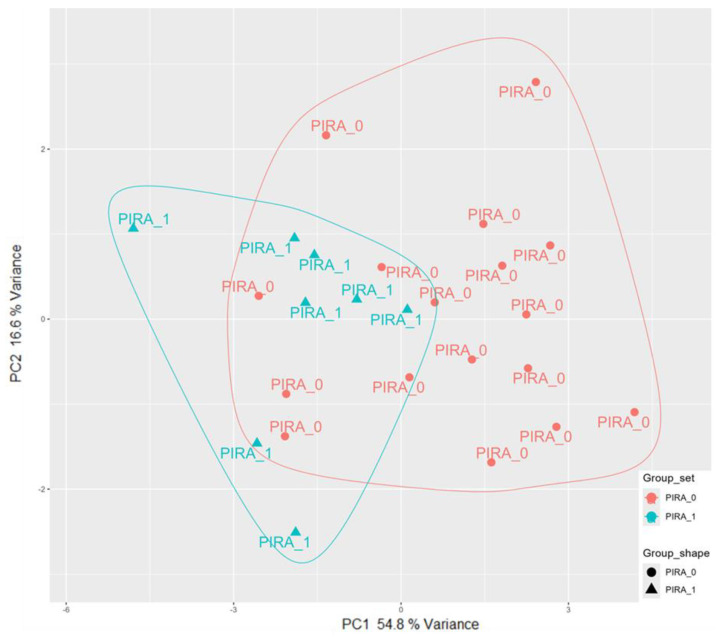
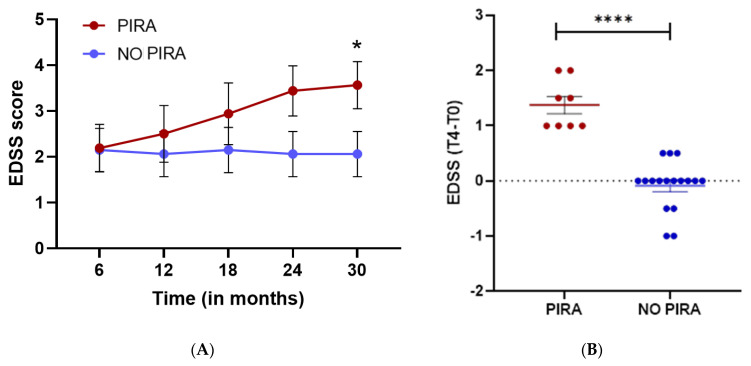
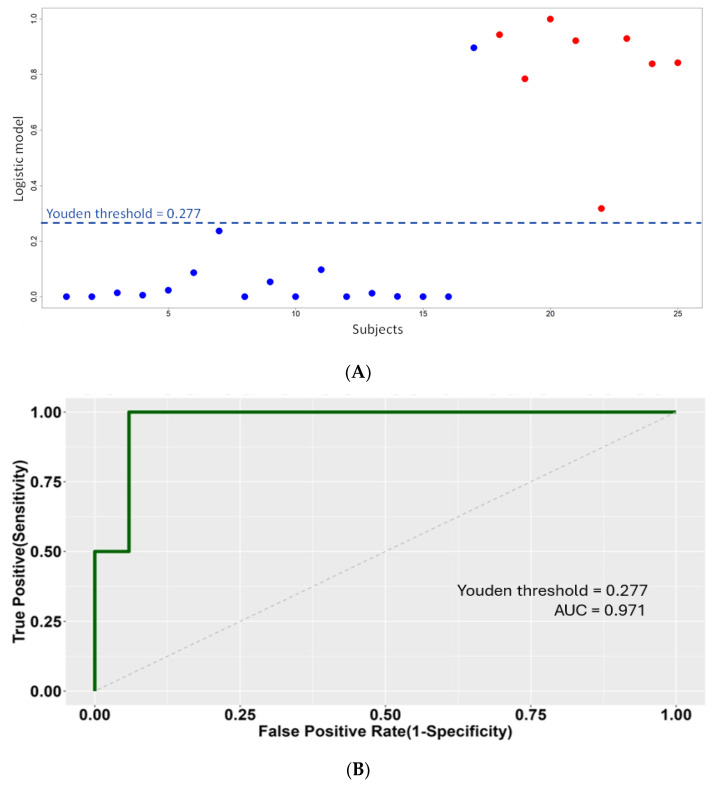
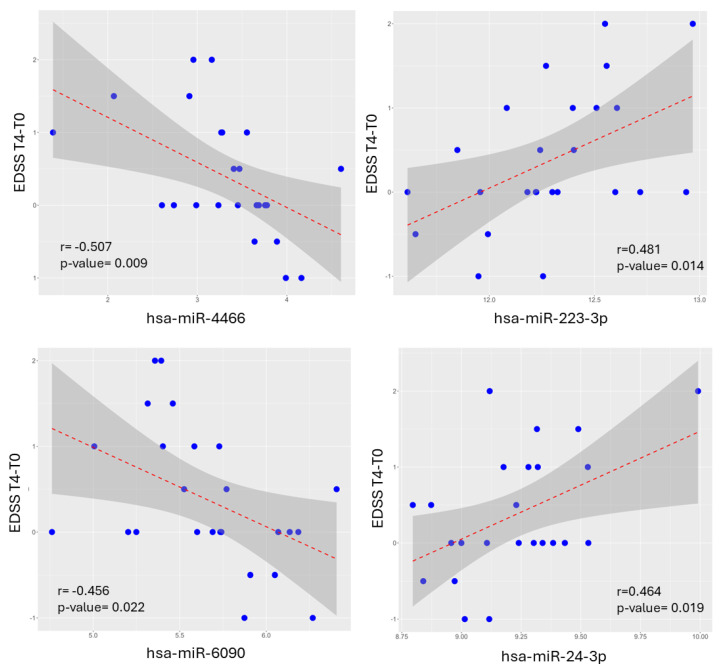
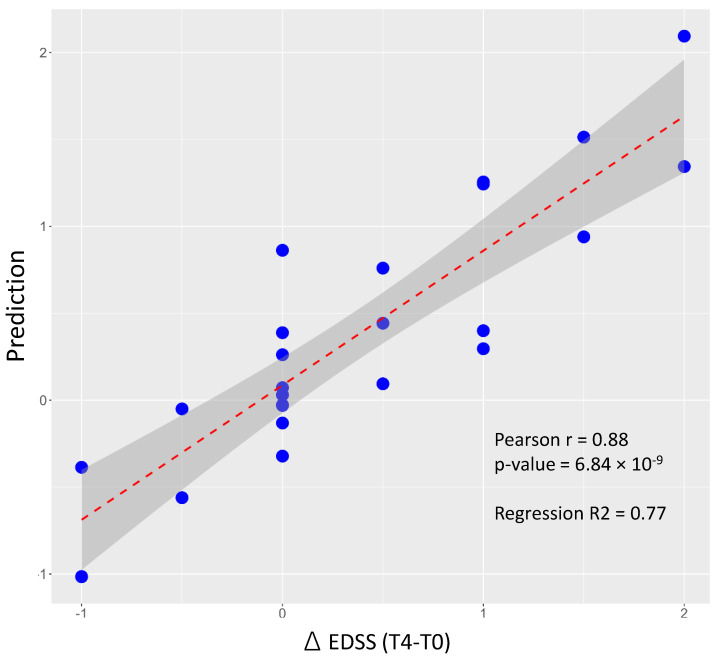
The current hypothesis on the pathophysiology of multiple sclerosis (MS) suggests the involvement of both inflammatory and neurodegenerative mechanisms. Disease Modifying Therapies (DMTs) effectively decrease relapse rates, thus reducing relapse-associated disability in people with MS. In some patients, disability progression, however, is not solely linked to new lesions and clinical relapses but can manifest independently. Progression Independent of Relapse Activity (PIRA) significantly contributes to long-term disability, stressing the urge to unveil biomarkers to forecast disease progression. Twenty-five adult patients with relapsing-remitting multiple sclerosis (RRMS) were enrolled in a cohort study, according to the latest McDonald criteria, and tested before and after high-efficacy Disease Modifying Therapies (DMTs) (6-24 months). Through Agilent microarrays, we analyzed miRNA profiles from peripheral blood mononuclear cells. Multivariate logistic and linear models with interactions were generated. Robustness was assessed by randomization tests in R. A subset of miRNAs, correlated with PIRA, and the Expanded Disability Status Scale (EDSS), was selected. To refine the patient stratification connected to the disease trajectory, we computed a robust logistic classification model derived from baseline miRNA expression to predict PIRA status (AUC = 0.971). We built an optimal multilinear model by selecting four other miRNA predictors to describe EDSS changes compared to baseline. Multivariate modeling offers a promising avenue to uncover potential biomarkers essential for accurate prediction of disability progression in early MS stages. These models can provide valuable insights into developing personalized and effective treatment strategies.
Keywords: miRNA; modeling approach; multiple sclerosis; progression independent of relapse activity (PIRA).
Conflict of interest statement
The authors declare no conflicts of interest.
Figures
Similar articles
-
Biomarkers of Progression Independent of Relapse Activity-Can We Actually Measure It Yet?Int J Mol Sci. 2025 May 14;26(10):4704. doi: 10.3390/ijms26104704. Int J Mol Sci. 2025. PMID: 40429847 Free PMC article. Review.
-
Cladribine and ocrelizumab induce differential miRNA profiles in peripheral blood mononucleated cells from relapsing-remitting multiple sclerosis patients.Front Immunol. 2023 Dec 13;14:1234869. doi: 10.3389/fimmu.2023.1234869. eCollection 2023. Front Immunol. 2023. PMID: 38152407 Free PMC article.
-
How patients with multiple sclerosis acquire disability.Brain. 2022 Sep 14;145(9):3147-3161. doi: 10.1093/brain/awac016. Brain. 2022. PMID: 35104840 Free PMC article.
-
Real-world evidence of ocrelizumab-treated relapsing multiple sclerosis cohort shows changes in progression independent of relapse activity mirroring phase 3 trials.Sci Rep. 2023 Sep 11;13(1):15003. doi: 10.1038/s41598-023-40940-w. Sci Rep. 2023. PMID: 37696848 Free PMC article. Clinical Trial.
-
Harmonizing Definitions for Progression Independent of Relapse Activity in Multiple Sclerosis: A Systematic Review.JAMA Neurol. 2023 Nov 1;80(11):1232-1245. doi: 10.1001/jamaneurol.2023.3331. JAMA Neurol. 2023. PMID: 37782515
Cited by
-
Biomarkers of Progression Independent of Relapse Activity-Can We Actually Measure It Yet?Int J Mol Sci. 2025 May 14;26(10):4704. doi: 10.3390/ijms26104704. Int J Mol Sci. 2025. PMID: 40429847 Free PMC article. Review.
References
MeSH terms
Substances
Grants and funding
LinkOut - more resources
Full Text Sources
Molecular Biology Databases
