


The Migration Pattern of a Short-Tapered Femoral Stem Correlates with the Occurrence of Cortical Hypertrophies: A 10-Year Longitudinal Study Using Ein Bild Röntgen Analyse-Femoral Component Analysis
- PMID: 38930145
- PMCID: PMC11205188
- DOI: 10.3390/jcm13123616
The Migration Pattern of a Short-Tapered Femoral Stem Correlates with the Occurrence of Cortical Hypertrophies: A 10-Year Longitudinal Study Using Ein Bild Röntgen Analyse-Femoral Component Analysis
Abstract
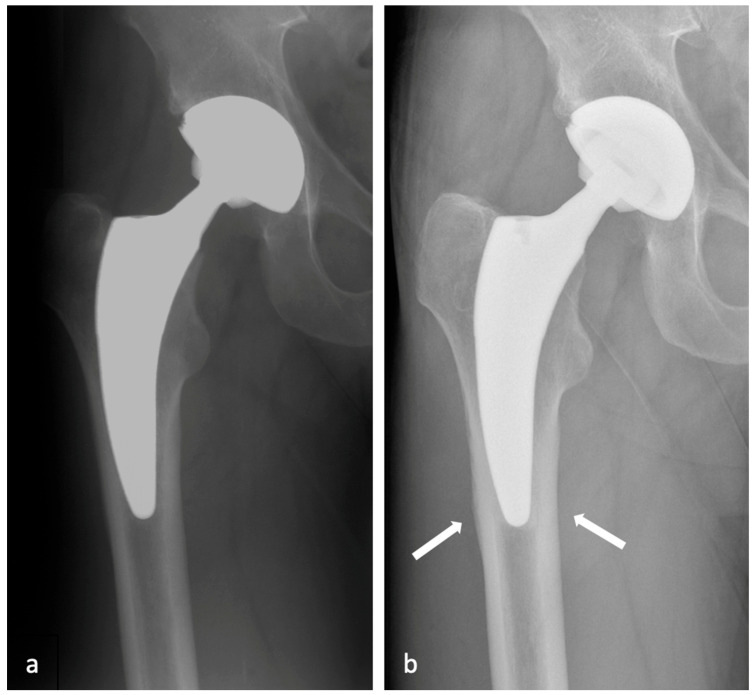
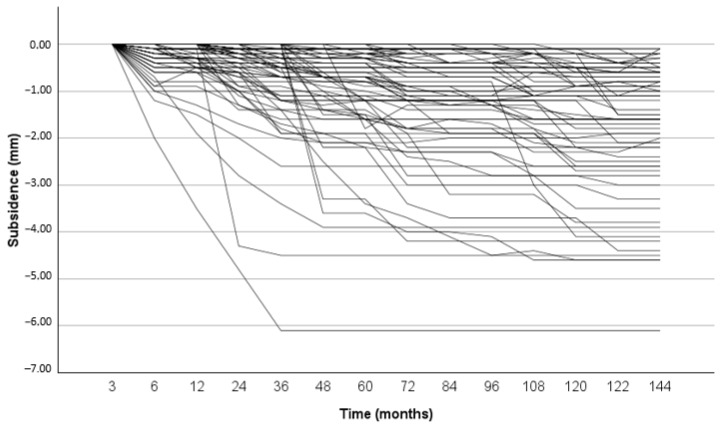
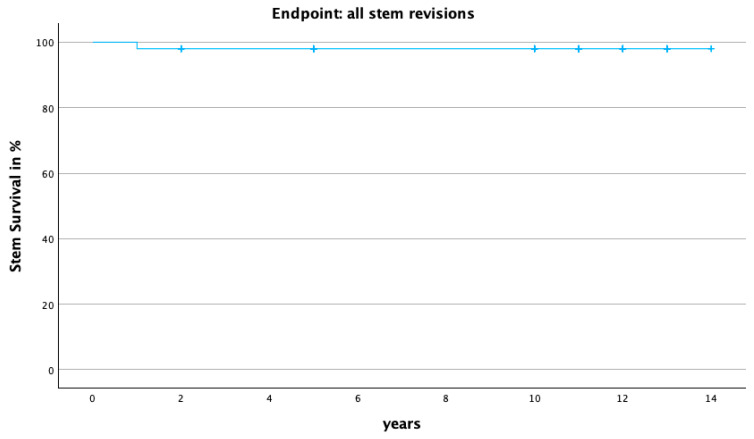
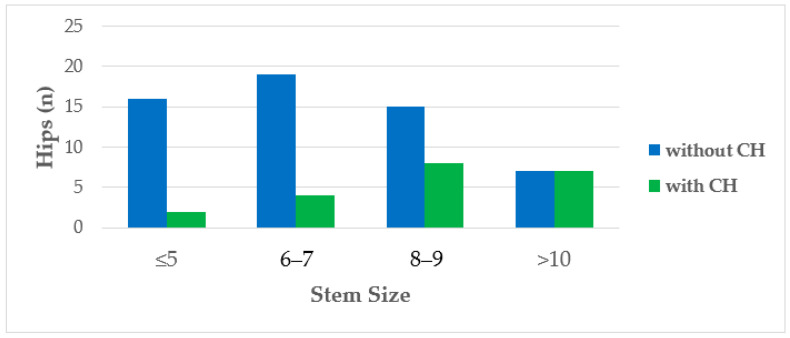
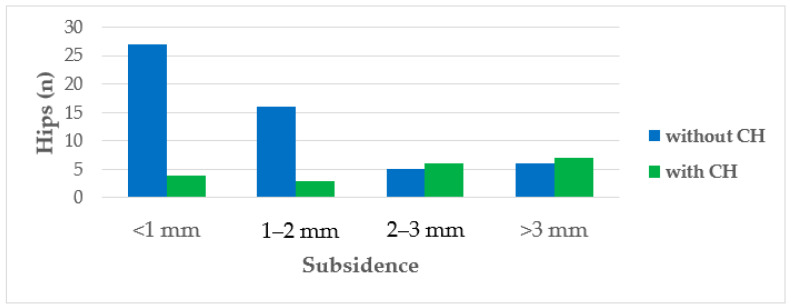
Background: Shorter hip stems have shown promising mid-term results but lack long-term data. High rates of distal cortical hypertrophy (CH) have been described, suggesting a more diaphyseal load transmission. This study aimed to determine patient-specific and surgery-related factors influencing CH and their impact on 10-year outcomes. Methods: It included 100 consecutive total hip arthroplasties (THAs) using the Fitmore stem (Zimmer, Warsaw, Indiana), with clinical and radiographic follow-ups at 1, 2, 5, and at least 10 years post-surgery. Results: No revisions were performed due to aseptic loosening after a mean of 11.6 years (range: 10-13.5 years). CH was observed in 26% of hips, primarily in Gruen zones 3 and 5. There was no significant difference in the Harris Hip Score between patients with and without CH. Larger stem sizes and greater axial subsidence significantly correlated with CH occurrence (OD 1.80, (1.13-1.92), p = 0.004; OD 1.47, (1.04-2.08), p = 0.028). The Fitmore stem demonstrated excellent survival rates and favorable outcomes over 10 years. Conclusions: Despite a lower CH rate compared to other studies, significant correlations with stem size and subsidence were identified. This study underscores the importance of patient selection and achieving high primary stability to maintain the metaphyseal anchoring concept.
Keywords: patient-reported outcome measures; short stem; stem migration; survival analysis; total hip arthroplasty.
Conflict of interest statement
No benefits in any form have been received or will be received from a commercial party related directly or indirectly to the subject of this article. Each author certifies that they have no commercial associations (e.g., consultancies, stock ownership, equity interest, patent/licensing arrangements, etc.) that might pose a conflict of interest in connection with the submitted article. More specifically, none of the authors received payments or services, either directly or indirectly (i.e., via their institution), from a third party in support of any aspect of this work. Also, all authors declare that they have had no other relationships or have been engaged in any other activities that could be perceived to influence or have the potential to influence what is written in this work.
Figures
References
-
- Matharu G.S., Culliford D.J., Blom A.W., Judge A. Projections for primary hip and knee replacement surgery up to the year 2060: An analysis based on data from The National Joint Registry for England, Wales, Northern Ireland and the Isle of Man. Ann. R Coll. Surg. Engl. 2022;104:443–448. doi: 10.1308/rcsann.2021.0206. - DOI - PMC - PubMed
-
- Grimberg A.W., Jörg L., Melsheimer O., Morlock M., Steinbrück A. Jahresbericht/Endoprothesenregister Deutschland EPRD. Patienteninformation. EPRD Deutsche Endoprothesenregister gGmbH; Berlin, Germany: 2023.
LinkOut - more resources
Full Text Sources
