


Environmental Pollution and Cardiovascular Disease: Part 1 of 2: Air Pollution
- PMID: 38939391
- PMCID: PMC11198409
- DOI: 10.1016/j.jacadv.2023.100805
Environmental Pollution and Cardiovascular Disease: Part 1 of 2: Air Pollution
Abstract
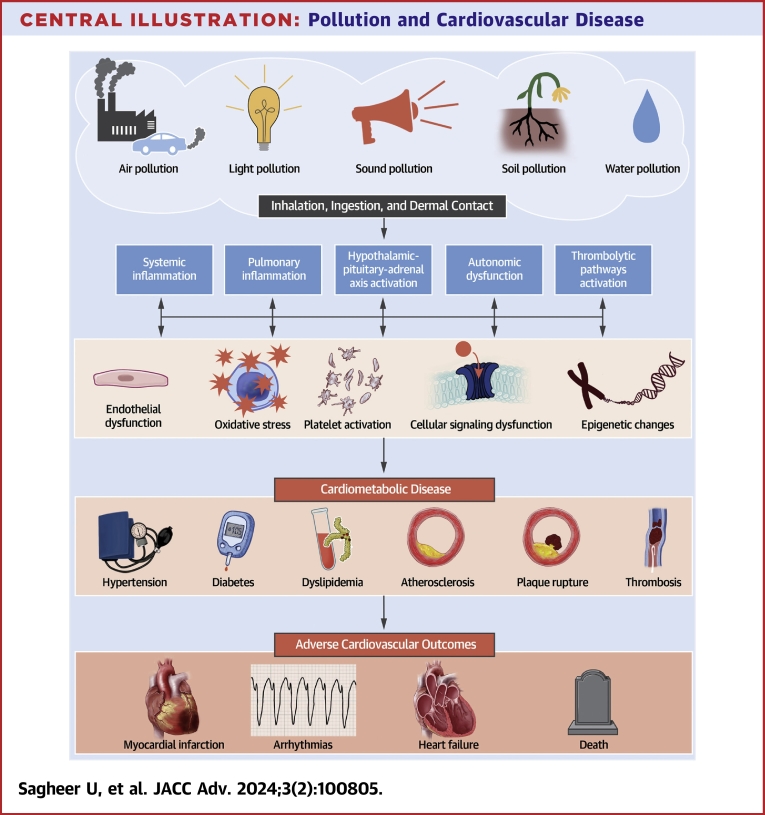
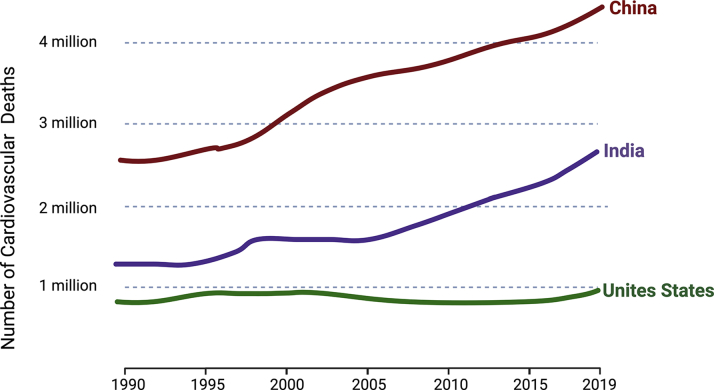
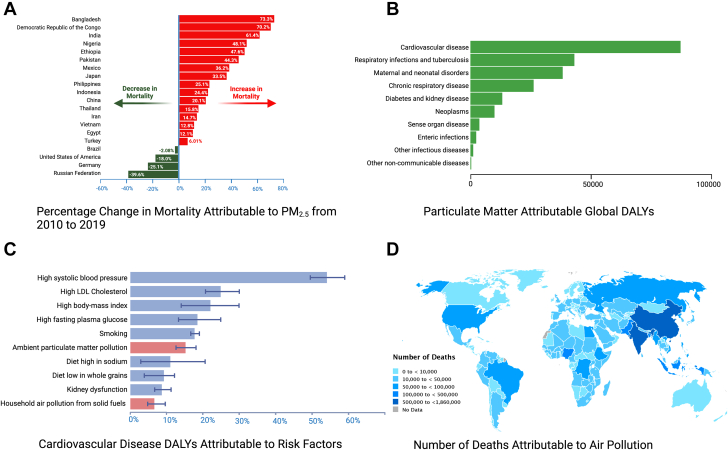
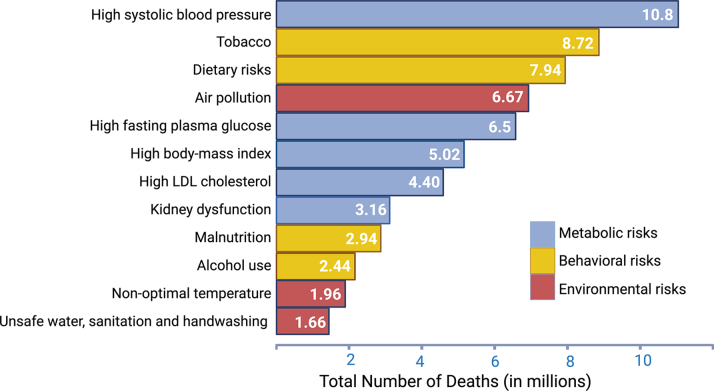
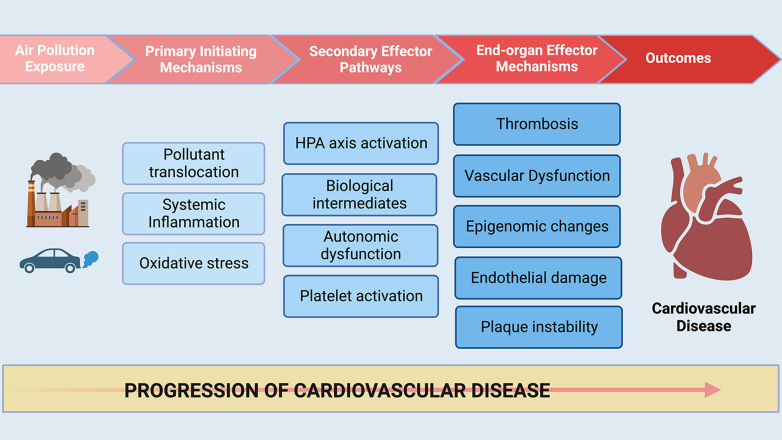
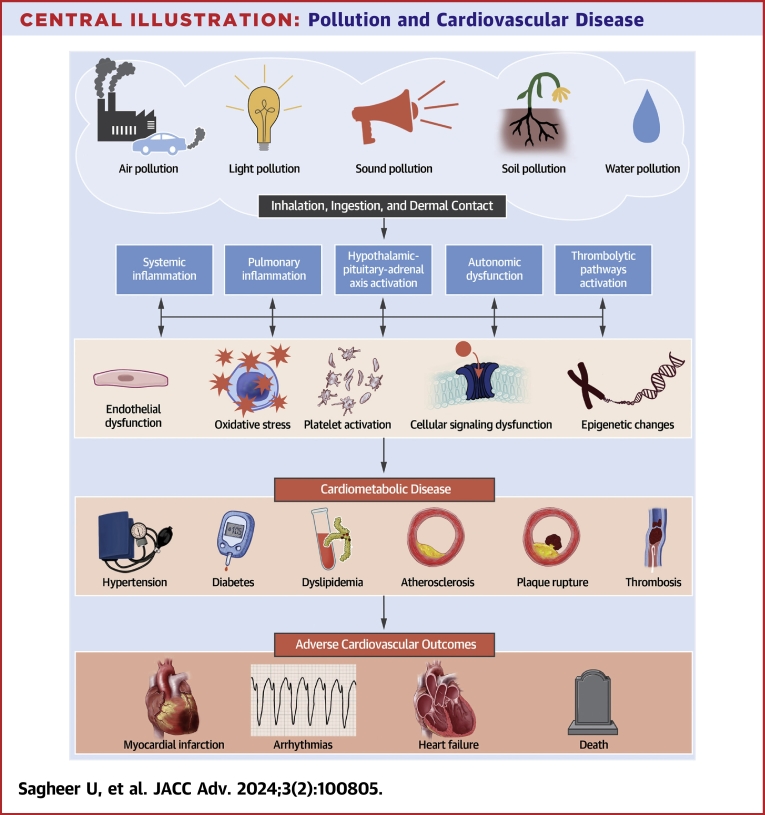
Cardiovascular disease (CVD) is the leading cause of morbidity and mortality worldwide. Over the past 50 years, there has been a substantial decline in the incidence of CVD and related mortality in high-income countries, largely due to the mitigation of modifiable risk factors such as smoking, hypertension, and diabetes. However, a significant burden of CVD remains in low- to middle-income countries, despite their lower prevalence of traditional risk factors; other environmental factors, particularly pollution, play a significant role in this attributable risk. Mounting evidence underscores a strong association between pollution and adverse health effects, including CVD. This article is part 1 of a 2-part state-of-the-art review and discusses air pollution and its adverse effects on CVD, highlighting pathophysiological mechanisms and methods to reduce air pollution and exposure to these pollutants.
Keywords: air pollution; global burden of disease; particulate matter.
© 2024 The Authors.
Conflict of interest statement
The authors have reported that they have no relationships relevant to the contents of this paper to disclose.
Figures
References
-
- Rajagopalan S., Landrigan P.J. Pollution and the heart. N Engl J Med. 2021;385:1881–1892. - PubMed
-
- Shapiro J.S., Walker R. Why is pollution from US manufacturing declining? the roles of environmental regulation, productivity, and trade. Am Econ Rev. 2018;108:3814–3854.
-
- Fuller R., Landrigan P.J., Balakrishnan K., et al. Pollution and health: a progress update. Lancet Planet Health. 2022;6:e535–e547. - PubMed
Publication types
Grants and funding
LinkOut - more resources
Full Text Sources
Miscellaneous
