


Brushing Methods for Patients Unable to Use a Mouthwash: A Preliminary Study of the Effects of Moisturizing Gel and Povidone-Iodine in Healthy Volunteers
- PMID: 38947579
- PMCID: PMC11213489
- DOI: 10.7759/cureus.61277
Brushing Methods for Patients Unable to Use a Mouthwash: A Preliminary Study of the Effects of Moisturizing Gel and Povidone-Iodine in Healthy Volunteers
Abstract
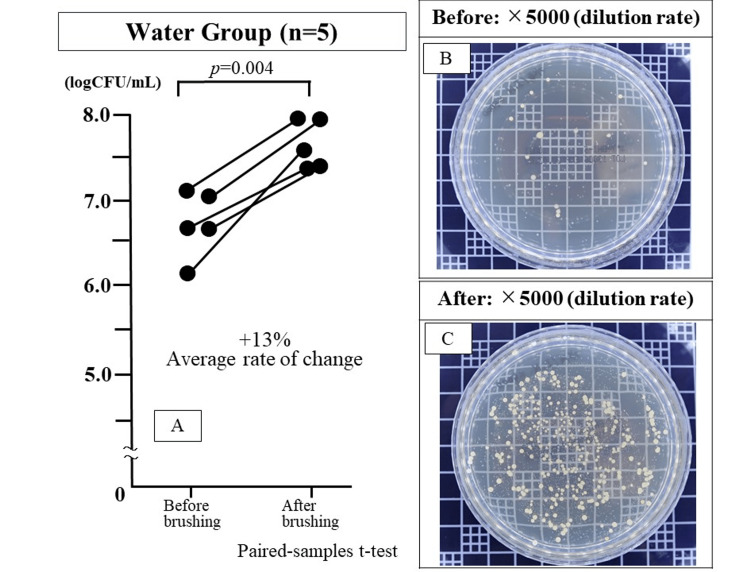
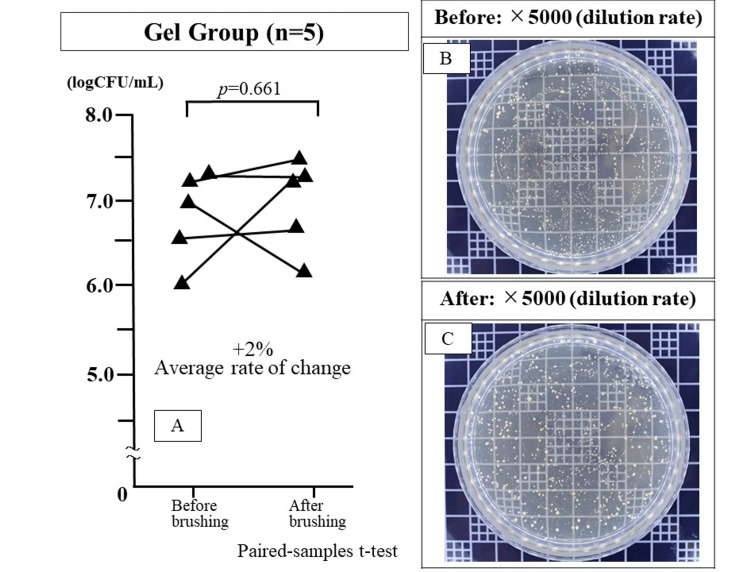
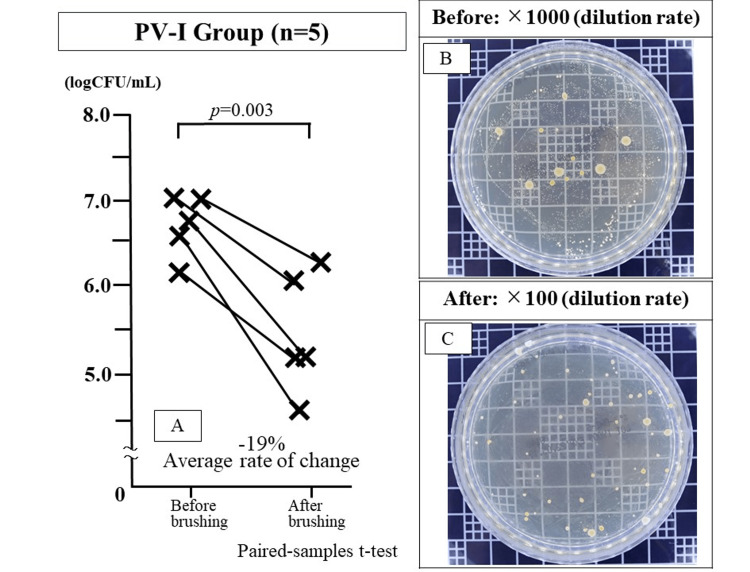
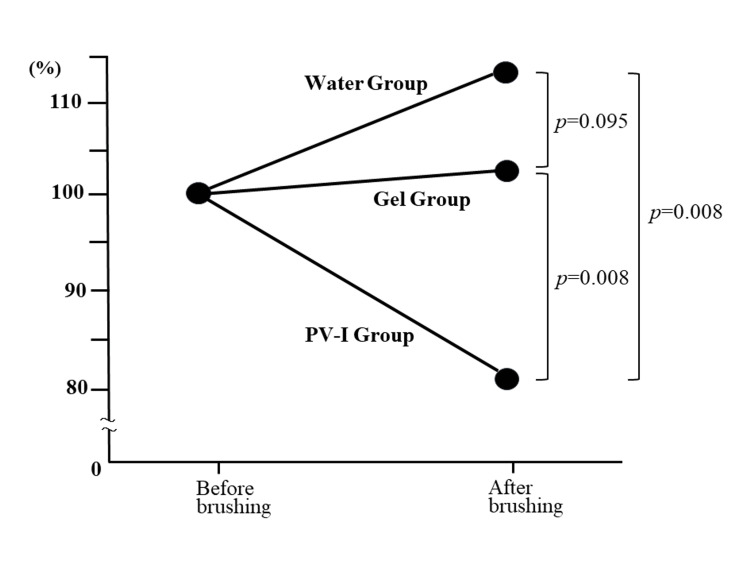
Introduction: Brushing older adults or intubated patients who are unable to rinse can transmit bacteria from dental plaque into the oral cavity and increase the risk of aspiration pneumonia. Therefore, this study examined brushing methods to prevent the spread of bacteria in the oral cavity. Methods: Three types of brushing methods were performed on five volunteers by dental hygienists (water group: brushing with toothbrush bristles soaked in water; gel group: brushing with a moisturizing gel placed on the toothbrush; PV-I group: brushing with toothbrush bristles dipped in povidone-iodine). Neither group spat out the saliva or gargled during brushing but brushed while wiping the water/gel/PV-I solution with a sponge brush. The same five volunteers served as subjects for the three methods. Saliva was collected before and after brushing, and the number of colonies was determined using bacterial culture. Results: The water group demonstrated a significantly increased number of bacteria in the saliva owing to the spread of bacteria from the dental plaque. The gel group prevented the spread of the bacteria. The PV-I group showed a significant decrease in the number of bacteria in the saliva after brushing.
Conclusions: Brushing with toothbrush bristles dipped in a povidone-iodine solution is recommended for intubated or older adult patients who cannot gargle.
Keywords: moisture gel; number of bacteria; povidone iodine; saliva; tooth brushing.
Copyright © 2024, Funahara et al.
Conflict of interest statement
Human subjects: Consent was obtained or waived by all participants in this study. the Institutional Review Board of Kyushu Dental University issued approval 21-42. This study was conducted in accordance with the Declaration of Helsinki and the Ethical Guidelines for Medical and Biological Research Involving Human Subjects of the Ministry of Health, Labor, and Welfare of Japan. This study was approved by the Institutional Review Board of Kyushu Dental University (#21-42). Animal subjects: All authors have confirmed that this study did not involve animal subjects or tissue. Conflicts of interest: In compliance with the ICMJE uniform disclosure form, all authors declare the following: Payment/services info: This work was supported by the J Grants-in-Aid for Scientific Research (grant number: JP22K10295). The authors thank all the participants in this study. . Financial relationships: All authors have declared that they have no financial relationships at present or within the previous three years with any organizations that might have an interest in the submitted work. Other relationships: All authors have declared that there are no other relationships or activities that could appear to have influenced the submitted work.
Figures
References
-
- Relationship between tongue pressure and salivary bacteria in the older adults requiring long-term care. Funahara M, Soutome S, Sakamoto Y, et al. Gerontology. 2023;69:282–288. - PubMed
-
- Efficacy of topical antibiotic administration on the inhibition of perioperative oral bacterial growth in oral cancer patients: a preliminary study. Funahara M, Hayashida S, Sakamoto Y, Yanamoto S, Kosai K, Yanagihara K, Umeda M. Int J Oral Maxillofac Surg. 2015;44:1225–1230. - PubMed
LinkOut - more resources
Full Text Sources