


Recommendations to advance digital health equity: a systematic review of qualitative studies
- PMID: 38951666
- PMCID: PMC11217442
- DOI: 10.1038/s41746-024-01177-7
Recommendations to advance digital health equity: a systematic review of qualitative studies
Abstract
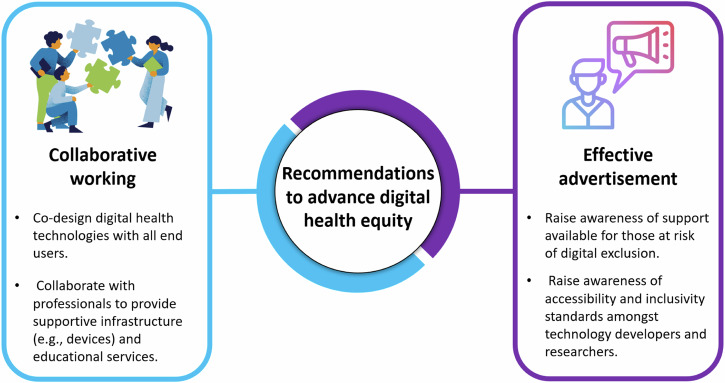
The World Health Organisation advocates Digital Health Technologies (DHTs) for advancing population health, yet concerns about inequitable outcomes persist. Differences in access and use of DHTs across different demographic groups can contribute to inequities. Academics and policy makers have acknowledged this issue and called for inclusive digital health strategies. This systematic review synthesizes literature on these strategies and assesses facilitators and barriers to their implementation. We searched four large databases for qualitative studies using terms relevant to digital technology, health inequities, and socio-demographic factors associated with digital exclusion summarised by the CLEARS framework (Culture, Limiting conditions, Education, Age, Residence, Socioeconomic status). Following the PRISMA guidelines, 10,401 articles were screened independently by two reviewers, with ten articles meeting our inclusion criteria. Strategies were grouped into either outreach programmes or co-design approaches. Narrative synthesis of these strategies highlighted three key themes: firstly, using user-friendly designs, which included software and website interfaces that were easy to navigate and compatible with existing devices, culturally appropriate content, and engaging features. Secondly, providing supportive infrastructure to users, which included devices, free connectivity, and non-digital options to help access healthcare. Thirdly, providing educational support from family, friends, or professionals to help individuals develop their digital literacy skills to support the use of DHTs. Recommendations for advancing digital health equity include adopting a collaborative working approach to meet users' needs, and using effective advertising to raise awareness of the available support. Further research is needed to assess the feasibility and impact of these recommendations in practice.
© 2024. The Author(s).
Conflict of interest statement
The authors declare no competing interests.
Figures



References
-
- World Health Organization. Digital Health. URL: https://www.who.int/health-topics/digital-health#tab=tab_3 (2020).
-
- National Institute for Health and Clinical Excellence. Evidence standards framework for digital health technologies. URL: https://www.nice.org.uk/corporate/ecd7/resources/evidence-standards-fram... (2022).
Publication types
Grants and funding
LinkOut - more resources
Full Text Sources
