


Genomic characterization of Klebsiella pneumoniae carbapenemase-producing Klebsiella pneumoniae (KPC-Kp) strains circulating in three university hospitals in Northern Italy over three years
- PMID: 38961463
- PMCID: PMC11223429
- DOI: 10.1186/s13756-024-01429-x
Genomic characterization of Klebsiella pneumoniae carbapenemase-producing Klebsiella pneumoniae (KPC-Kp) strains circulating in three university hospitals in Northern Italy over three years
Abstract
Objectives: Genomic surveillance of Klebsiella pneumoniae carbapenemase-producing Klebsiella pneumoniae (KPC-Kp) is crucial for virulence, drug-resistance monitoring, and outbreak containment.
Methods: Genomic analysis on 87 KPC-Kp strains isolated from 3 Northern Italy hospitals in 2019-2021 was performed by whole genome sequencing (WGS), to characterize resistome, virulome, and mobilome, and to assess potential associations with phenotype resistance and clinical presentation. Maximum Likelihood and Minimum Spanning Trees were used to determine strain correlations and identify potential transmission clusters.
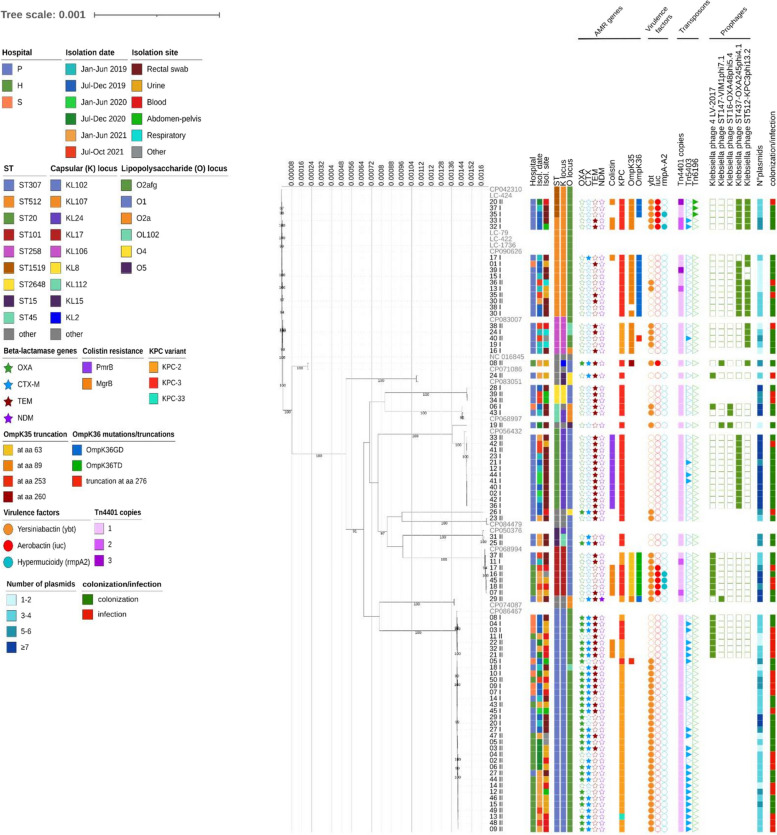
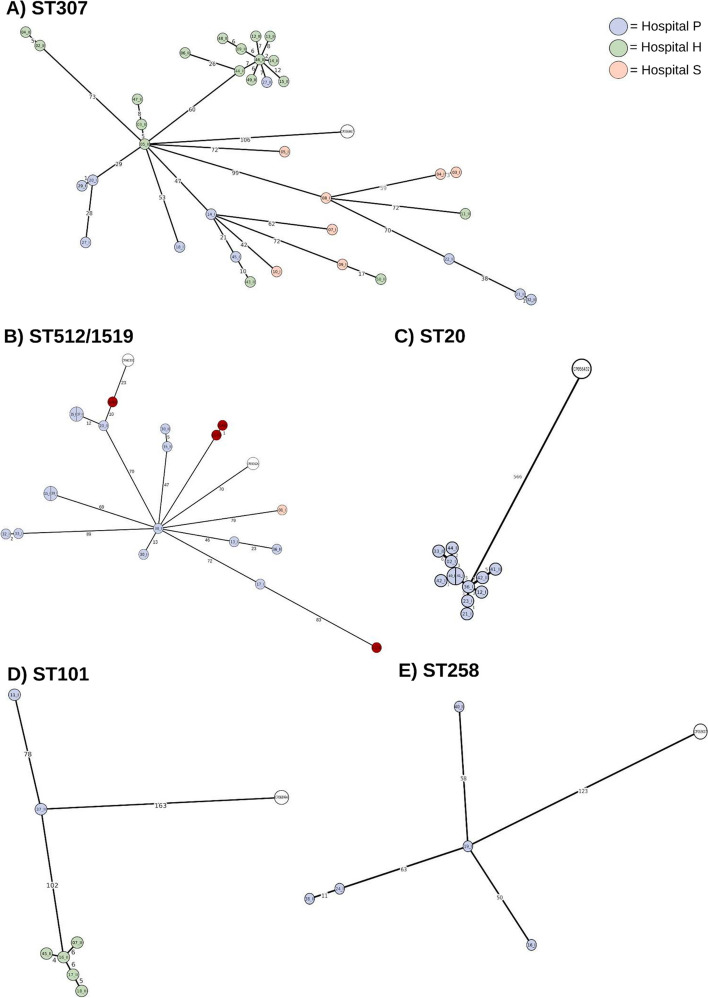
Results: Overall, 15 different STs were found; the predominant ones included ST307 (35, 40.2%), ST512/1519 (15, 17.2%), ST20 (12, 13.8%), and ST101 (7, 8.1%). 33 (37.9%) KPC-Kp strains were noticed to be in five transmission clusters (median number of isolates in each cluster: 5 [3-10]), four of them characterized by intra-hospital transmission. All 87 strains harbored Tn4401a transposon, carrying blaKPC-3 (48, 55.2%), blaKPC-2 (38, 43.7%), and in one case (1.2%) blaKPC-33, the latter gene conferred resistance to ceftazidime/avibactam (CZA). Thirty strains (34.5%) harbored porin mutations; of them, 7 (8.1%) carried multiple Tn4401a copies. These strains were characterized by significantly higher CZA minimum inhibitory concentration compared with strains with no porin mutations or single Tn4401a copy, respectively, even if they did not overcome the resistance breakpoint of 8 ug/mL. Median 2 (IQR:1-2) virulence factors per strain were detected. The lowest number was observed in ST20 compared to the other STs (p<0.001). While ST307 was associated with infection events, a trend associated with colonization events could be observed for ST20.
Conclusions: Integration of genomic, resistance score, and clinical data allowed us to define a relative diversification of KPC-Kp in Northern Italy between 2019 and 2021, characterized by few large transmission chains and rare inter-hospital transmission. Our results also provided initial evidence of correlation between KPC-Kp genomic signatures and higher MIC levels to some antimicrobial agents or colonization/infection status, once again underlining WGS's importance in bacterial surveillance.
Keywords: K. pneumoniae carbapenemase-producing Klebsiella pneumoniae (KPC-Kp); Antimicrobial resistance (AMR); Genomic epidemiology; WGS.
© 2024. The Author(s).
Conflict of interest statement
The authors declare no competing interests.
Figures
References
-
- European Centre for Disease Prevention and Control. Antimicrobial resistance in the EU/EEA (EARS-Net) - Annual Epidemiological Report 2020. Stockholm: European Centre for Disease Prevention and Control (ECDC); 2022. https://www.ecdc.europa.eu/sites/default/files/documents/AER-antimicrobi....
