


Social impact of brain fog and analysis of risk factors: Long COVID in Japanese population
- PMID: 38961833
- PMCID: PMC11330230
- DOI: 10.1002/acn3.52139
Social impact of brain fog and analysis of risk factors: Long COVID in Japanese population
Abstract
Objective: To reveal the clinical features and assess risk factors linked to brain fog and its societal implications, including labor productivity, providing valuable insights for the future care of individuals who have experienced coronavirus disease 2019 (COVID-19).
Methods: We analyzed a comprehensive cohort dataset comprising 1,009 patients with COVID-19 admitted to Japanese hospitals. To assess brain fog, we analyzed patients who responded to a questionnaire indicating symptoms such as memory impairment and poor concentration.
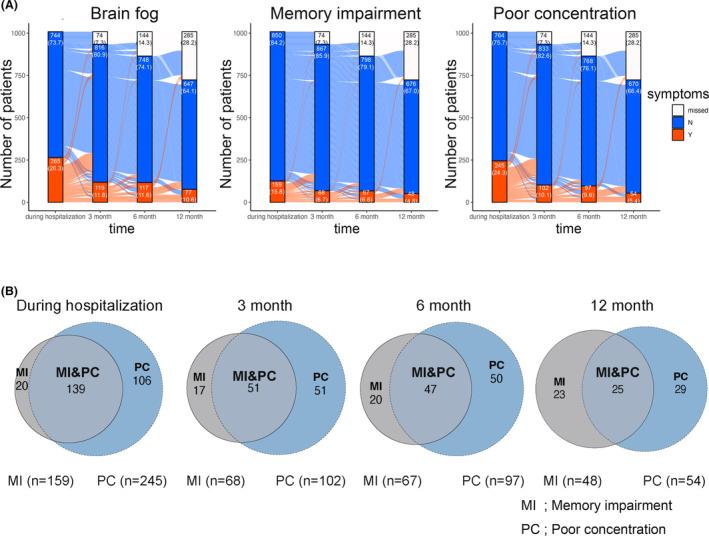
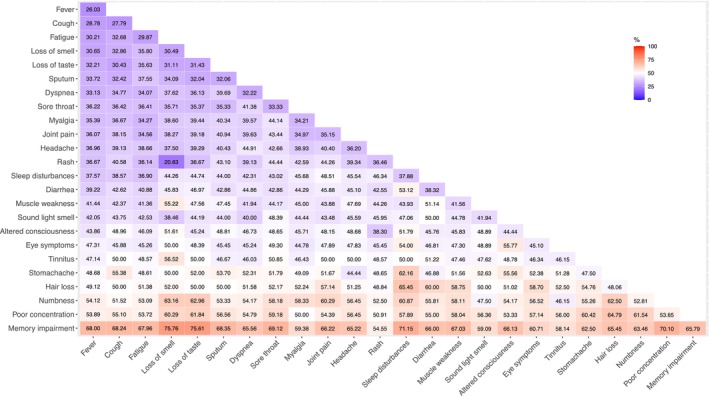
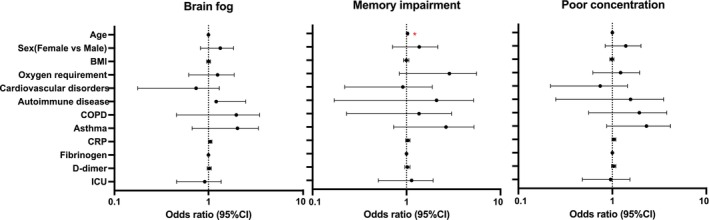
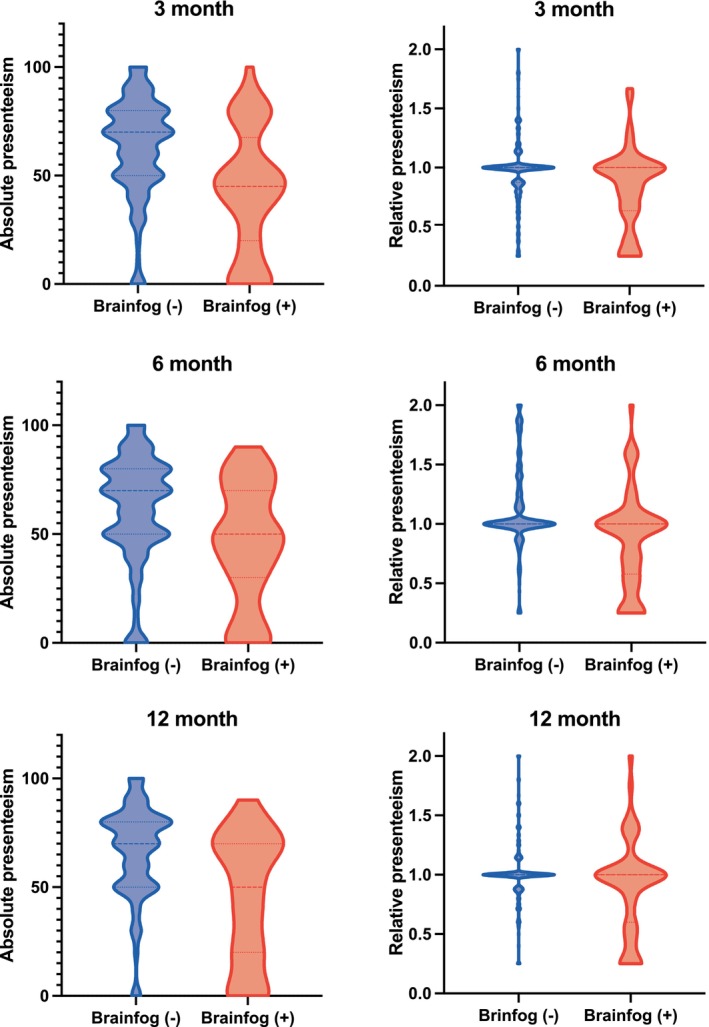
Results: The prevalence of brain fog symptoms decreased 3 months posthospitalization but remained stable up to 12 months. Neurological symptoms such as taste and smell disorders and numbness at hospitalization correlated with a higher frequency of identifying brain fog as a long COVID manifestation. Our findings indicated that advanced age, female sex, a high body mass index, oxygen required during hospitalization, chronic obstructive pulmonary disease, asthma, and elevated C-reactive protein and elevated D-dimer levels were risk factors in patients exhibiting brain fog. Additionally, we demonstrated the negative impact of brain fog on labor productivity by presenteeism scores.
Interpretations: This study clarified the clinical characteristics of patients experiencing brain fog as a long COVID manifestation, specifically emphasizing neurological symptoms during hospitalization and their correlation with brain fog. Additionally, the study identified associated risk factors for its onset and revealed that the emergence of brain fog was linked to a decline in labor productivity.
© 2024 The Author(s). Annals of Clinical and Translational Neurology published by Wiley Periodicals LLC on behalf of American Neurological Association.
Conflict of interest statement
The corresponding authors have no conflicts of interest related to this manuscript to disclose.
Figures
References
-
- COVID‐19 rapid guideline: managing the long‐term effects of COVID‐19. London. 2020. - PubMed
MeSH terms
Supplementary concepts
Grants and funding
- JP 21fk0108431/Japan Agency for Medical Research and Development
- JP 21fk0108553/Japan Agency for Medical Research and Development
- JP 21fk0108563/Japan Agency for Medical Research and Development
- JP 21fk0108573/Japan Agency for Medical Research and Development
- JP 22fk0108510/Japan Agency for Medical Research and Development
- JP 22fk0108513/Japan Agency for Medical Research and Development
- JP 22fk0108573/Japan Agency for Medical Research and Development
- JP 22wm0325031/Japan Agency for Medical Research and Development
- JP20fk0108415/Japan Agency for Medical Research and Development
- JP20fk0108452/Japan Agency for Medical Research and Development
- JP20nk0101612/Japan Agency for Medical Research and Development
- 20CA2054/Ministry of Health, Labour and Welfare
- JPMH21HA2011/Ministry of Health, Labour and Welfare
- JPMH23HA2011/Ministry of Health, Labour and Welfare
- JPMJCR20H2/Core Research for Evolutional Science and Technology
- JPMJPR21R7/Precursory Research for Embryonic Science and Technology
LinkOut - more resources
Full Text Sources
Medical
Research Materials
