


Tampons as a source of exposure to metal(loid)s
- PMID: 38963987
- PMCID: PMC11913127
- DOI: 10.1016/j.envint.2024.108849
Tampons as a source of exposure to metal(loid)s
Abstract
Background: Between 52-86% of people who menstruate in the United States use tampons-cotton and/or rayon/viscose 'plugs'-to absorb menstrual blood in the vagina. Tampons may contain metals from agricultural or manufacturing processes, which could be absorbed by the vagina's highly absorptive tissue, resulting in systemic exposure. To our knowledge, no previous studies have measured metals in tampons.
Objectives: We evaluated the concentrations of 16 metal(loid)s in 30 tampons from 14 tampon brands and 18 product lines and compared the concentrations by tampon characteristics.
Methods: About 0.2 - 0.3 g from each tampon (n = 60 samples) were microwave-acid digested and analyzed by inductively coupled plasma mass spectrometry (ICP-MS) to determine concentrations of arsenic, barium, calcium, cadmium, cobalt, chromium, copper, iron, manganese, mercury, nickel, lead, selenium, strontium, vanadium, and zinc. We compared concentrations by several tampon characteristics (region of purchase, organic material, brand type) using median quantile mixed models.
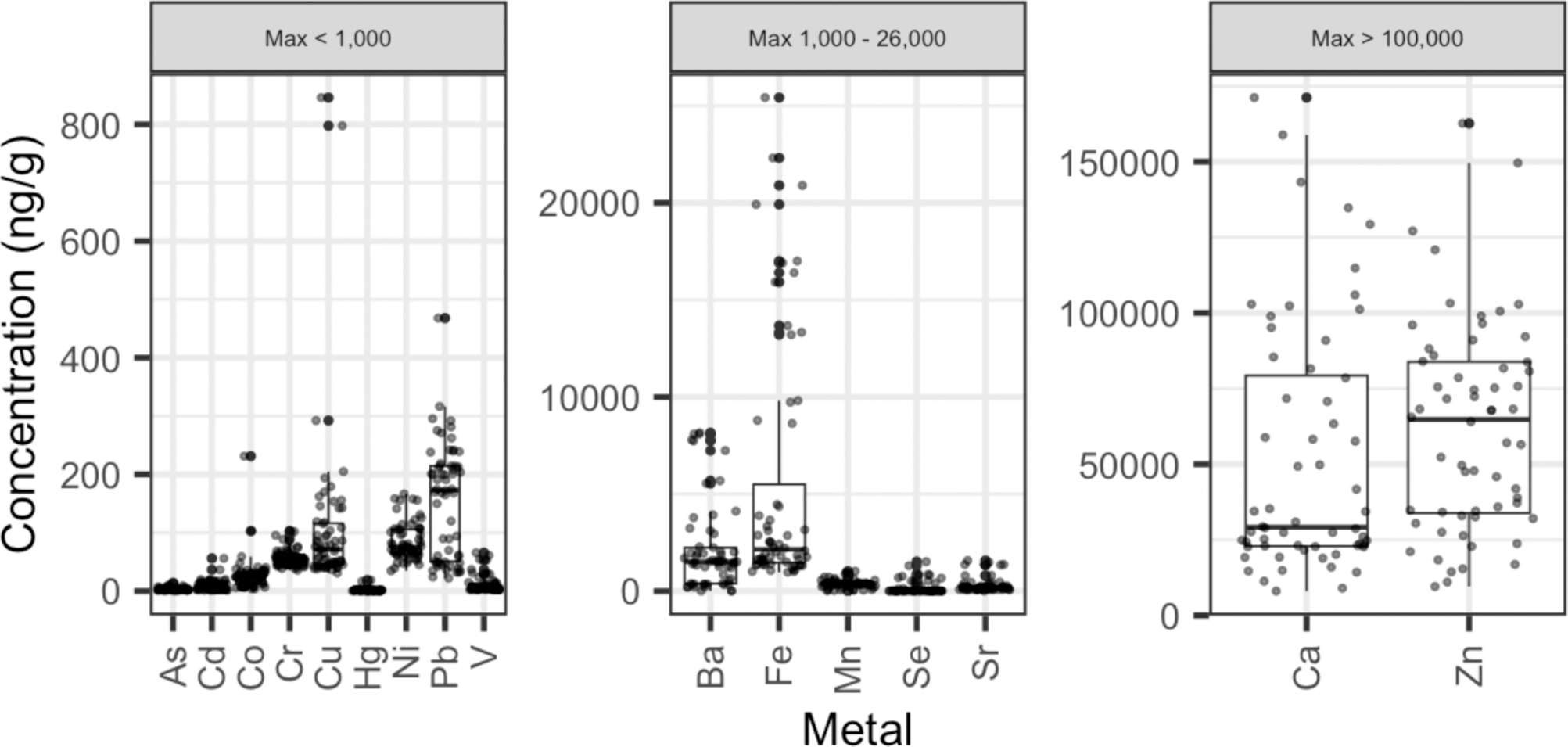
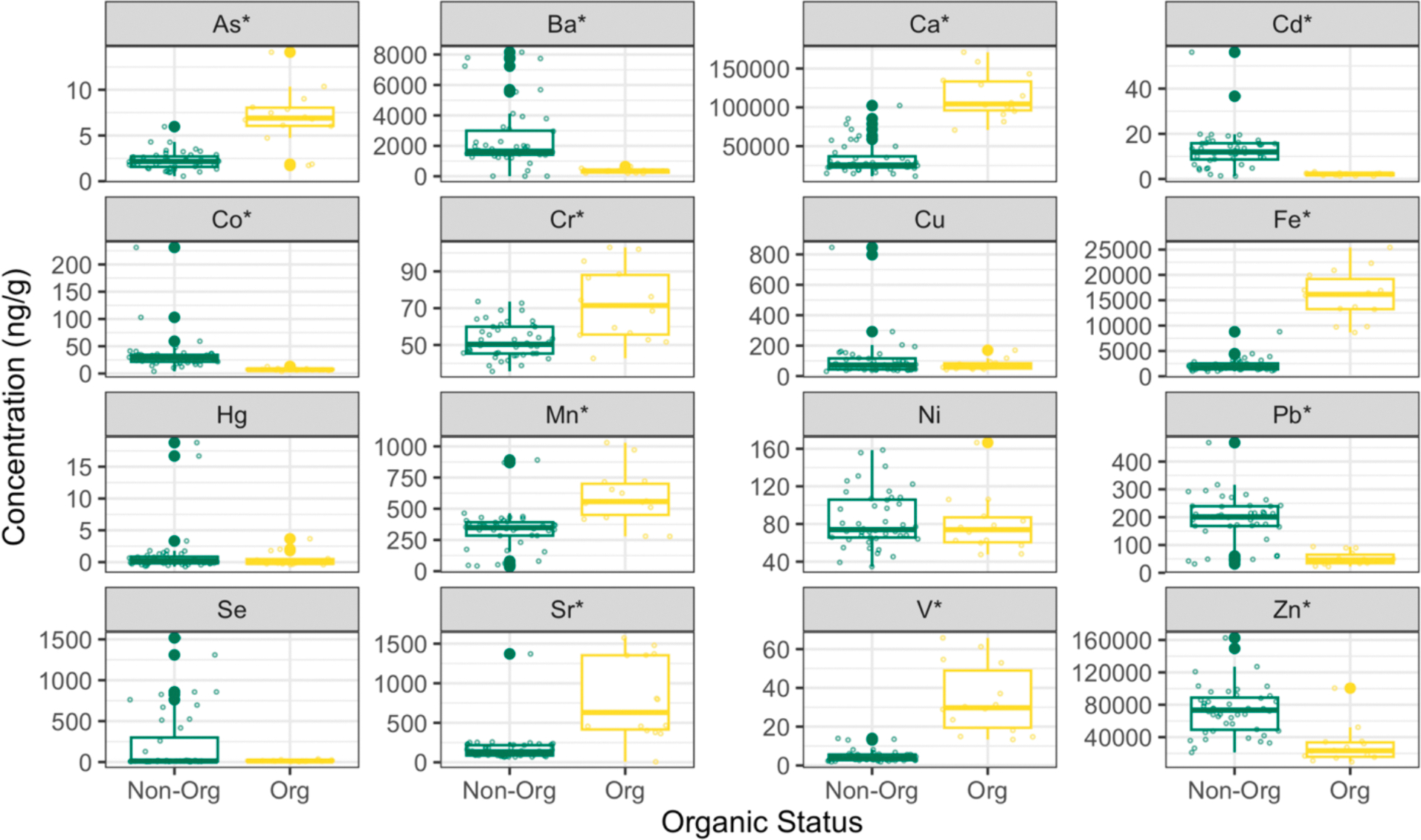
Results: We found measurable concentrations of all 16 metals assessed. We detected concentrations of several toxic metals, including elevated mean concentrations of lead (geometric mean [GM] = 120 ng/g), cadmium (GM = 6.74 ng/g), and arsenic (GM = 2.56 ng/g). Metal concentrations differed by region of tampon purchase (US versus European Union/United Kingdom), by organic versus non-organic material, and for store- versus name-brand tampons. Most metals differed by organic status; lead concentrations were higher in non-organic tampons while arsenic was higher in organic tampons. No categoriy had consistently lower concentrations of all or most metals.
Discussion: Tampon use is a potential source of metal exposure. We detected all 16 metals in at least one sampled tampon, including some toxic metals like lead that has no "safe" exposure level. Future research is needed to replicate our findings and determine whether metals can leach out of tampons and cross the vaginal epithelium into systemic circulation.
Keywords: Environmental Exposure; Menstrual Hygiene Products; Menstruation; Metals; Vaginal Absorption.
Copyright © 2024 The Authors. Published by Elsevier Ltd.. All rights reserved.
Conflict of interest statement
Declaration of competing interest The authors declare that they have no known competing financial interests or personal relationships that could have appeared to influence the work reported in this paper.
Figures
References
-
- Absorbent Hygiene Products Working Group of EDANA, 2020. Edana Code of Practice for tampons placed on the European market. Version 3.
-
- Angelova V, Ivanova R, Delibaltova V, Ivanov K, 2004. Bio-accumulation and distribution of heavy metals in fibre crops (flax, cotton and hemp). Ind. Crop. Prod. 19 (3), 197–205.
-
- Archer JC, Mabry-Smith R, Shojaee S, Threet J, Eckert JJ, Litman VE, 2005. Dioxin and furan levels found in tampons. J Womens Health (larchmt). 14 (4), 311–315. - PubMed
MeSH terms
Substances
Grants and funding
LinkOut - more resources
Full Text Sources
