Role of endoscopy in eosinophilic esophagitis
- PMID: 38965710
- PMCID: PMC11837575
- DOI: 10.5946/ce.2024.023
Role of endoscopy in eosinophilic esophagitis
Abstract
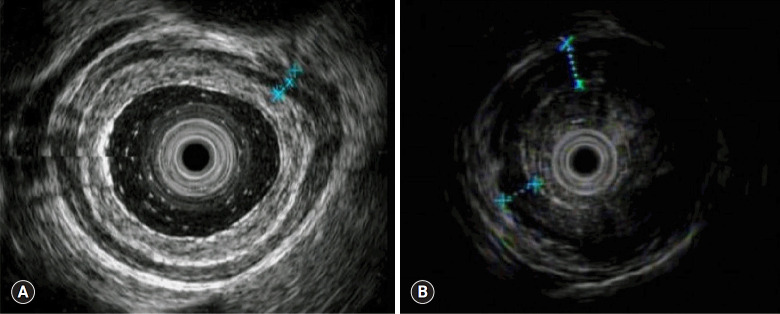
Eosinophilic esophagitis (EoE) is a chronic immune-mediated disease involving inflammation of the esophagus. Endoscopy is essential in the diagnosis and treatment of EoE and shows typical findings, including esophageal edema, rings, exudates, furrows, and stenosis. However, studies involving pediatric and adult patients with EoE suggest that even a normally appearing esophagus can be diagnosed as EoE by endoscopic biopsy. Therefore, in patients with suspected EoE, biopsy samples should be obtained from the esophagus regardless of endoscopic appearance. Moreover, follow-up endoscopies with biopsy after therapy initiation are usually recommended to assess response. Although previous reports of endoscopic ultrasonography findings in patients with EoE have shown diffuse thickening of the esophageal wall, including lamina propria, submucosa, and muscularis propria, its role in EoE remains uncertain and requires further investigation. Endoscopic dilation or bougienage is a safe and effective procedure that can be used in combination with medical and/or dietary elimination therapy in patients with esophageal stricture for the management of dysphagia and to prevent its recurrence.
Keywords: Endoscopic dilation; Endoscopic ultrasonography; Endoscopy; Eosinophilic esophagitis.
Conflict of interest statement
The authors have no potential conflicts of interest.
Figures

References
-
- Dellon ES. Eosinophilic esophagitis: what’s in a name? Dig Dis Sci. 2024;69:330–334. - PubMed
-
- Furuta GT, Liacouras CA, Collins MH, et al. Eosinophilic esophagitis in children and adults: a systematic review and consensus recommendations for diagnosis and treatment. Gastroenterology. 2007;133:1342–1363. - PubMed
Publication types
LinkOut - more resources
Full Text Sources